Inanna Ishtar
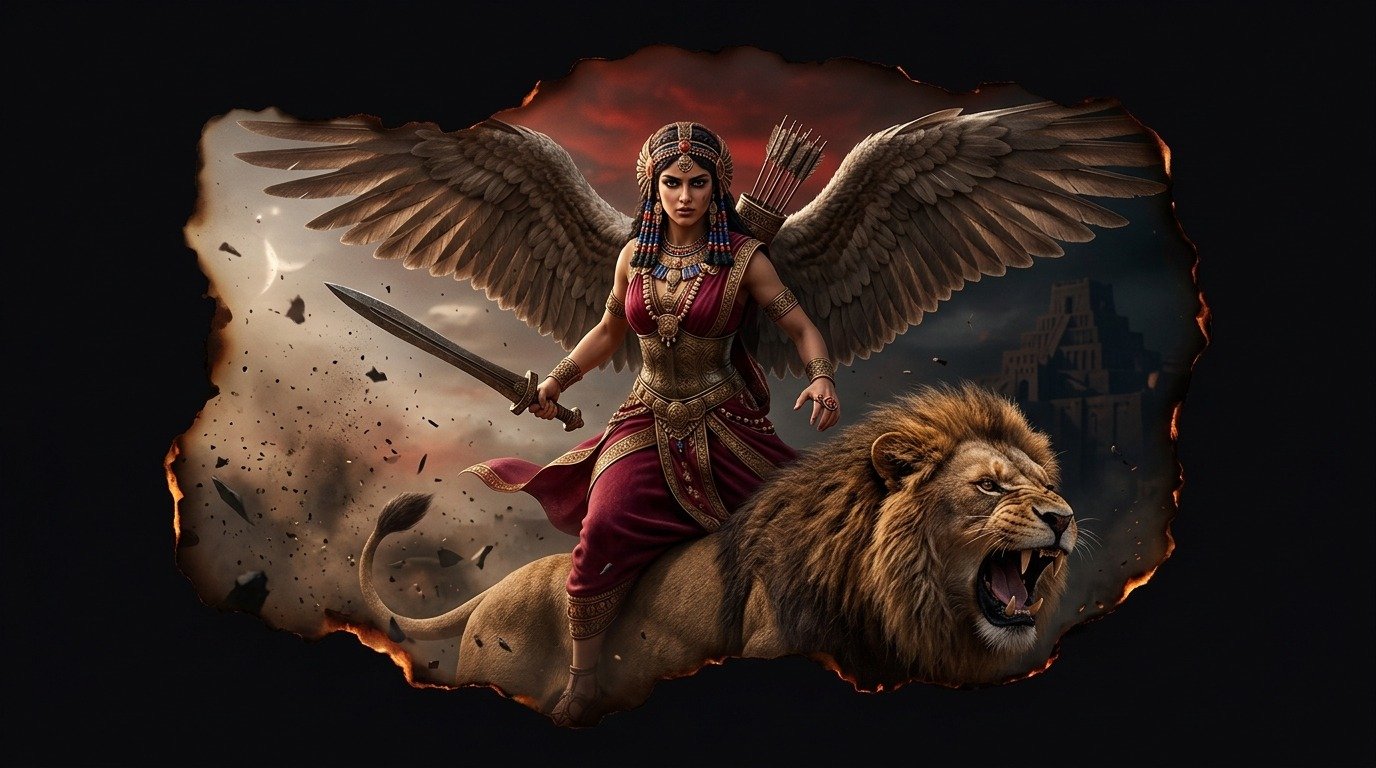
Inanna/Ishtar: the bronze sword and the evening star
The queen of contradictions
Inanna is the most vibrant, dangerous, and fascinating deity of the pantheon. She knows no middle ground. She is the morning star that heralds the din of battle, and the evening star that awakens desire in the bed of lovers. She is the goddess of courtly love, of unbridled passion, of the fertility of the fields, and of the bloody carnage of war. Upon seeing her, warriors feel their hearts fill with a fearsome courage, while lovers consume themselves in a fire that often proves fatal. Her presence is a whirlwind of movement. She is depicted standing on the back of a roaring lion, dressed in the finery of a bride but with wings on her back and a quiver full of arrows sprouting from her shoulders. Inanna defies all categories: she is neither a submissive mother nor a docile wife; she is an independent force seeking to expand her territory and her power at any cost, wresting the secrets of the cosmic order from the gods themselves through seduction or direct threat.
The descent to the realm of no return
The myth that defines her character most deeply is her journey to the Kur, the dark underworld ruled by her sister Ereshkigal. Dissatisfied with her domains on earth and in heaven, Inanna decided to conquer the realm of the dead. To do this, she dressed in her seven sacred garments, the insignia of her divine power, and descended through the seven gates of the abyss. At each gate, the guardian of death forced her to strip away an attribute: first her crown, then her lapis lazuli jewelry, her necklace, her breastplates, and finally, her robes. Upon arriving before her sister's throne, Inanna was completely naked, stripped of all her divinity. Ereshkigal looked at her with the eyes of death and turned her into a corpse of rotting flesh that she hung from a peg on the wall. However, death could not hold the mistress of life. Thanks to the intervention of Enki and the cunning of his messengers, she resurrected from the shadows, but the law of the underworld is strict: to leave, she had to surrender someone in her place. Upon returning to earth and seeing that her husband, the shepherd Dumuzi, was not mourning her but celebrating on his throne, Inanna pointed at him with the finger of condemnation, handing him over to the demons of the abyss. She is the love that gives life and, at the same time, the resentment that demands sacrifice.
The patroness of the crown and battle
On the battlefield, Inanna is called "the destroyer of mountains." It is said that when she enters combat, the sky turns red and the earth is covered in a dew of blood. She enjoys the chaos of the fight, the clash of war chariots, and the fall of empires. The kings of Mesopotamia did not dare to rule without her blessing; during the great New Year festival, the sovereign had to unite with the goddess in a rite of sacred marriage to ensure that the land would bear fruit and that the armies would achieve victory over their enemies. Her cult survived the fall of entire dynasties, transforming and absorbing the faces of other deities. In the streets of Uruk and Babylon, the temples dedicated to her were places filled with music, dance, and the transgression of everyday limits. Inanna is the force that breaks the barriers of the established, the star that shines brightest on the eve of the storm, reminding men that life and destruction are two sides of the same bronze coin.
Comments
Share information, an experience, or a source to help enrich this entry. They are automatically reviewed before being published.
Loading comments...