Edinburgh Castle
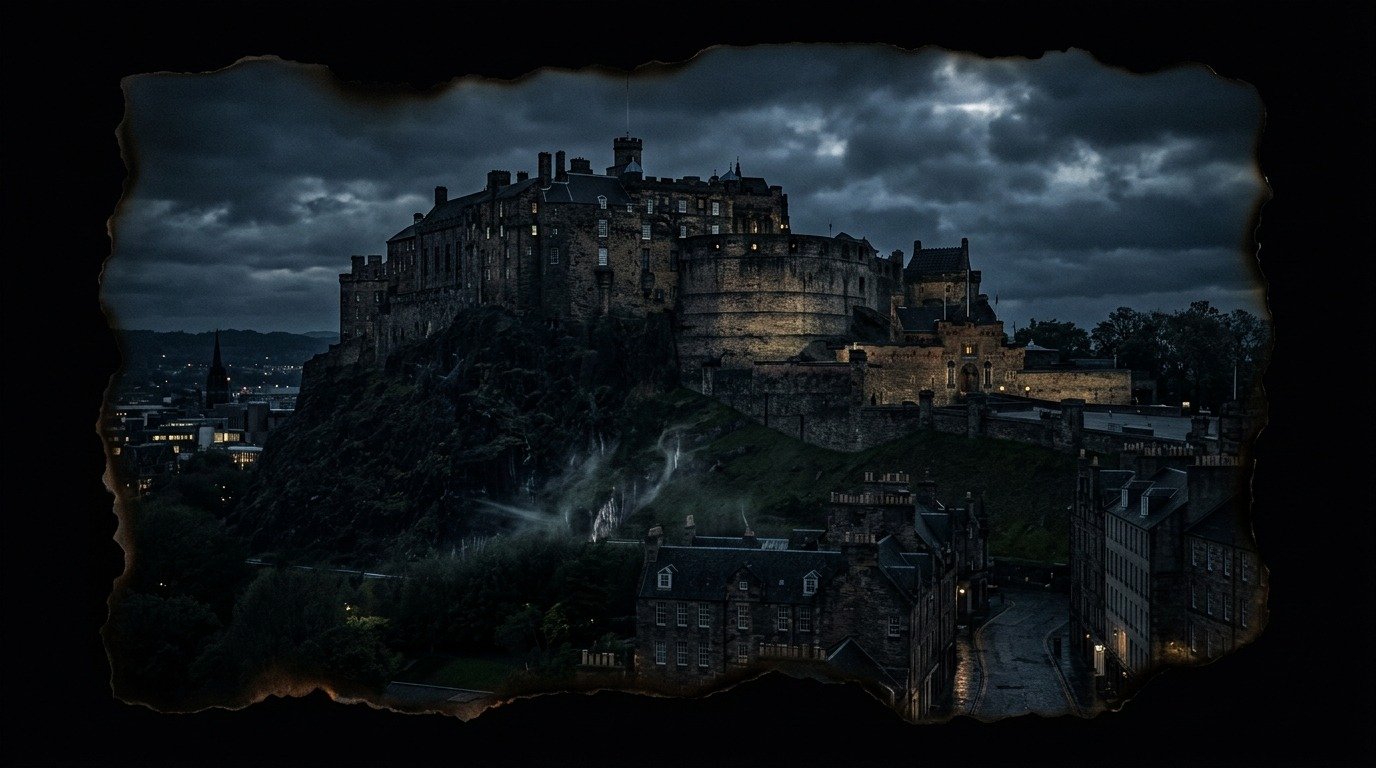
Edinburgh Castle: The Laments Beneath the Volcanic Rock
The Whisper in the Darkness of the Rock
The morning that, centuries ago, a young piper descended into the newly discovered tunnels beneath Edinburgh Castle, the air was so cold it froze his breath. His mission was simple yet dangerous: to advance through the secret tunnels leading down to the Royal Mile while playing his bagpipes, as soldiers on the surface followed the sound to map the depths of the fortress. The echo of the melody moved steadily beneath the stone foundations. Suddenly, upon reaching the level of St. Giles' Cathedral, the music stopped dead. The soldiers waited in silence, called out to the young man, and lowered torches to search for him. The tunnel was completely empty. They never found a body, a piece of clothing, or the instrument. Since that day, when the north wind lashes the volcanic rock, the lament of a solitary bagpipe vibrates beneath the city streets.
The Rock of a Thousand Battles
Edinburgh Castle stands upon Castle Rock, a volcanic basalt plug that has dominated the Scottish landscape for over a thousand years. This fortress was not built for rest, but for war. Its walls withstood twenty-six sieges throughout its history, making it one of the most attacked places in Europe. During the 17th and 18th centuries, its underground vaults functioned as a military prison with subhuman conditions. Hundreds of French, American, and Scottish insurgent prisoners of war were crammed into damp, dark, plague-ridden cellars, where many died chained to the rock walls.
The Restless Sentinels
The legend of the lost piper is only one of the shadows that guard the castle. For centuries, the fortress guards have recorded the presence of a headless drummer. His first documented appearance occurred in 1650, just before Oliver Cromwell's troops took the castle. The sound of his military drum echoes across the battlements whenever the fortress faces imminent danger. Likewise, in the ancient dungeons of the French prisoners, night watchmen report the silhouette of a ragged man who pushes intruders in the dark, leaving behind a trace of the smell of manure and stagnant water.
The Verdict of Science
In the year 2001, psychologist Richard Wiseman led one of the largest scientific investigations into paranormal activity in history at this site. For ten days, equipped with thermal cameras, motion sensors, and magnetometers, a group of volunteers explored the darkest areas of the castle. The results were surprising: participants reported more temperature drops, shadowy figures, and sensations of someone touching their clothes in the areas reputed to be haunted, even without knowing of that reputation. Wiseman attributed it to environmental factors, such as drafts, changes in light, and temperature; believers read it differently.
The Truth Behind the Basalt Walls
The piper's tunnel was never found, but beneath the Old Town of Edinburgh, there are indeed real cellars, vaults, and passageways, many walled up for centuries. The physical explanation for the castle's phenomena focuses on the cold drafts traveling at high speeds through these underground galleries and the effect of the volcanic rock, which amplifies and distorts the sounds of outside traffic, mimicking footsteps and human laments in the silence of the stone chambers.
The Echo Beneath the Stone
The sun sets, and the silhouette of the castle is silhouetted black against the Scottish sky. Below, beneath the damp cobblestones of the Royal Mile, the silence of the night is once again interrupted by that dull murmur of a bagpipe searching, without success, for the way out.
Comments
Share information, an experience, or a source to help enrich this entry. They are automatically reviewed before being published.
Loading comments...