Chillingham Castle
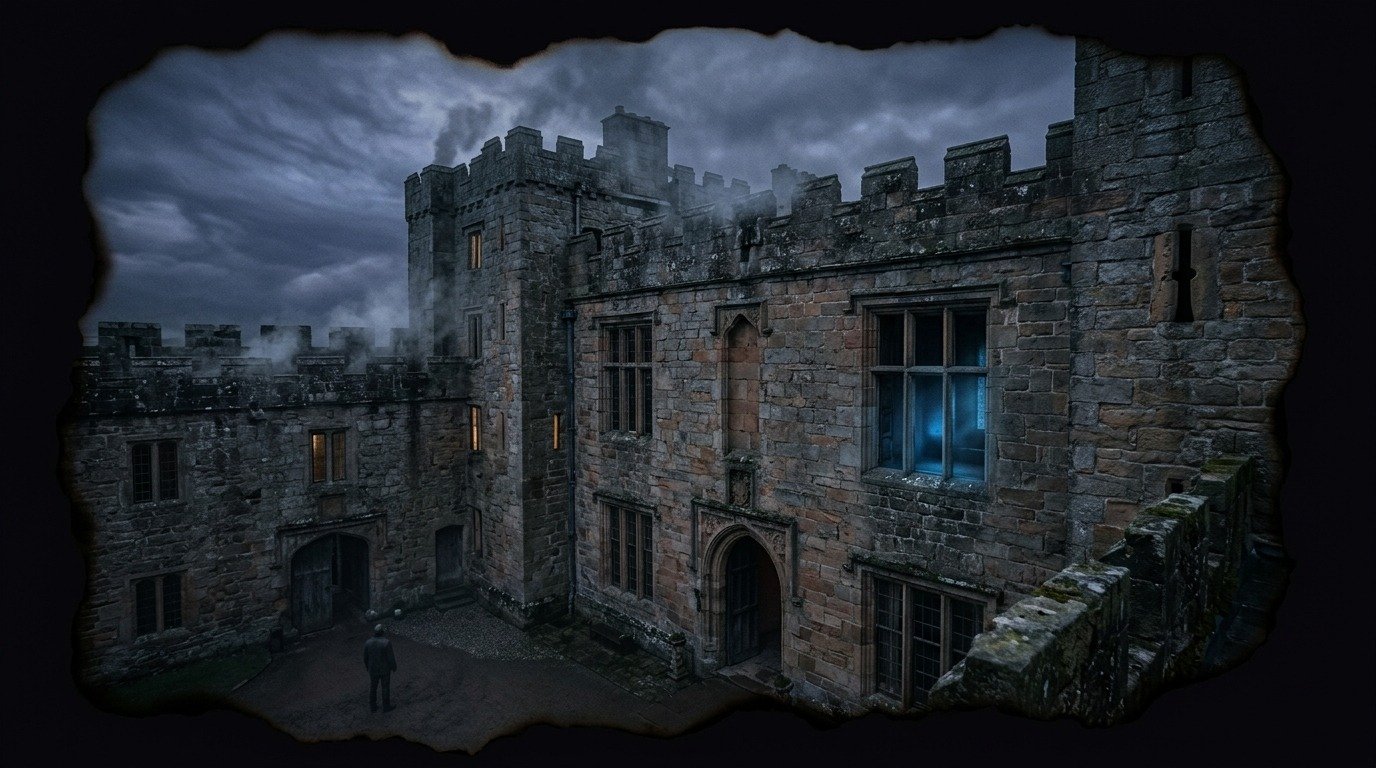
Chillingham Castle: The Fortress Where Pain Was Etched into Stone
The story everyone tells in Chillingham begins with the blow of a pickaxe. In the 1920s, during renovations in the Pink Room, workmen broke through a stone wall nearly three meters (almost 10 feet) thick. Behind it, in a narrow, damp cavity, they found bones: those of a young child, and according to some accounts, also those of a man. Among the remains were shreds of deep blue fabric. From that day on, the castle had a name for the ghost that had tormented it for generations: the Blue Boy.
The Bastion of the Bloody Border
Located in the county of Northumberland, a few kilometers (miles) from the border with Scotland, Chillingham Castle began in the 12th century as a simple watchtower. In 1344, King Edward III granted the Grey family a license to fortify the site, turning it into a quadrangular castle designed to withstand violent Scottish raids. Chillingham was not a place for courting or feasts; it was a machine of war. In 1298, King Edward I, "the Hammer of the Scots," stopped there on his way to his northern campaigns. In the depths of the castle, a windowless dungeon with a trapdoor in the ceiling received prisoners whom no one ever intended to let out again.
The Executioner and the Midnight Glow
Chillingham's reputation as the most haunted castle in England is built on the violence it harbored. The darkest legend is that of John Sage, the castle's torturer during the Border Wars: a sadistic man who, it is said, tortured and killed dozens of Scottish prisoners, sparing neither women nor children, and who ended up hanged on the castle grounds. Visitors claim he can still be heard dragging bodies through the corridors below. But Chillingham's most famous entity is the Blue Boy. For generations, guests sleeping in the Pink Room reported the same thing: after midnight, a heartbreaking cry would shatter the silence. Then, a blue glow would appear beside the bed, and within it, the figure of a child who would vanish into the wall. The very same wall where, centuries later, the bones would be found.
Footsteps in the Dark
Today, the castle remains privately owned and opens its doors to visitors, including night tours that attract investigators from all over the world. Visitors agree on the heaviness of the air in the torture chamber, where instruments of punishment are on display. Many claim to feel a tightness in their throat upon entering, accompanied by a metallic, rancid smell. In the library and on the stairs, investigators record whispers and the rustle of silk skirts. Locals attribute this to Lady Mary Berkeley, wife of Ford Grey, who abandoned her to elope with her own sister. Her spirit, they say, still wanders the castle in search of the husband who never returned.
The Walls That Do Not Forget
There is no document confirming who the boy in the wall was, when he died, or why he was locked away there; what is known about the 1920s discovery comes from the castle's oral tradition. The story goes that the bones received a Christian burial in the village cemetery and that, since then, the Blue Boy stopped appearing in the Pink Room. But those who sleep in the castle claim that the child's crying can still be heard from time to time behind the walls, as if the confinement had been permanently imprinted into the stone.
Comments
Share information, an experience, or a source to help enrich this entry. They are automatically reviewed before being published.
Loading comments...