Čachtice Castle
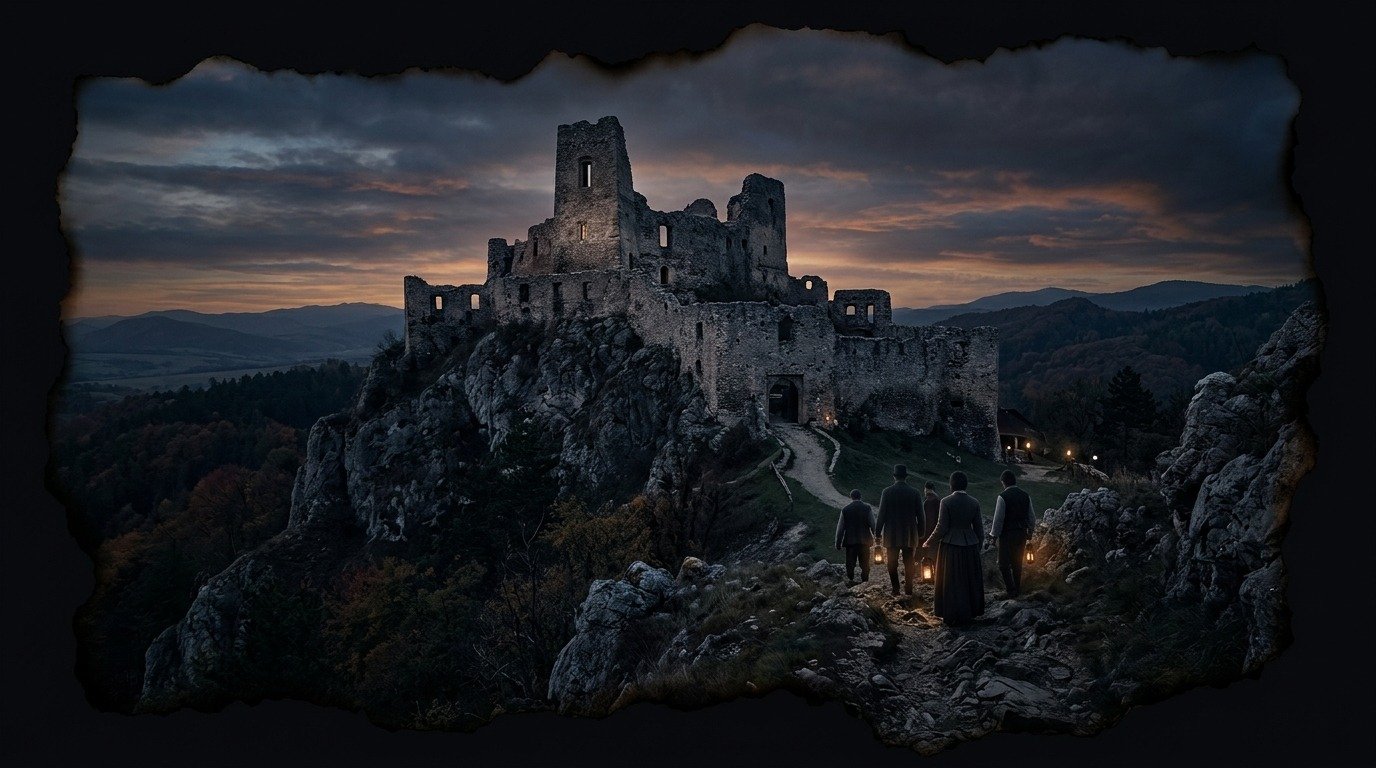
Čachtice Castle: The Lair of the Blood Countess
The Raid on the Cellars of Pain
On the night of December 29, 1610, the Count Palatine György Thurzó entered Čachtice Castle by surprise, accompanied by a group of armed soldiers. His goal was to put an end to the rumors that terrorized the villages of modern-day Slovakia. As they descended into the fortress's cellars with lit torches, what they found stopped the hearts of the most battle-hardened men: the lifeless body of a young woman bled dry on the floor, another girl on the brink of death with her body mutilated by needles, and a group of young women chained in the side cells awaiting their turn for torment. At the center of that carnage was Erzsébet Báthory, the most powerful countess in Hungary.
The Fortress of the Hungarian Border
Čachtice Castle was built in the 13th century on a hill in the Carpathian Mountains to defend the western border of the Kingdom of Hungary from Mongol invasions. Its strategic location made it an impregnable bastion of thick limestone walls and deep underground galleries carved into the rock. In 1604, after the death of her husband Ferenc Nádasdy, Erzsébet Báthory settled permanently in the castle, transforming the military fortress into a private prison where she carried out one of the most documented periods of torture in the European aristocracy.
The Bath of Youth and the Iron Maiden
Popular legend consolidated the image of Countess Báthory bathing in the blood of young virgins to preserve her eternal youth. For this purpose, the use of the "Iron Maiden" is described—a metallic sarcophagus with spikes inside that, when closed, bled the victims dry over the countess's bathtub. Although the countess was condemned to live locked in her rooms in the castle until her death in 1614, the villagers of the region swear that her spirit, covered in a white dress stained with red, walks through the ruins of the walls looking for new victims.
Terror Among the Limestone Ruins
Today, Čachtice Castle is in ruins, but it continues to attract researchers and travelers. Those who venture to spend the night within its crumbling walls report an intense feeling of oppression in their chest when approaching the area of the ancient cellars. Audio recordings obtained at the site capture female whispers in Old Hungarian and muffled wails that seem to come directly from the cracks in the limestone rock upon which the castle sits.
The Fall of the Báthory Dynasty
Modern historical research reveals that, while the myth of the blood bath was an 18th-century literary exaggeration, the countess's crimes were real. In 1611, her trusted servants were tried and executed; the countess, due to her rank, was never brought to trial. More than three hundred witnesses testified about torture, burns, beatings, and mutilations. The number of victims was never fixed: the trials spoke of about eighty young women, and one witness claimed that the countess kept a book with 650 names.
The Wind in the Walled-In Tower
The toothless silhouette of the ruins of Čachtice watches over the valley from the top of the hill. The wind whistles through the window of the tower where the countess drew her last breath, recalling the cruelty that remained forever engraved in the stone of the Carpathians.
Comments
Share information, an experience, or a source to help enrich this entry. They are automatically reviewed before being published.
Loading comments...