Houska Castle
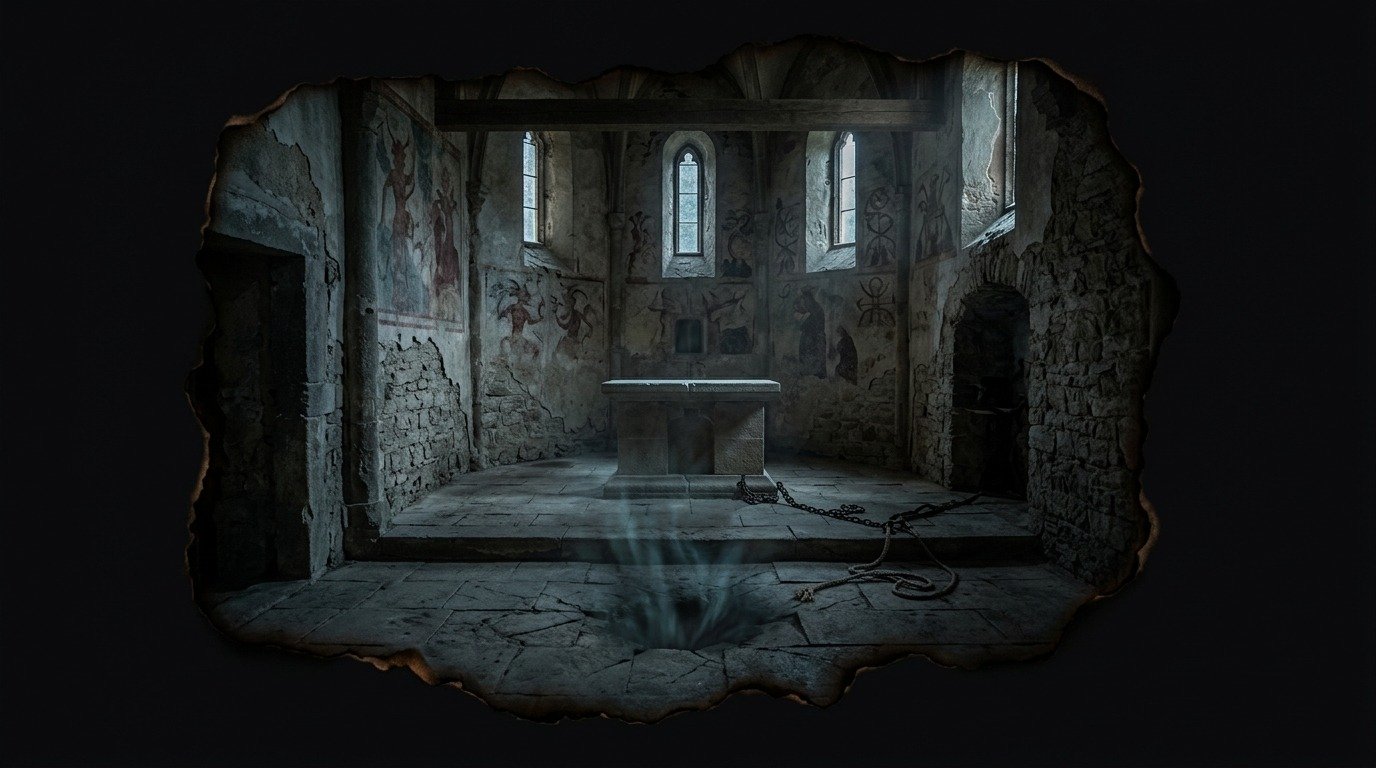
Houska Castle: the plug of the bottomless pit
The scream that aged a man
At the end of the 13th century, during the construction of Houska Castle, the nobles of Bohemia decided to conduct a heinous experiment. They summoned several prisoners sentenced to death and offered them absolute pardon in exchange for a single task: to let themselves be lowered by a rope and descend to the bottom of a rock crevice that seemed to have no end. The first volunteer, a young and strong man, accepted the deal. He had barely descended a few meters (yards) into the absolute darkness when the silence of the pit was shattered by screams of uncontrolled panic. Upon pulling him up immediately, the soldiers recoiled in horror: the prisoner's hair had turned completely white, and his face showed the wrinkles and wear of an eighty-year-old man. He died two days later without being able to utter a single coherent word.
The fortress without external enemies
Situated in the dense forests north of Prague, in the Czech Republic, Houska Castle is an absolute architectural anomaly. Built by order of King Ottokar II of Bohemia, the building lacks external defenses: it has no moats, is not near any strategic trade route, and has no drinking water supply or kitchens in its original design. The strangest thing is that all of its fortifications, guard posts, and loophole windows are oriented inward, pointing toward the castle's central courtyard, as if the real danger did not come from the outside, but from the very ground of the fortress.
The gateway to the underworld
Legend claims that Houska Castle was built with a single purpose: to serve as a physical plug over one of the mouths of Hell itself. The bottomless pit exhaled sulfurous vapors, and from it emerged creatures half-human and half-animal that devoured the surrounding livestock. To seal the portal, the builders erected the castle chapel directly over the cursed crevice, covering the temple walls with frescoes depicting demonic creatures and pagan figures, an unusual occurrence in Christian churches of the time. It is said that during World War II, the German occupation used the castle and that occult experiments were conducted there, attracted by the chapel's underground; a document proving this has never appeared, but the story is repeated on every guided tour.
The visions in the stone chapel
Tourists and researchers who visit the Houska chapel unanimously report a loud buzzing vibrating in their ears when standing in the center of the altar. Many people suffer from dizziness, fainting, and a sudden difficulty breathing in this area. The castle guards claim that during full moon nights, the figure of a monk dressed in a black habit with no face walks through the inner courtyard, while a pack of black dogs with glowing eyes runs around the walls before disappearing into the solid stone.
What is known
No one has ever found the crevice beneath the chapel, nor any record of the prisoner who turned gray in a single night: both stories live on in oral tradition. Historians explain the castle's strangeness differently: Houska was more of an administrative residence than a border fortress, and its position on a sandstone cliff gave it natural defense without the need for moats. For skeptics, the suggestion and the confinement of the chapel are enough to explain the dizziness and buzzing described by visitors.
The altar over the abyss
Silence reigns in the Houska chapel under the twilight light. Beneath the thick stone floor of the altar, the geological fault remains closed, holding the breath of a darkness that waits patiently for the stone to give way.
Comments
Share information, an experience, or a source to help enrich this entry. They are automatically reviewed before being published.
Loading comments...