Cagliostro
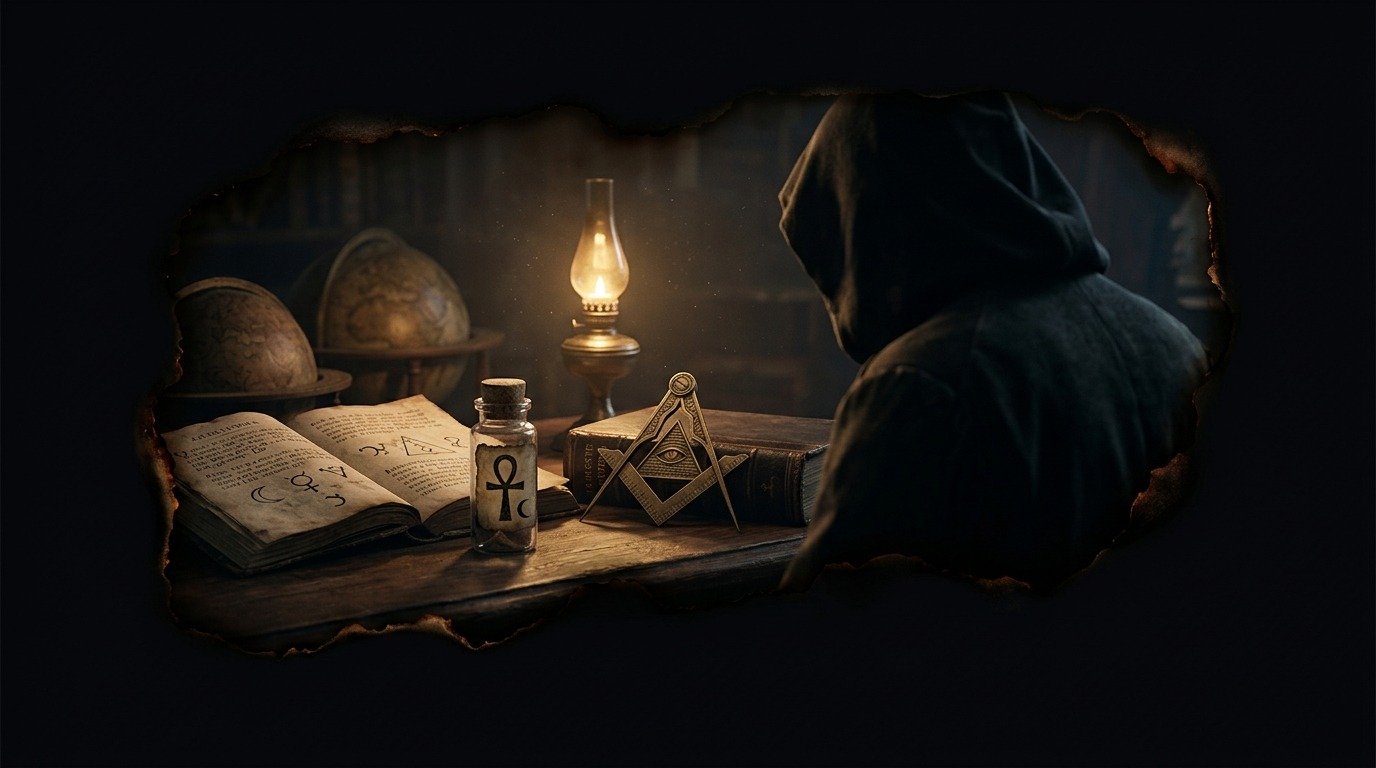
Cagliostro: The Great Copht of Alchemy and Esotericism
Who He Was
Count Alessandro di Cagliostro was an 18th-century Italian alchemist, healer, traveler, and Freemason. He founded the Egyptian Rite of Freemasonry and achieved notoriety throughout Europe for his free healings, his gifts of clairvoyance, and his indirect involvement in French political scandals that preceded the Revolution.
Life and Historical Journey
Historical research carried out by the Roman Inquisition established that Cagliostro's true name was Giuseppe Balsamo, born in Palermo, Sicily, on June 2, 1743, to a family of humble merchants. During his youth, he entered as a novice in the convent of the Brothers of Mercy in Caltagirone, where he acquired fundamental knowledge of botany, pharmacy, and medicine. He was expelled from the convent due to his rebellious behavior.
Around 1768, Balsamo married Lorenza Feliciani in Rome. Together with her, he traveled through Europe and the Near East using various aliases and forged letters of recommendation. In 1776, during a stay in London, Balsamo definitively adopted the title of Count Alessandro di Cagliostro and was initiated into Freemasonry in a London lodge.
In 1780, he settled in Strasbourg, where his fame as a philanthropic physician was consolidated thanks to his free healings of terminally ill patients using botanical preparations. His success earned him the protection of Cardinal Louis de Rohan, one of the most influential figures of the French court. In 1785, in Paris, Cagliostro became involved in the Affair of the Queen's Necklace. He was arrested and held in the Bastille for nine months. After a public trial that exposed the intrigues of the court, he was declared innocent and released to popular acclaim, but was banished from France by royal order.
In 1789, he made the mistake of traveling to Rome, a territory under strict papal jurisdiction that persecuted Freemasonry. On December 27 of that year, he was arrested by the Holy Office, denounced by his own wife under coercion. Prosecuted for the crime of Freemasonry and heresy, he was initially sentenced to death, a sentence that Pope Pius VI commuted to life imprisonment. He was imprisoned in the fortress of San Leo, where he died on August 26, 1795.
Doctrine and Esoteric Work
Cagliostro's main contribution to occultism was the **Egyptian Rite of Freemasonry**, which he developed starting in 1777 and whose mother lodge he founded in Lyon in 1784. This system admitted both men and women (the latter grouped in lodges of adoption directed by his wife, Lorenza, under the title of Grand Copht). Cagliostro proclaimed himself Grand Copht and designed a body of rituals aimed at achieving the physical and moral regeneration of the human being.
The Egyptian rite consisted of three degrees (Apprentice, Companion, and Master) and promised its initiates two types of regeneration:
1. **Physical regeneration**: A forty-day retreat in which the initiate followed a strict diet, received small doses of a special alchemical elixir, and experienced the loss of hair, teeth, and skin to completely rejuvenate the organism. 2. **Spiritual regeneration**: A theurgic process through which the initiate recovered the primal purity that humanity possessed before the Fall of Eden, obtaining the power to command astral spirits and intermediate angels.
Legends and Controversies
The central debate surrounding Cagliostro lies in the duality of his identity. While his followers revered him as a divine avatar with powers of transmutation and clairvoyance, his detractors and the official biography of the Church portrayed him as the criminal Giuseppe Balsamo, a professional swindler specializing in the forgery of documents, the sale of apocryphal elixires of youth, and the exploitation of the aristocracy's credulity.
In the phenomenal realm, he was credited with the practice of crystallomancy using children or youths as seers, whom he called "pupils." These children, after being magnetized by Cagliostro, would look into a glass of clear water and describe visions of the future or events happening thousands of miles away. He was also credited with the prophecy of the fall of the French monarchy and the destruction of the Bastille, written in an open letter from his exile in London in 1786.
Legacy and Influence
The figure of Cagliostro represents the crossroads of the Age of Enlightenment between rationalism and the resurgence of esotericism. His life and trials inspired works by first-rate literary creators, such as Johann Wolfgang von Goethe in his play *The Great Copht*, and Alexandre Dumas in his series of historical novels *Memoirs of a Physician*.
On the Masonic and mystical plane, his Egyptian rituals laid the foundation for the development of the Rite of Misraim (Egypt in Hebrew), which emerged in Italy at the beginning of the 19th century, and the Rite of Memphis, later unified as the Rite of Memphis-Misraim, which remains active today and preserves the theurgic and alchemical teachings of the Grand Copht.
Comments
Share information, an experience, or a source to help enrich this entry. They are automatically reviewed before being published.
Loading comments...