Baku
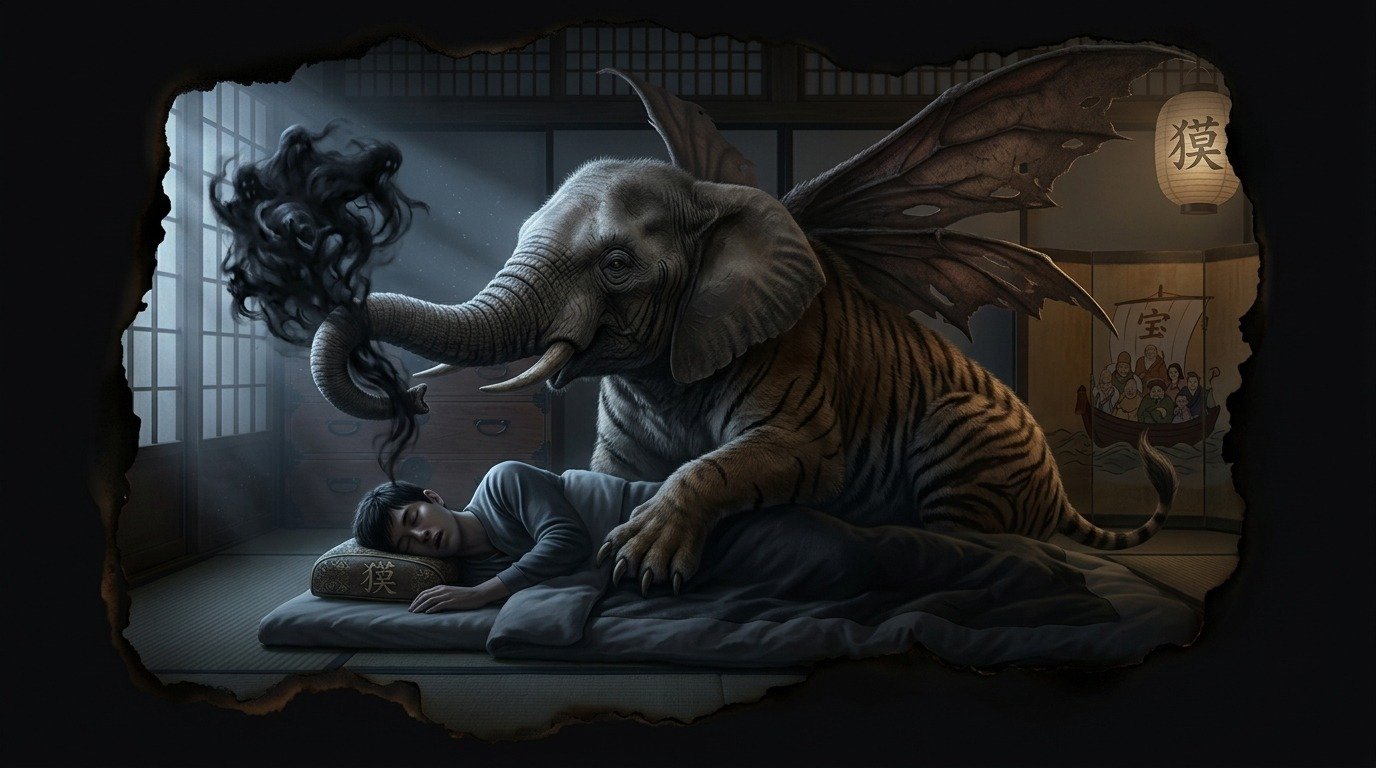
Baku: The Devourer of Chimeras and Nightmares
Chimerical Origin and Cultural Migration
The Baku (獏 or 貘) is a liminal entity whose origin is located in classical Chinese folklore (where it is known as *Mò*) before being assimilated and deeply integrated into the pantheon of Japanese *yōkai* during the Muromachi period (14th-16th centuries). In ancient Chinese texts, such as the *Shan Hai Jing* (Classic of Mountains and Seas), the creature was not initially associated with the dream plane, but was instead described as a sacred animal whose pelt possessed prophylactic properties capable of repelling pestilence, evil spirits, and harmful energy (*sha qi*).
Physically, the Baku is an absolute chimera. The traditional description compiled during the Edo period portrays it with the trunk of an elephant, the eyes of a rhinoceros, the claws of a tiger, and the tail of an ox. This anatomical fragmentation suggests that it was created from the remnants of divine clay left over after the creation of the other beasts of the earth. Upon migrating to Japan, its prophylactic function specialized exclusively in the ecology of the dream plane, becoming the devourer of *akumu* (nightmares).
The Office of the Devourer of Shadows
The operational dynamics of the Baku belong to the realm of sympathetic magic and nocturnal protection. When a sleeper is assaulted by terrifying visions, sleep paralysis, or dire premonitions, they wake up in the darkness and must utter the ritual invocation three times: *"Baku kurae"* ("Baku, devour my dream") or *"Baku ga rai"* ("May the Baku come").
Upon being summoned, the creature enters the sleeper's astral space through the exhalation of its breath and inhales the nightmare with its trunk, digesting the dense psychic energy that feeds the fear. However, this service carries a severe ontological risk: if the Baku is not satiated by the summoned nightmare, or if it is summoned without justification, it will proceed to devour the sleeper's desires, hopes, and beneficial memories, leaving them in a state of chronic existential emptiness known as "living death."
Esoteric Symbology and the Alchemy of Dreams
On the plane of inner alchemy and the esoteric mysticism of Esoteric Buddhism (*Shingon*), the Baku represents the transmutation of poison into medicine (*henboku*). It does not destroy the darkness of the subconscious; it consumes it to transmute it into spiritual fuel. The elephant trunk symbolically links it to Ganesha (Kangiten in Japan), the remover of obstacles and lord of thresholds.
The ideograms of the Baku and its image were frequently painted on the pillows of imperial court nobles and on the sails of the treasure ships of the Seven Lucky Gods (*Takarabune*) placed under the head during the first night of the New Year (*Hatsuyume*). This ensured that any ominous portents received during the night of cosmic transition were neutralized before manifesting on the physical plane.
Invocation and Safeguarding at the Astral Threshold
To work with the energy of the Baku from a sovereign perspective and avoid the emptying of one's own desires, one must proceed under a strict discipline of the astral body:
1. **The Amulet of the "Baku" Character (貘)**: The classical character is traced with purified ink on a piece of rice paper (*washi*) and placed under the mattress. This acts as a passive filter that only allows constructive dream energies to pass through. 2. **Precise Invocation**: The summons must only be made upon waking from an actual, destabilizing nightmare. It should not be summoned preventatively if there is no raw material (fear) to offer it. 3. **Return Offering**: Upon waking after a dream consumed by the Baku, the practitioner must perform a brief meditation of gratitude and visualization of white light, ensuring that the astral channel is closed immediately to prevent the collateral consumption of benign *ki*.
Comments
Share information, an experience, or a source to help enrich this entry. They are automatically reviewed before being published.
Loading comments...