Quirinus
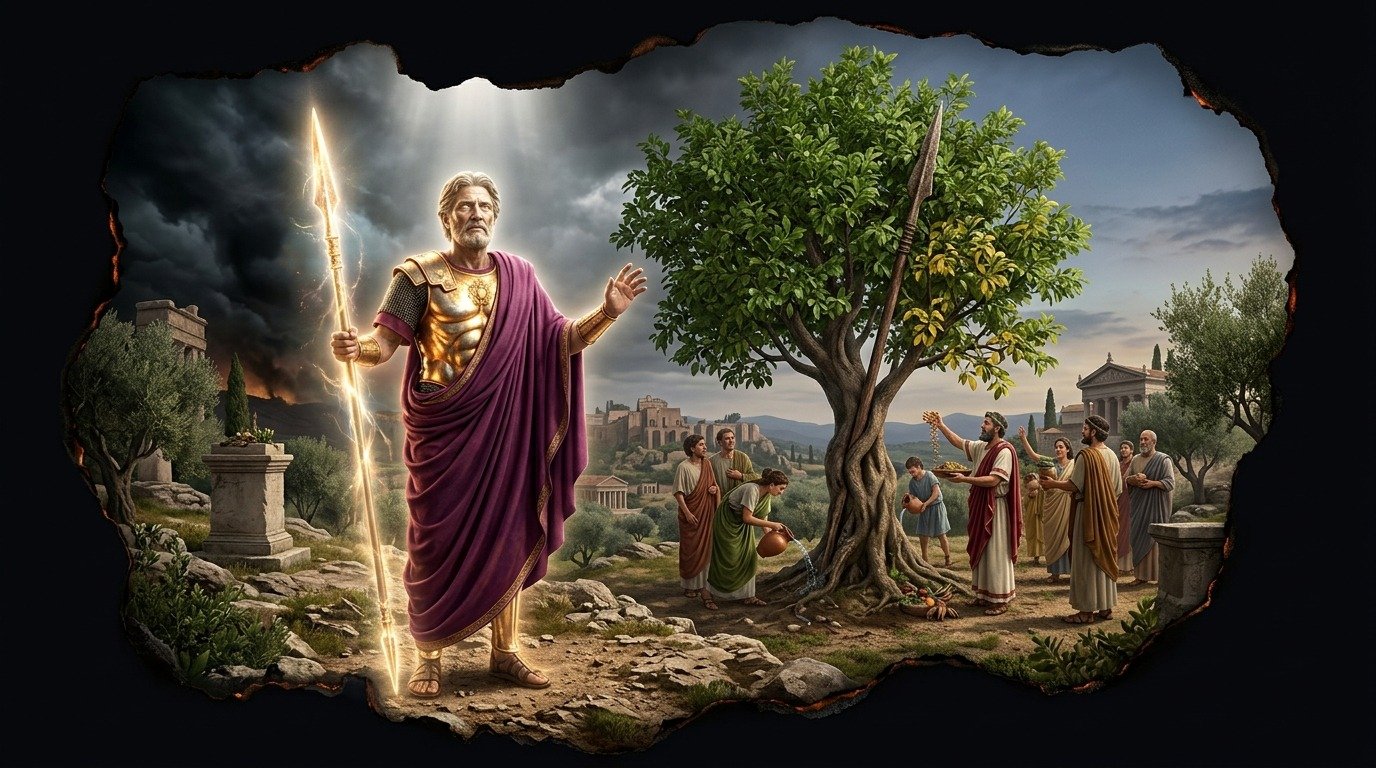
Quirinus: The Apotheosis of the Founder
The Ascent from the Storm
The plain of the Goat's Marsh was plunged into an unnatural darkness. It was not the usual twilight, but a storm of violent gusts and black clouds that seemed to have devoured the midday sun. In the midst of the whirlwind stood Romulus, the first king of Rome, surrounded by his terrified senators. When the wind died down and light returned to the earth, the wooden throne was empty. There was no trace of his body, not a drop of blood, nor a shred of his purple cloak. While the patricians whispered mutual accusations of regicide in the gloom, a resplendent figure descended from the heavens to meet the citizen Proculus Julius on the road of the Quirinal Hill. The apparition wore armor that blinded the eyes and carried a spear that vibrated with celestial power. He was no longer a mortal prone to anger; he was Quirinus, the divine transmutation of the founder, ascended to the order of the immortals to watch over his creation from on high.
The Third Pillar of the Quirinal
With his ascension, the god did not replace his heritage of blood, but transformed it. While his father, Mars, embodied unleashed violence, the fury of the legions marching beyond the borders, and the bronze that bites into flesh, Quirinus became the god of armed peace, the protector of the hill that bore his name. Thus was constituted the first great trinity of the State, the archaic triad: Jupiter ruled the cosmos, Mars external war, and Quirinus the internal cohesion and prosperity of the citizens, the *quirites*. Dressed not in battle armor, but in the toga of the magistrate beneath which the weight of chainmail could be discerned, Quirinus personified the latent strength of the Roman people when they laid down their swords to wield the plow and the law, always ready to remind them that peace is only maintained if one is willing to defend it.
The Spear That Takes Root
The most sacred symbol of his presence on earth was an ancient spear kept in his temple on the Quirinal Hill. Legend recalled that, in the days of his mortal youth, Romulus had thrown that shaft with such force from the Palatine Hill that it drove deep into the ground of the Quirinal. No man, no matter how strong, managed to pull it out. With the passing of the seasons, the dead wood of the spear began to sprout, covering itself with green leaves and turning into a robust cornel tree. The sacred tree grew strong and leafy, linking the destiny of the city to the health of its roots. If the leaves yellowed, all of Rome trembled and the citizens rushed with vessels of pure water to quench the plant's thirst, knowing that the stability of the State depended on the firmness with which the god's weapon remained planted in the earth.
The Guardian of Civil Peace
The cult of Quirinus was entrusted to the *Flamen Quirinalis*, one of the three major priests of the city, who performed rites that would have seemed strange to frontier generals. On his festival, the Quirinalia, the Romans celebrated the "Feast of Fools," the last day on which those who had forgotten the correct date to toast their grain could do so under the benevolent gaze of the god. The flamen also officiated sacrifices alongside the deity Robigo to protect crops from mildew and rust, showing that the ancient warrior king now cared for the bread of his children. Quirinus remained in the heart of Rome as a constant reminder that an empire is not only won by the sword abroad, but is sustained by order, labor, and sacred concord within its own walls.
Comments
Share information, an experience, or a source to help enrich this entry. They are automatically reviewed before being published.
Loading comments...