Neptune
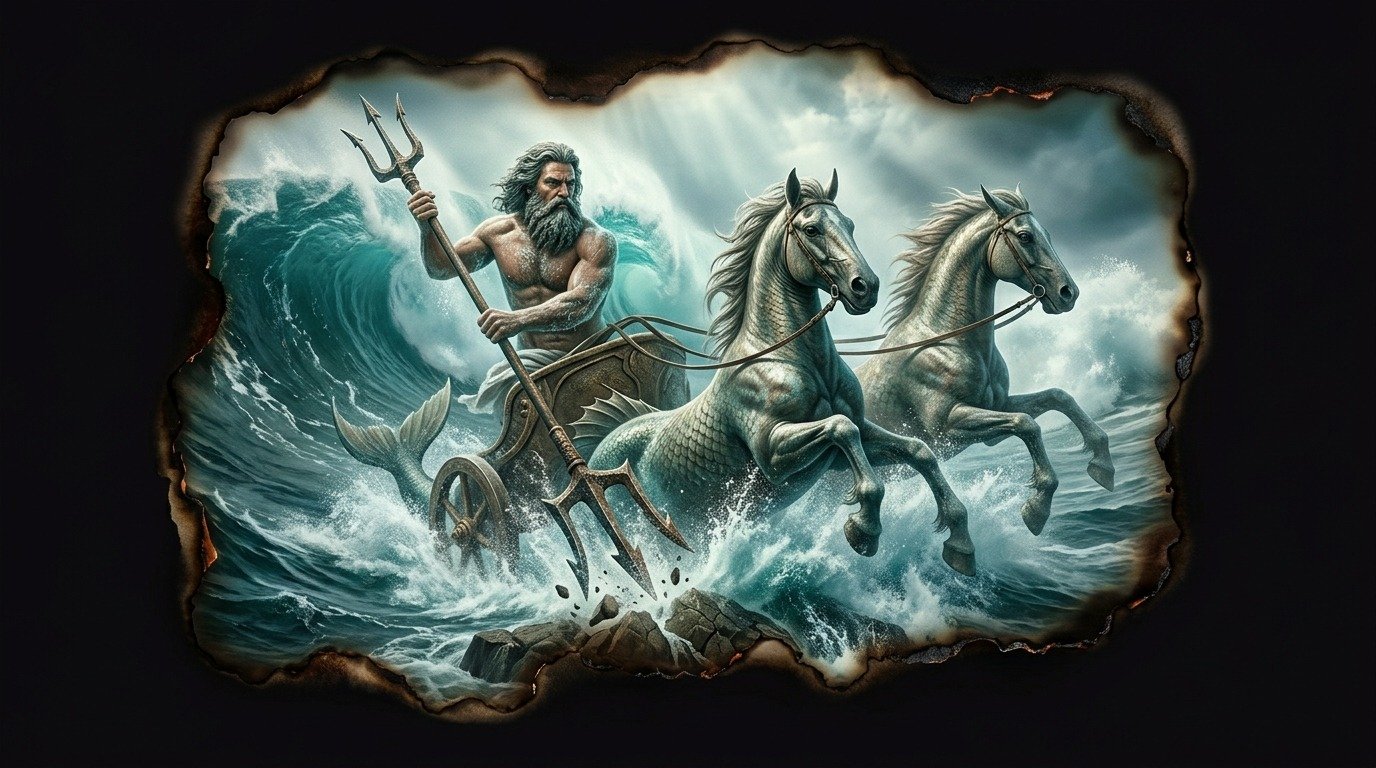
Neptune: The Gallop of the Liquid Abyss
The Lord of the Sleeping Waves
Before claiming the empire of the oceans, Neptune was the lord of fresh waters, the guardian of springs, sources, and rivers that brought life back to the thirsty lands of Latium. In the height of summer, when the sun scorched the fields and crops threatened to wither, the Romans celebrated the Neptunalia, building huts of green branches to shelter themselves from the heat and thank the god for the freshness of the underground streams that gushed from the heart of the earth. Over time, his dominion expanded to embrace the immensity of the sea. Neptune became the sovereign of the salty depths, a deity with a temperament as changeable and violent as the ocean itself. His palace of coral and seashells is hidden in the abysses where sunlight never penetrates, and from there he rules the relentless currents, abyssal monsters, and the dead calms that drive sailors to despair.
The Trident That Shakes the Ground
The undisputed symbol of his power is the trident, a three-pronged weapon with which he can cleave the waves or calm the most furious tempest. But the strike of his trident does not only affect the water; Neptune is also the one who shakes the earth from below. When he drives his steel into the seabed or the roots of the mountains, the ground trembles, city walls crack, and cliffs collapse into the sea. This telluric power makes him a feared god, who must be appeased before undertaking any voyage or laying the foundations of any port. His connection to brute force and speed is manifested in his most beloved creation: the horse. Neptune is the patron of equines and chariot races. It was said that the first horses emerged from the sea foam struck by his trident, and for this reason the Romans consecrated the games of the circus in his honor, where the frenzied gallop of the chariots imitated the onslaught of the waves crashing against the coast.
The Pact of the Depths
Navigating Neptune's waters was an act of audacity that required humility. Roman sailors and generals never set sail without first throwing offerings of gold or black bulls into the waves, begging for the god's favor so that the currents would be propitious to them. His figure is that of a colossus with a thick beard and salt-sprinkled hair, whose chariots drawn by hippocamps—creatures half horse, half fish—ride the crests of the waves with a speed that defies the wind. Neptune represents the untamed frontier of the world, a constant reminder that, no matter how powerful earthly empires may be, there will always be a liquid abyss that obeys only the will of his trident.
Comments
Share information, an experience, or a source to help enrich this entry. They are automatically reviewed before being published.
Loading comments...