Pluto
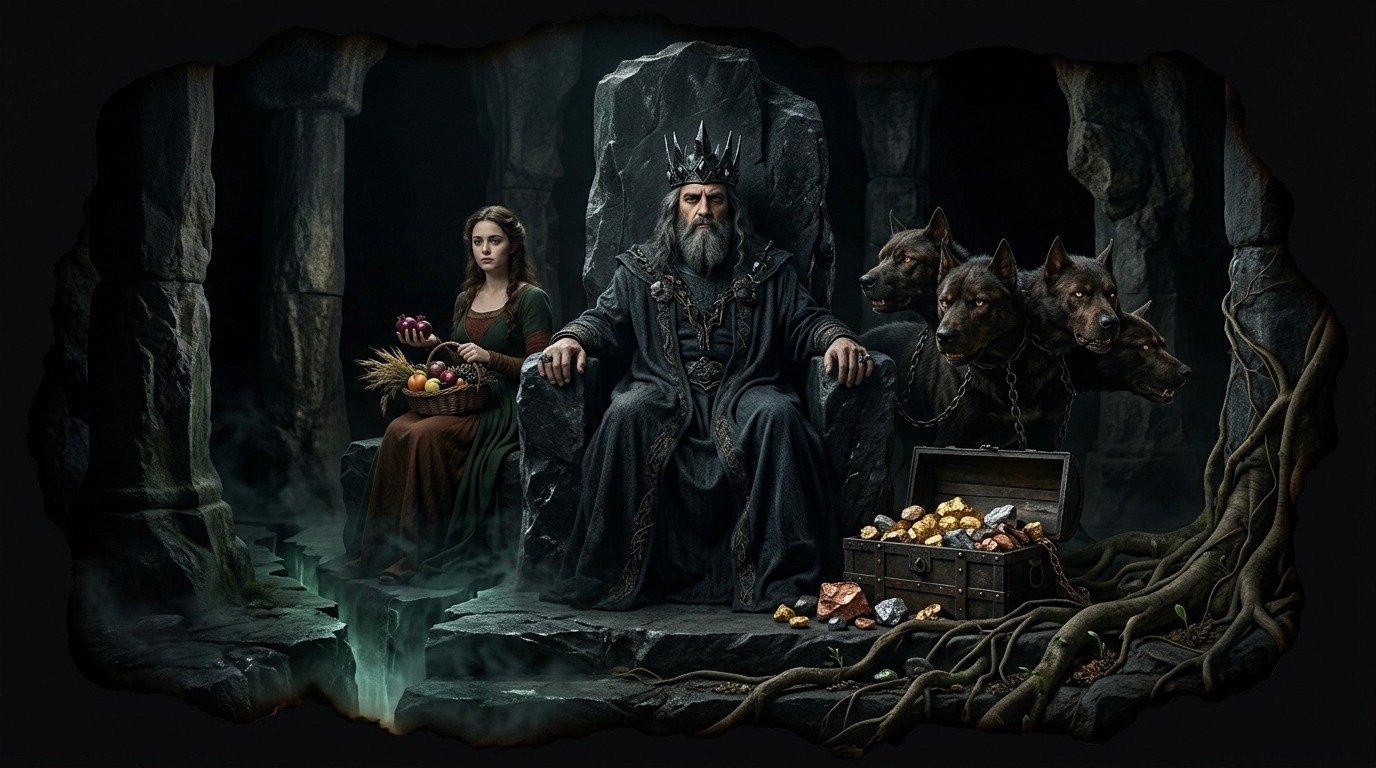
Pluto: the lord of invisible riches
The crown of shadows
In the twilight of the underworld, where the currents of the River Styx mark the boundary of mortal existence, stands the throne of Pluto. Unlike other deities of death, cold and destructive, Pluto is a stern but just ruler, the administrator of an inevitable realm that all living beings will reach sooner or later. His domain is not a place of eternal punishment, but the final rest of souls, a territory of silent shadows where time has no meaning. His crown does not shine with the gold of the sun, but with the dark gleam of obsidian and black iron. Pluto's face is expressionless, marked by the immutability of one who knows that the ultimate destiny of the universe works in his favor. He does not need to wage war or demand devotion through fear; it is enough for him to wait on his stone throne, flanked by Cerberus, the three-headed dog who ensures that no soul escapes his silent embrace.
The treasure of the earth's depths
The name of Pluto evokes abundance. He is not only the lord of the dead, but the absolute owner of everything that lies hidden beneath the earth's crust. From his domains spring precious metals—gold, silver, bronze—with which men trade and forge empires, but also the minerals that nourish the roots of trees and allow vegetation to flourish. He is the "Rich Father" (*Dis Pater*), the custodian of the invisible riches that sustain life on the surface. Each seed that falls to the earth and disappears into the darkness of the soil enters the realm of Pluto. There, in the silence of the depths, the god protects and transforms it, allowing it to germinate and return to the light converted into food. Thus, his power closely unites death with regeneration, proving that in the order of the universe, the end of one thing is always the beginning of another.
The abduction of spring
The myth that defines his existence is his union with Proserpina, the daughter of the earth. Consumed by the loneliness of his realm of shadows, Pluto emerged from a crack in the ground in his chariot of black horses and carried her away with him to the depths. This act unleashed despair in the upper world, forcing a sacred pact: Proserpina would spend part of the year in the underworld with her husband and another on the surface with her mother. This agreement gave rise to the seasons of the year. When Proserpina descends to Pluto's throne, the earth cools and enters the sleep of winter; when she returns to the surface, spring bursts into color. Pluto, therefore, is not the enemy of life, but the guardian of its necessary cycle, the husband who shares with spring the secret that life needs the darkness of the earth to be able to be reborn with greater strength.
Comments
Share information, an experience, or a source to help enrich this entry. They are automatically reviewed before being published.
Loading comments...