Pachamama
Pachamama: The Stone Skin That Beats Beneath the Ground
The Mother Who Bears the Weight of the World
Pachamama is not simply a goddess who walks upon the earth; she *is* the earth itself. She is the stone skin of the mountains, the clay soil of the valleys, the abyss of the gorges, and the dark dampness of the caves. She has no human face that can be carved into a wooden statue, nor can she be enclosed within the walls of a temple built by mortal hands. Her body is the immensity of the Andes, and every hill is a fold of her mantle, every river is a vein through which her blood of fresh water flows, and every tremor is the beating of her heart of rock shuddering in the depths. Born at the beginning of time, before the sun lit the day, she is the eternal mother who welcomes seeds into her womb so they may become food, and she is also the final womb that receives the bodies of men when death arrives. Her presence is constant, silent, and absolute: no one can take a step in the world without treading upon the body of Pachamama.
The Sacred Hunger of the Earth
Pachamama's domain is that of sustenance and reciprocity. She is not a benevolent and passive deity who gives away her fruits without asking for anything in return; the earth is hungry and thirsty, and she demands to be fed to maintain the balance of the world. If men take corn, potatoes, water, and minerals from her, they must return a portion of that wealth as a sign of respect. This principle, *ayni*, is the fundamental law that governs life in the Andes. When this pact of reciprocity is ignored, when the soil is exploited with greed or water sources are polluted, Pachamama shows her fearsome face. Crops rot in the fields, droughts crack the valleys, and the earth trembles with a dull fury that crumbles mountain slopes and buries the villages of those who forgot gratitude.
The Well of Offerings and the Murmur of Chicha
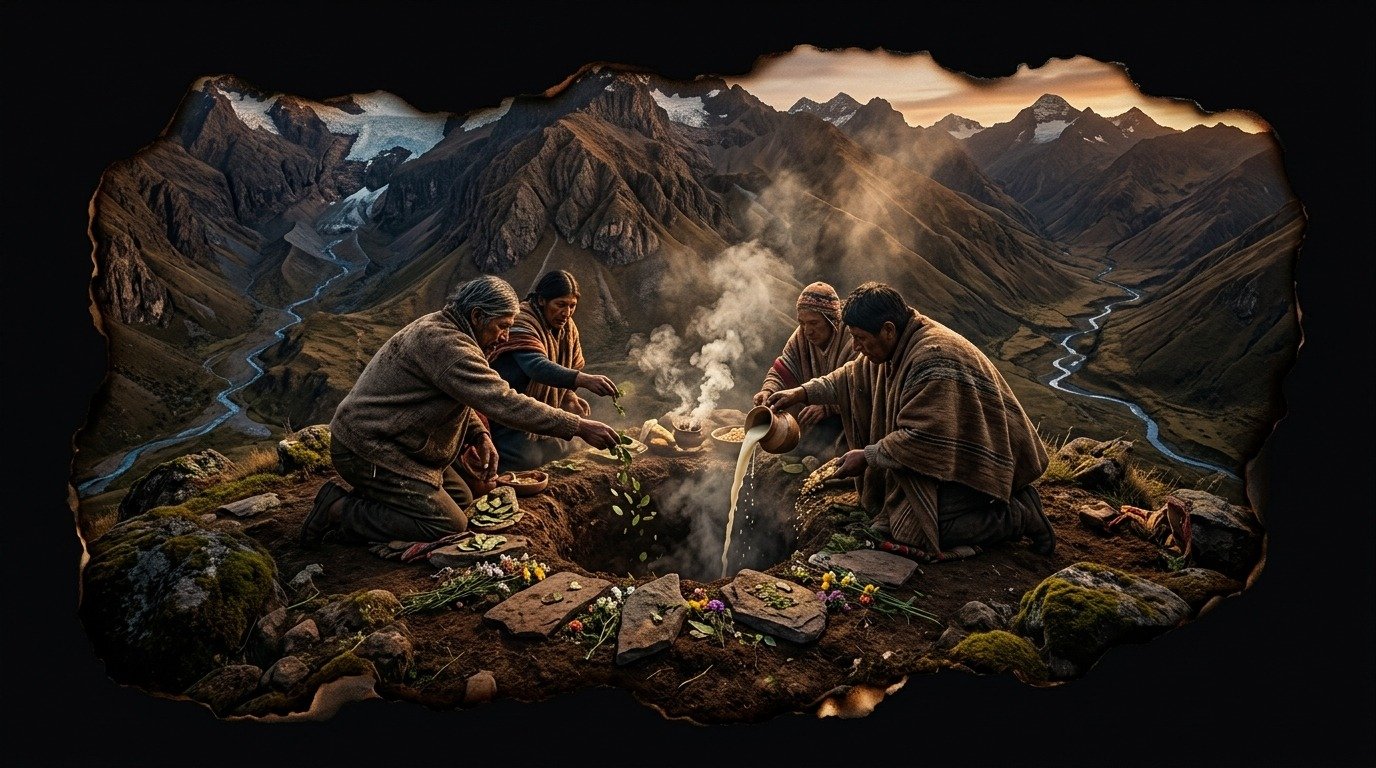
The ceremony that defines the relationship with Pachamama is the *corpachada*, the act of feeding mother earth. In the month of August, when the earth opens to begin the planting cycle, Andean communities dig a deep well in the fertile soil. It is not a grave, but an open mouth toward the womb of the world. Men and women kneel before the well and offer her the best of their harvests: coca leaves selected one by one, toasted corn, sacred llama fat, and generous pours of *chicha de jora*. While the smoke of incense and copal resin rises to the sky, prayers are directed to the ground in a low murmur that mimics the sound of the wind among the stones. "Pachamama, holy mother, receive this food and this drink so that the earth may be good, so that the livestock may multiply, and so that your children do not suffer from hunger." Only after the mother has been satiated is the well closed with flat stones and wild flowers, and the soil can begin to be plowed with the certainty that the year will bring abundance.
The Mistress of Circular Time
Pachamama has survived all the storms of history. When the temples of the other gods were destroyed and the sacred *huacas* were desecrated, she remained intact because no one can destroy the ground upon which they walk. She dressed herself in the mantles of Christian saints to continue receiving the prayers of her people in secret, but her essence never changed. She remains the presence that shepherds invoke in the lonely *punas*, the warmth that springs from the ground on cold nights, and the certainty that everything that comes from the earth must, sooner or later, return to her embrace of stone.
Comments
Share information, an experience, or a source to help enrich this entry. They are automatically reviewed before being published.
Loading comments...