The Sídhe
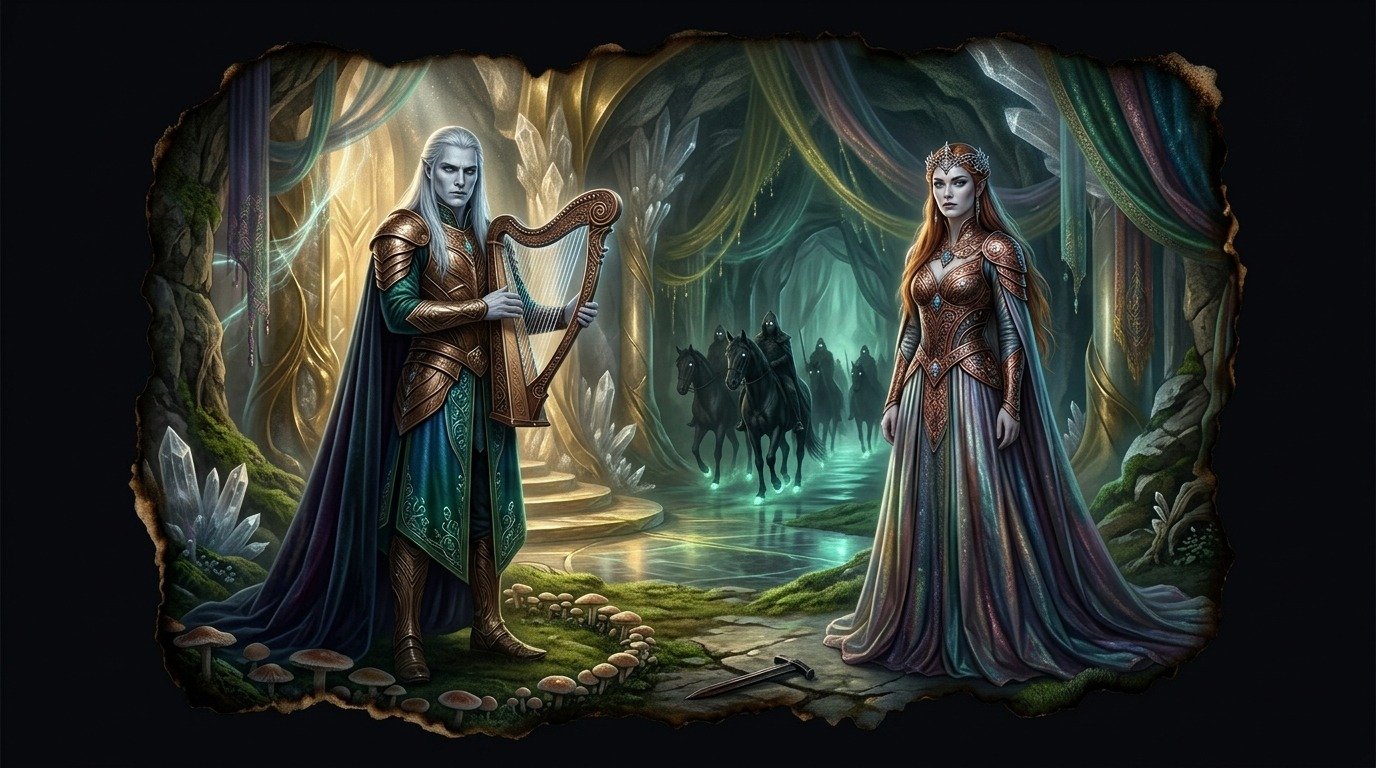
The Sídhe: the lords of twilight beneath the hills
The people of the mounds
Before stone temples crumbled and maps divided the land with lines of ink, they already ruled. They are not benevolent elves nor demons of sulfur; they are the aristocracy of the Otherworld, the ancient gods who agreed to retreat into the twilight when the men of iron landed on their shores. The Sídhe dwell beneath the green mounds, in palaces of glass and gold that exist in the folds of space, where time runs slow as honey or fast as a flash of lightning. Anyone who walks beside a lonely hill during twilight can hear the echo of their harps, a sound so beautiful that it withers the desire to return home.
Their appearance is that of men and women of unbearable beauty, tall, pale, and with a gaze as cold as winter frost. They do not wear rags of leaves, but silks of colors impossible to dye by human hands and polished bronze armor that reflects a light that does not come from the sun. Although they walk among us, their feet barely bend the blades of grass and their breath lacks the warmth of life.
Music in the mist and the royal court
The existence of the Sídhe is divided into two great courts that rule the seasons. The Luminous Court rules the warm months; they are capricious but magnanimous, capable of blessing a harvest or curing an illness if they are respected, though their generosity always hides a double-edged trap. The Dark Court, on the other hand, rides during winter nights. It is then that the Wild Hunt is heard: the gallop of their black horses with eyes of fire, whose hooves make no sound when striking the ground. Anyone who looks them directly in the eye during these processions risks being dragged away with them, condemned to ride for all eternity as a shadow without memory.
When a Sídhe takes a fancy to a mortal, the outcome is usually tragic. Their love is possessive and lethal; a bard who agrees to spend a night in their dreamlike halls will awaken in the real world turned into a decrepit old man, discovering that his relatives died centuries ago. There is no mercy in their nature, only a perfect aesthetic and an icy indifference toward the brevity of human life.
The pact of distance
To survive the proximity of the Sídhe, the peasants learned never to utter their true names. They are called "The Good People" or "The Silent Neighbors", not out of affection, but to avoid attracting their attention. Their presence is heralded by a sudden change in the wind, a scent of fresh apples in the middle of winter, or an unnatural silence in the forest, where the birds suddenly fall silent.
The only protection against their power is cold iron, an element they abhor because it represents rigidity and the death of magic. Placing a horseshoe on the door lintel or wearing a jacket inside out are the few defenses available to the common man. If a circle of mushrooms is found in the meadow, the rule is clear: one must never cross the boundary of the ring, for it is the ballroom where the Sídhe wear down the souls of the unwary until they turn into stardust.
Comments
Share information, an experience, or a source to help enrich this entry. They are automatically reviewed before being published.
Loading comments...