Changeling
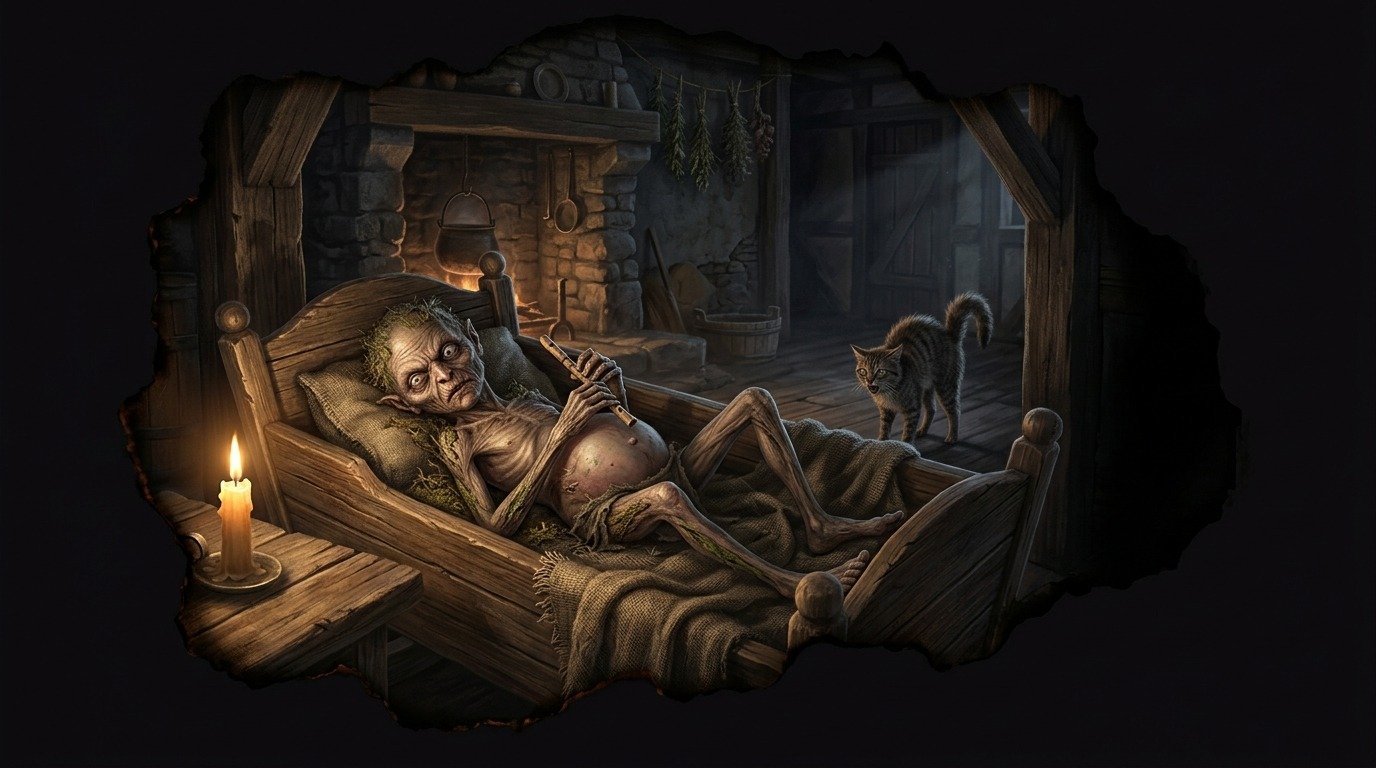
Changeling: The Usurping Whisper in the Cradle
The Silent Barter in the Gloom
Suspicion always begins with a sudden silence, or worse yet, with a cry that does not belong to this world. A mother steps away from the cradle just long enough to take the bread out of the oven or to fetch water from the well; the candle flickers without wind, the house cat arches its back under the table, and when she returns, the child she left is no longer there. In its place is an almost exact replica, a hastily fashioned imitation made from dead wood, moss, and the enchantment of the hill folk. The true child has been taken to the Hidden Kingdom, sometimes to renew the withered blood of the invisible ones, sometimes to serve as a toy in their mother-of-pearl halls, leaving behind a hungry and alien creature that men call a changeling. This abduction is not an act of capricious cruelty, but a biological necessity of the subterranean courts. The fairy lineage, though long-lived and possessing a beauty that hurts the eyes, suffers from a secret weakness: their blood grows stale over the centuries and their own offspring are born weak, deformed, or mute. To prevent the extinction of their grace, they covet the robustness of human infants, the warmth of their milk, and the strength of their mortal heritage. The substitute they leave in the cradle is a shell that quickly withers, or else an ancient, useless fairy who wishes to spend its final days being suckled and pampered by the warmth of a human home.
The Physiognomy of the Impostor
At first, the change is subtle. The baby seems to have contracted a mild fever, or perhaps its features have sharpened overnight. However, as the days pass, the illusion begins to crack. The changeling does not grow; its limbs remain thin as grapevine shoots, while its belly swells, driven by an appetite that no larder can satisfy. It devours entire loaves of bread, pots of porridge, and jugs of milk with a greed that repulses, yet its body still looks like that of a malnourished specter. Those who closely observe the usurping child discover details that curdle the blood. Its eyes do not have the vague innocence of infancy; they are bright, overly cunning sockets that follow the movements of adults with a cold, calculating malice. If left alone in a room, the incessant crying stops all at once; if someone peeks through the crack of the door, they can see it leap from the cradle with the agility of an otter, dance on the ceiling beams, or play a devilish tune on a reed flute it kept hidden in its diapers. It possesses the wisdom of three human lifetimes and the bitterness of an old man who knows his time is running out, but as soon as it hears the latch, it leaps back into its blanket and bursts into tears with a deafening shriek that grates on the nerves of the entire village.
The Unmasking and the Fire
To recover the true child, the community must resort to a war of wits against the impostor. The changeling fears exposure; if it is discovered, the enchantment is broken and its relatives from the hill are forced to return the stolen child to save their own. The oldest method consists of astonishing the creature to force it to reveal its true age. Eggshells are emptied and set to boil filled with water in front of the fireplace; the impostor, unable to contain its curiosity at such an absurdity, will speak with the deep voice of an old man: "I have seen the first forest grow, I have seen the first sea dry up, but I never saw cooking in eggshells." If words are not enough, they resort to the cruelty of iron and fire, the two great weaknesses of the fae lineage. Placing a red-hot iron shovel near its face or threatening to throw it into the embers of the hearth awakens the panic of the usurper. In the proximity of the purifying fire, the changeling does not burn; instead, it emits a shriek that tears through the air, climbs up the chimney like soot, or flees through the window toward the moors. At that very instant, the cry of the true child is heard once more behind the door, damp with the dew of the hill, but often marked forever by the silence of having been on the other side of the veil.
Comments
Share information, an experience, or a source to help enrich this entry. They are automatically reviewed before being published.
Loading comments...