Genius Loci
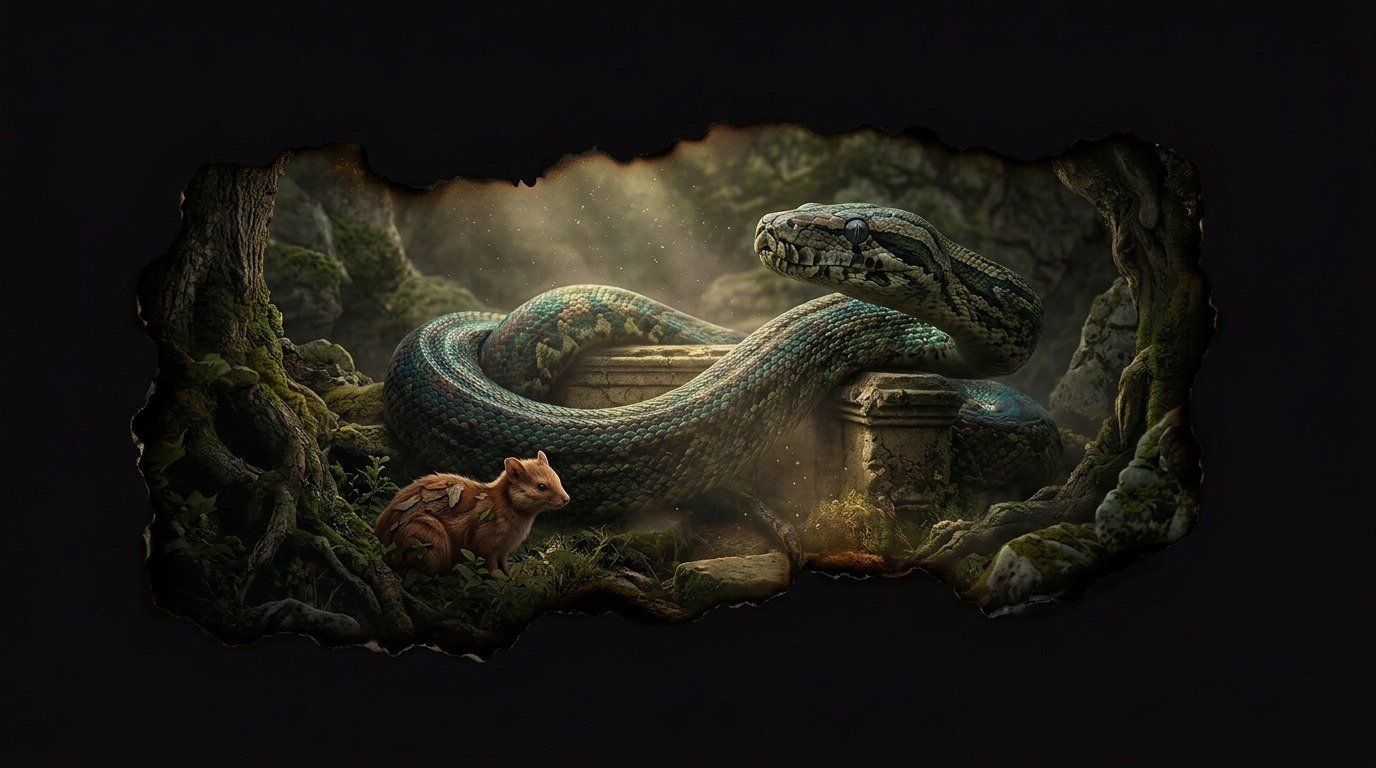
Genius Loci: The Invisible Memory of the Land
The Consciousness of Space
There are places where silence is not an absence of sound, but a watchful presence. It is not a ghost returning from the past, nor a goblin seeking refuge beneath the roots; it is the *Genius Loci*, the collective spirit, the very consciousness of a piece of land that has acquired individuality. A forest clearing, a windswept hill, the shadowy bend of a gorge, or the abandoned garden of a Roman villa have their own genius, an invisible entity that defines the character of that space and governs everything that grows, dies, or breathes within it.
The genius of the place is born from the accumulation of eras. It is the result of the wind brushing against the rocks, the decomposition of thousands of autumns, and the forgotten dreams of travelers who once rested there. In the antiquity of the Latin hills and Iberian valleys, it was known that the landscape was not an inert stage, but a living body. Entering a sacred grove without asking permission from the genius that inhabited it was considered an act of desecration as grave as storming a stone temple, for the entire territory reacted to the intruder.
Serpent, Shadow, and Silence
The *Genius Loci* rarely shows itself in an anthropomorphic form. When it decides to make itself visible to human eyes, it usually takes the form of a creature that symbolizes an intimate connection with the depths of the earth: a snake with shimmering scales sliding between the cracks of a ruined altar, or an animal with unusual fur watching from the edge of the undergrowth and disappearing in the blink of an eye. On other occasions, its manifestation is purely atmospheric.
It is the inexplicably warm draft of air that caresses your face as you cross a stone threshold; it is the sudden sense of peace that invites you to sleep on the grass, or, conversely, a sudden chill on the back of your neck warning you to leave immediately. The genius of the place is responsible for making certain spots naturally welcoming, while others, for no apparent physical reason, inspire an instinctive dread that urges travelers to quicken their pace. A place that has been wronged by human greed or violence becomes barren and hostile, as its genius falls ill or withdraws, leaving behind an empty and forsaken space.
The Pact of the Threshold
The relationship with these entities is not based on religious worship, but on elementary diplomacy. Before building a house, driving a plow into the earth, or diverting the course of a stream, ancient builders made libations of wine, milk, or honey to appease the genius of the place. It was a pact of mutual hospitality: humans respected the boundaries of the territory, and the genius guaranteed the stability of the foundations, the fertility of the garden, and protection against storms.
Today, though stripped of its altars and ancient names, the *Genius Loci* survives in the corners that civilization has not managed to fully domesticate. It still dwells in the cellars of old mansions where the dust of several generations accumulates, on mountain paths that seem to change direction when the fog rolls in, and in the ancient trees that hold up the sky in the squares of forgotten towns. The attentive traveler knows that, upon arriving at a new place, it is always wise to keep a moment of silence; it is the greeting owed to the invisible master of the house.
Comments
Share information, an experience, or a source to help enrich this entry. They are automatically reviewed before being published.
Loading comments...