Gnome
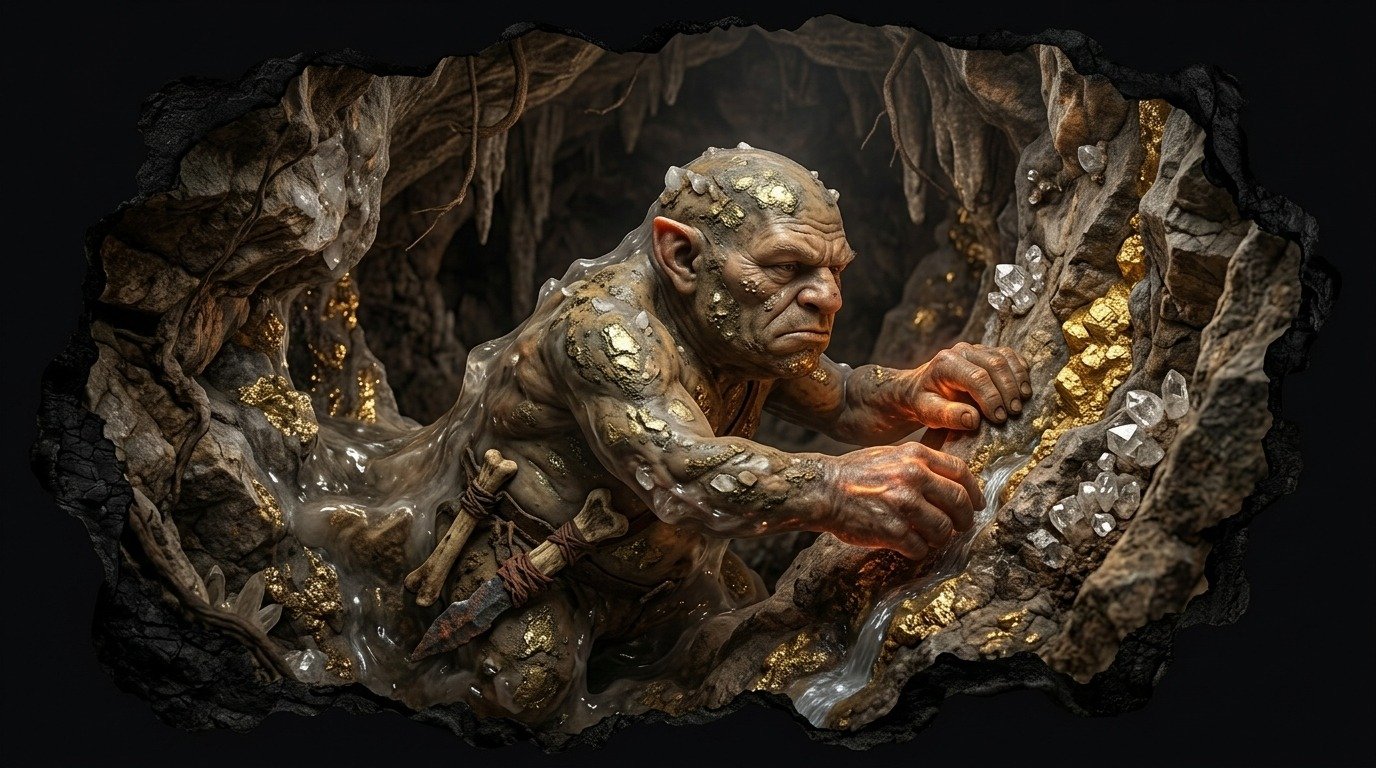
Gnome: The Guardian of the Veins of the Earth
The Inhabitants of the Dense Rock
In the ordering of the occult forces of nature conceived by Paracelsus, the universe is supported by four elemental pillars, and the densest of them is earth. Gnomes—or pygmies, as the Swiss physician and alchemist also called them—are the undisputed sovereigns of this realm of rock, metal, and roots. These beings must not be confused with the dwarves of Germanic folklore or the decorative figures of modern gardens; the Paracelsian gnome is an entity of a unique physical and spiritual nature, whose main characteristic is its ability to move through solid stone with the same fluidity with which a fish cuts through water or a bird glides through the air.
For a gnome, rock is not a solid obstacle, but its natural medium, a transparent and passable space. Its body, though short in stature and robust in appearance, is endowed with a shifting density. They can condense themselves until they become as hard as the granite that surrounds them, or subtilize themselves to slip through the most microscopic crack in a quartz vein. Their clothing is not made of fabric, but is an extension of their own clay-like skin, often gleaming with the patina of dried mud or the metallic reflection of pyrite.
The Alchemy of the Underworld and the Growth of Metal
The task of gnomes in the cosmic economy is that of guardians and cultivators of subterranean riches. For Hermetic philosophy, metals and precious stones are not inert elements, but "fruits" that grow slowly in the womb of the earth, nourished by the planet's central heat. Gnomes are the farmers of this invisible garden. They clean impurities from veins of gold, direct underground water currents to temper silver deposits, and protect nests of diamonds from disruptive external forces.
They have an extremely serious, melancholic, and reserved character. They are tireless workers, but their industriousness does not arise from ambition, but from a deep sense of duty toward the structure of the world. They rarely show themselves to human beings, whom they consider superficial and noisy creatures who desecrate the earth without understanding its sanctity. However, ancient miners and true alchemists knew that a gnome's favor was indispensable. A sharp tap on the walls of a gallery, the unusual flickering of a torch, or the falling of a small pebble were the signs with which a gnome warned of an imminent collapse or, conversely, guided the respectful miner's pickaxe toward a vein of pure ore.
The Soul Borrowed by Love
Despite their immense power over matter and their longevity, which far exceeds that of mortals, gnomes share the tragic condition of all Paracelsian elementals: they are born and die like the flowers of the field, without possessing an immortal soul. Their existence ends in total dissolution within their own element; when a gnome dies, it simply becomes a clod of earth or just another stone on the path.
The only way for a gnome to attain immortality and acquire a soul is through marriage to a human being. This bond, however, is extremely rare and dangerous. The human who unites with a gnome must submit to the laws of the earth, accepting a life of silence, darkness, and physical rigor. In exchange, the gnome will reveal the secrets of metallic transmutation and the location of the world's oldest treasures. But if the mortal consort betrays the elemental's trust or shows greed, the gnome's vengeance is implacable: the earth beneath the traitor's feet becomes as soft as swamp mud, swallowing them forever into the depths where neither sunlight nor the memory of the living can reach.
Comments
Share information, an experience, or a source to help enrich this entry. They are automatically reviewed before being published.
Loading comments...