The White Lady
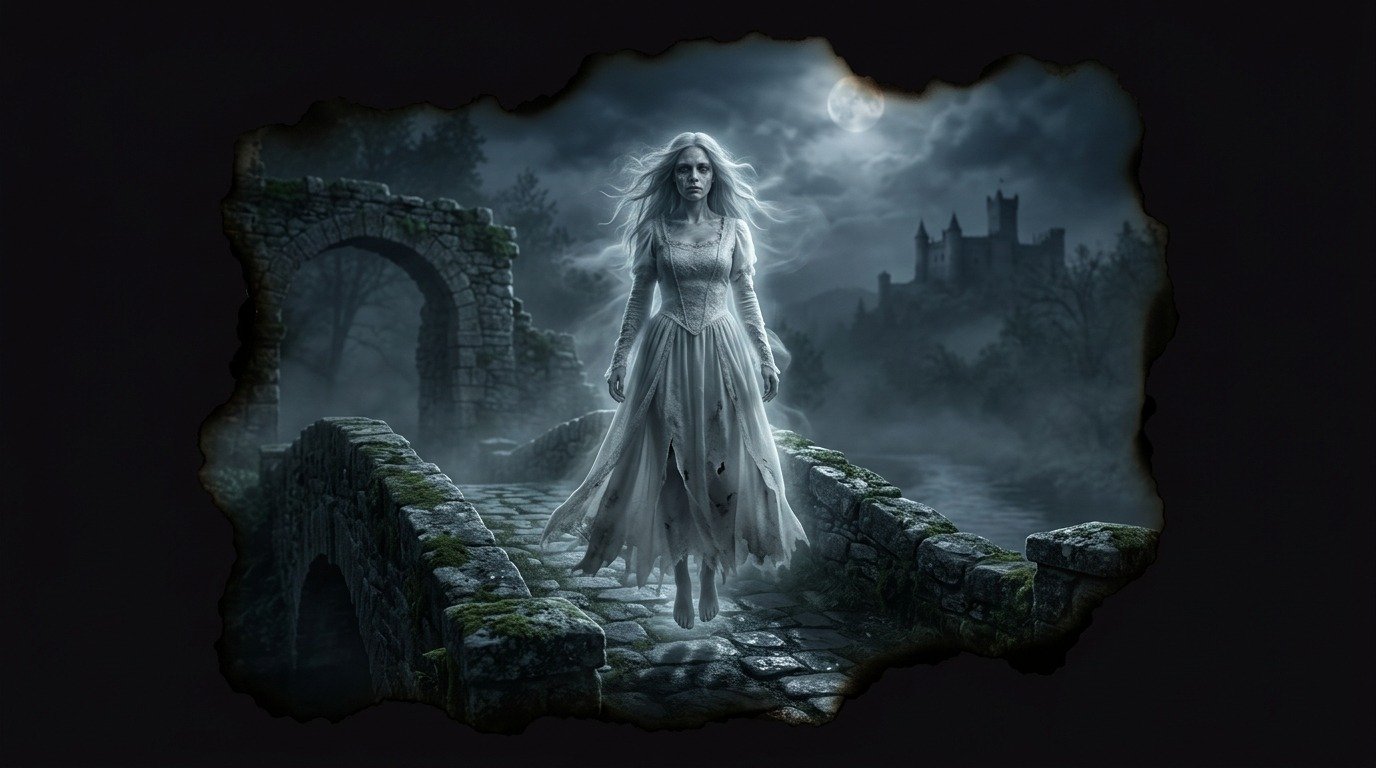
The White Lady: The Eternal Mourning of the Lost Soul
The Origin of the Pale Shroud
She does not belong to a single people, nor to a single dynasty, but her silhouette is identical in any corner of the world where pain has claimed a tribute of blood. The White Lady is, perhaps, the purest archetype of loss. Her roots sink deep into medieval European folklore, where she was linked to the deaths of royalty and the tragedies of great lineages. It was said that her appearance in the corridors of a castle was not an attack, but a grim omen, the announcement that the lord of the fortress was about to draw his last breath. Over the centuries, this specter descended from the battlemented towers to rural roads, stone bridges, and windswept cliffs. Her origin almost always tells of the same open wound: a bride abandoned at the altar, a mother stripped of her children, or a betrayed woman who preferred the embrace of the abyss over the humiliation of life.
The Atmosphere of the Apparition
Those who claim to have locked eyes with a White Lady describe an atmosphere that thickens before her arrival. The wind dies down completely, the chirping of crickets suddenly ceases, and an unnatural cold, chilling to the bone, descends upon the place. She does not walk; she floats a few inches off the ground, shrouded in a lace or silk dress that seems to emit a dying phosphorescence. Her face is usually veiled by a light mist or by her own disheveled hair, but when she allows herself to be seen, she reveals features of a breathtaking, marble-like beauty, marked by empty sockets or tears that glisten like frost under the moon. The encounter with her is rarely physically violent, but the weight of her sadness is capable of breaking the sanity of even the most temperate witness.
The Thousand Faces of Lost Purity
Throughout the geography of mystery, the White Lady adopts different names without losing her essence. In the Scottish Highlands, she is known as the harbinger of death for the clans; in the forests of Germany, she watches over the ruins of destroyed monasteries, trapped in a time loop of penance. In Latin America, her figure inevitably merges with the myth of La Llorona, dragging her garments along riverbanks in an eternal and futile search. Even in feudal Japan, under the name of Yuki-onna or the snow woman, she shares that same ghostly white that represents both the winter of nature and the cold of the grave. It is a reminder that human despair, when it reaches its boiling point, can remain imprinted forever on the fabric of reality.
Comments
Share information, an experience, or a source to help enrich this entry. They are automatically reviewed before being published.
Loading comments...