Dyatlov Pass incident
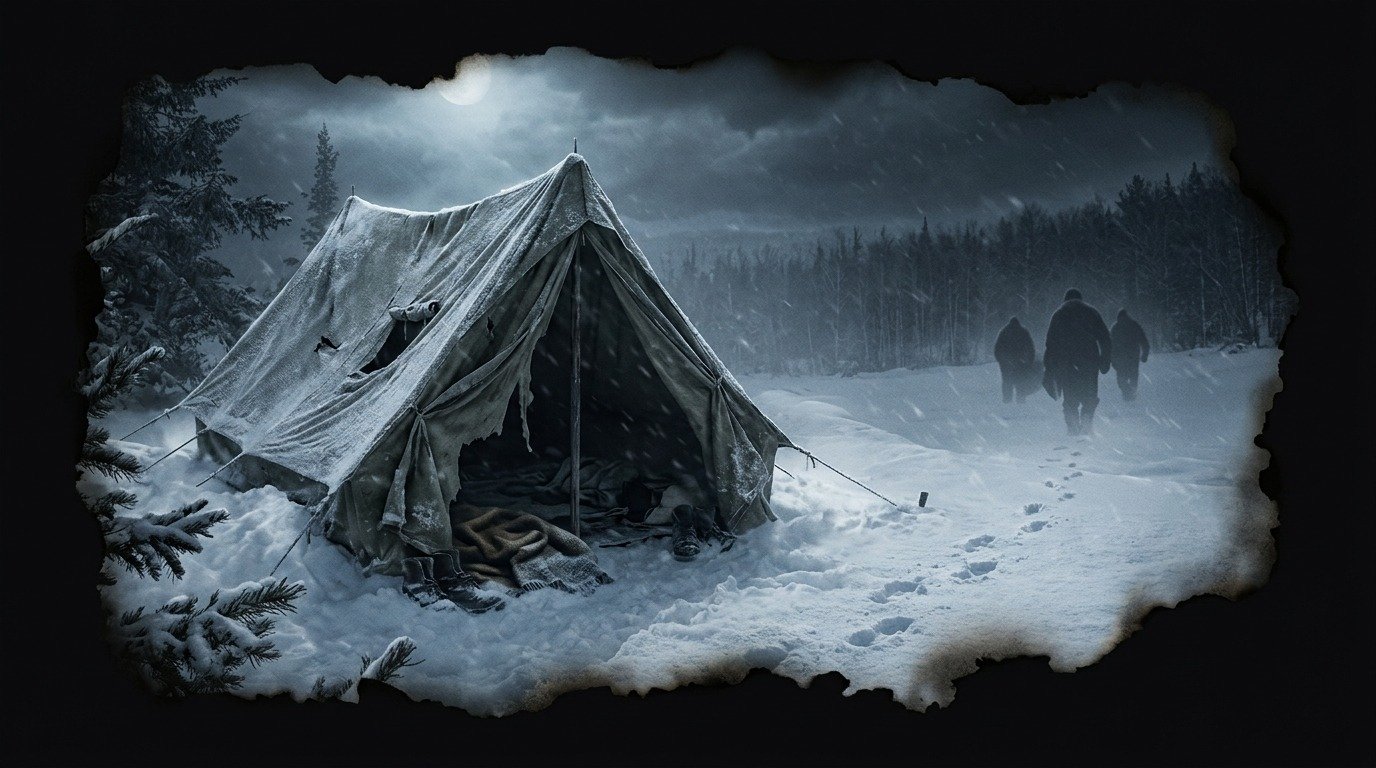
Dyatlov Pass incident: the inexplicable tragedy of the Urals
What happened
The Dyatlov Pass incident refers to the death of nine young Soviet hikers on the night of February 1 to 2, 1959, on the slope of Kholat Syakhl mountain, in the Ural Mountains. The group abandoned their tent in the middle of a freezing storm at temperatures of thirty degrees below zero Celsius (-22 °F), barefoot and half-naked, dying in the snow due to hypothermia and severe internal trauma that the official investigation attributed to a "compelling natural force."
The protagonists and the location
The group was made up of nine students and graduates of the Ural Polytechnic Institute (seven men and two women), led by Igor Dyatlov, an experienced 23-year-old mountain guide. The location of the event was the mountain pass on the slope of Kholat Syakhl (which in the language of the local Mansi indigenous group means "Dead Mountain"), in the Sverdlovsk region, Soviet Union.
The facts
The group began their expedition on January 25, 1959, with the goal of reaching Gora Otorten mountain. On February 1, due to worsening weather, they established their camp on the slope of Kholat Syakhl. Al not returning on the scheduled date, a rescue team was sent out and located the camp on February 26. They found the tent badly damaged, cut open from the inside with knives. All of the hikers' belongings, including their coats, boots, and survival gear, remained inside the tent. Following the footprints in the snow, the rescuers found the first five bodies one and a half kilometers (0.9 miles) from the tent, under a large pine tree at the edge of the forest. They were dressed only in underwear and socks. The remaining four bodies were found in May of the same year, buried under four meters (13 feet) of snow in a nearby creek. The forensic medical examination revealed that while the first five young people died strictly of hypothermia, three of those found in May showed massive internal injuries, equivalent to the force of a car crash: skull fractures and broken ribs, but with no external signs of violence or bruising on the skin. Subsequent analyses detected high levels of radiation on the clothing of some of the victims.
The investigation
The Soviet prosecutor's office immediately opened a criminal investigation. Hypotheses such as an attack by members of the Mansi indigenous group were considered, but this was ruled out as no footprints of other people were found in the snow other than those of the hikers themselves. The case was formally closed in May 1959 with the conclusion that the young people died due to a "compelling force of nature which they were unable to overcome." The file was classified, and access to the region remained prohibited for three years. In 2019, the Prosecutor General's Office of the Russian Federation reopened the case to conduct a modern technical review. The final report, supported by an avalanche simulation study published in 2021 by researchers from the Swiss Federal Institute of Technology in Lausanne (EPFL), determined that the primary cause of the tragedy was a slab avalanche. The slide struck the tent while the youth were sleeping, causing their bone fractures. Fearing that the structure would completely collapse and suffocate them, they cut the canvas to get out and descended toward the forest to seek temporary shelter, where extreme hypothermia ended their lives. Subsequent damage to the bodies found in the creek was attributed to the months they spent under the snow and water.
The legacy
The Dyatlov Pass incident is one of the greatest mysteries of the 20th century and has generated hundreds of conspiracy theories about secret military tests, infrasound weapons, UFO sightings in the area, and attacks by the Ural "Yeti." The pass was officially named "Dyatlov Pass" in honor of the group's leader. The event has been the subject of numerous documentaries, investigative books, and film adaptations.
Comments
Share information, an experience, or a source to help enrich this entry. They are automatically reviewed before being published.
Loading comments...