Mary Celeste
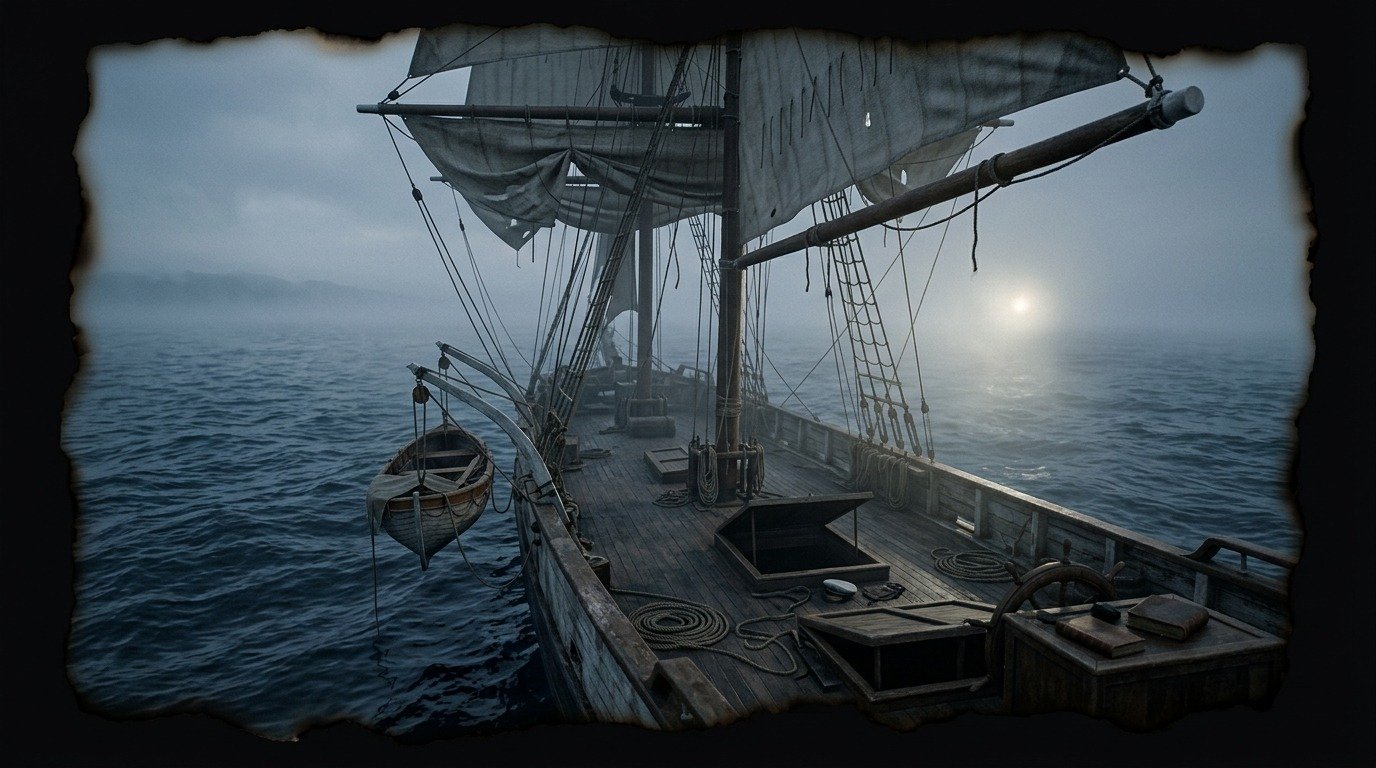
Mary Celeste: The Mystery of the Abandoned Brigantine
The Mystery of the Abandoned Brigantine
The Mary Celeste is the most iconic case of collective disappearance at sea. This American brigantine was found adrift in the Atlantic Ocean in December 1872. The ship was in perfect seaworthy condition, with the crew's belongings intact and provisions for several months. However, there was no one on board. The disappearance of its ten occupants occurred without signs of violence and constitutes a classic enigma of space and time anomalies.
The Protagonists and the Route of the Voyage
The crew of the Mary Celeste consisted of ten people. The captain, Benjamin Briggs, was an experienced mariner of firm religious convictions. He was accompanied by his wife, Sarah Cobb, their two-year-old daughter, Sophia Matilda, and a select crew of seven completely trustworthy sailors. On November 7, 1872, the vessel set sail from New York bound for Genoa, Italy. Its cargo consisted of 1,701 barrels of industrial alcohol, a highly volatile material. At the same time, the Canadian ship Dei Gratia, captained by David Morehouse, a close friend of Briggs, set sail from the same area a week later, following a similar route.
The Discovery at Sea
On December 5, 1872, the Dei Gratia spotted the Mary Celeste about 400 miles east of the Azores islands. Captain Morehouse observed that the brigantine was sailing erratically, with damaged rigging and sails partially deployed. Receiving no response to his signals, he sent a boarding crew to investigate. The sailors of the Dei Gratia found no one on the ship. The vessel was wet from seawater that had entered through the open hatches, but the hull remained intact and fully afloat. There was enough food and drinking water for six months of travel. The personal belongings of the crew, including valuables and dry clothing, were in their cabins. The ship's only lifeboat was missing. Captain Briggs's logbook remained on his desk; the last entry was dated November 25, 1872, ten days before the discovery, and placed the ship near the island of Santa Maria in the Azores. The ship was missing its chronometer, sextant, navigation log, and ship's papers, indicating a planned but hasty evacuation.
The Official Investigation in Gibraltar
The crew of the Dei Gratia sailed the Mary Celeste to the British port of Gibraltar to claim salvage rights. The British Admiralty Court, under the direction of Attorney General Frederick Solly-Flood, opened an exhaustive investigation under suspicion of foul play. Solly-Flood looked for signs of mutiny, piracy, or an insurance fraud scheme by the crew of the Dei Gratia. The police examined the ship looking for traces of blood or damage from physical violence, but found no evidence of a struggle. Analyses confirmed that the marks on the hull were normal wear and tear from the sea. The court eventually awarded the salvage fee to the rescuers, but the suspicion of foul play was never dispelled by actual evidence. None of the crew members of the Mary Celeste ever reappeared, nor were any remains of the lifeboat ever found.
Explanations of the Phenomenon
The esoteric perspective associates the disappearance of the Mary Celeste with a space-time anomaly or a transposition vortex. According to this interpretation, the ship passed through a zone of electromagnetic distortion that instantaneously displaced organic matter to another dimension or physical location, leaving inanimate objects in place. This theory explains why the food, clothing, and cargo remained unaltered, and why the lifeboat disappeared along with the essential navigation instruments that the crew members had with them at the moment of transit. The most solid scientific and physical explanation points to a combination of chemical and climatological factors. Nine of the industrial alcohol barrels found in the hold were empty due to leakage. The alcohol vapors accumulated in the confined space of the hold due to the heat of the Atlantic. Faced with the risk of a catastrophic explosion, Captain Briggs ordered a temporary evacuation to the lifeboat. To stay safe, they tied the lifeboat to the brigantine with a towline. A sudden storm or a strong gust of wind strained the rope until it broke, leaving the crew adrift in an open boat, unable to reach the Mary Celeste again, which continued to sail driven by the wind.
The Legacy of the Ghost Ship
The Mary Celeste became the archetype of the ghost ship in global popular culture. In 1884, the writer Arthur Conan Doyle published a fictional story titled "J. Habakuk Jephson's Statement," directly inspired by this case. Conan Doyle changed the ship's name to "Marie Celeste" and added dramatic details that did not exist in reality, such as hot cups of tea on the table and half-eaten food. This literary version displaced the real story in the collective imagination. The mystery of the brigantine links historical navigation with the phenomena of unsolved mass disappearances and the legends of the ocean's invisible dangers.
Comments
Share information, an experience, or a source to help enrich this entry. They are automatically reviewed before being published.
Loading comments...