El Pombero
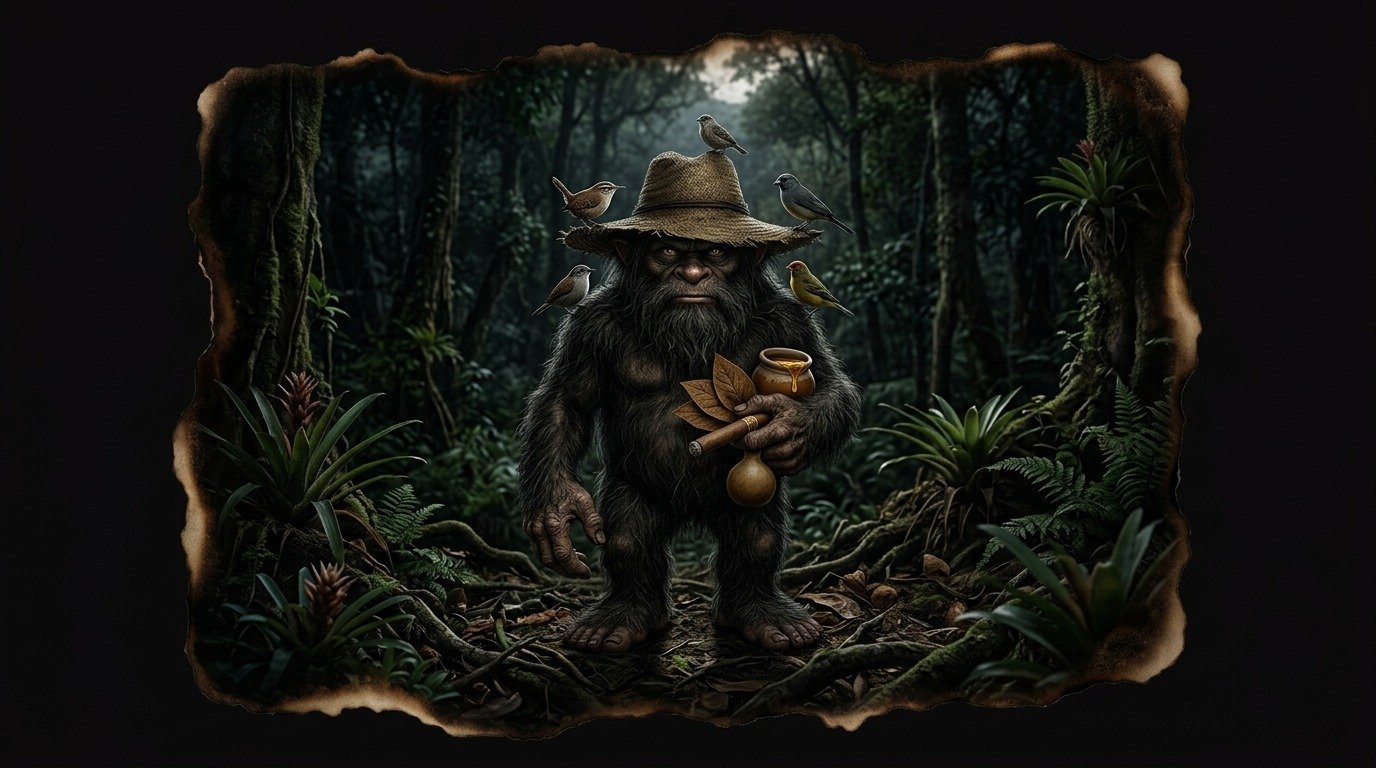
El Pombero: the lord of the Guaraní night
What is the Pombero
The Pombero is a goblin from Guaraní folklore, the most feared and respected being of the forest in Paraguay and northeastern Argentina (Misiones, Corrientes, Formosa, and Chaco), with versions also existing in southern Brazil. He is short, robust, and hairy, roams at night and during siesta time, perfectly imitates the singing of birds, and can make himself invisible. He protects the birds and the forest, punishes anyone who harms them, and has a reputation for visiting women at night. For this reason, in many homes, his name is still not spoken after dark today.
What he looks like
Descriptions change from one town to another, but almost all agree on a few traits:
- **Short and stocky**, with his body covered in hair and large, hairy hands. - **Silent**: he walks without making a sound, and in some stories, he does so because his feet are covered in hair. - **Shapeshifting**: he can shrink, stretch, hide behind a thin tree trunk, or transform into an animal, a log, or a shadow. - **Imitator**: he whistles and reproduces the song of any bird. A whistle in the forest, with no bird in sight, is the sign that he is near. - **Invisible** when he wants to be. Sometimes he is only heard.
In some versions, he wears a large straw hat that covers his face.
The Karai Pyhare
In Guaraní, he is called Karai Pyhare, "the lord of the night." Custom dictates not saying "Pombero" out loud, especially at night, because to name him is to call him. Anyone who needs to refer to him says "Karai," "lord," or simply "him." To disrespect him, mock him, or challenge him is to look for trouble.
Unlike other Guaraní beings like the Luisón or the Moñái, the Pombero is not listed among the seven monstrous sons of Tau and Keraná. He is an independent spirit, closer to the owners of the forest who look after the animals, like the Curupira of Brazil.
Protector of the birds
The Pombero is the guardian of the birds. He punishes children who hunt birds with slingshots, those who destroy nests, and those who kill animals needlessly. The most common punishments are making the culprit get lost in the forest, scaring them with whistles coming from everywhere, hiding their tools, or letting their animals out of the corral.
During siesta time, when the sun is harsh and adults are sleeping, children who escape to the forest run the risk of crossing paths with him. He shares this hour with the Jasy Jateré, another being of the Guaraní siesta, and mothers use both of them to keep children from going out.
The one who visits women
The darkest facet of the Pombero is his nocturnal one. It is said that he enters homes unseen and visits women while they sleep. For generations, unexplained pregnancies were attributed to him, and it was said that children born from these visits were dark-skinned, hairy, or resembled him. His touch can also cause illness: anyone who feels his hand or sees him face-to-face can be left mute, dazed, or with a fever for days.
The pact with the Pombero
The Pombero is not just a threat. Treated well, he is an ally. Tradition says that if an offering is left for him at night outside the house, he protects the home, watches over the animals, and warns of danger. The classic offerings are:
- **Tobacco**, in cigars or leaves. - **Caña** (sugar cane spirit). - **Honey**.
Anyone who starts leaving him gifts must keep doing so: if they forget one day, the Pombero takes offense and his protection turns into punishment. It is a deal that is not easily broken.
How to protect yourself
- Do not name him at night. If you must talk about him, say "Karai." - Do not hunt birds or break nests needlessly. - Do not walk alone through the forest during siesta time. - If you hear a strange whistle in the forest, do not answer or imitate it. - If you decide to leave him offerings, be consistent.
The Pombero today
Far from disappearing, the Pombero remains alive in the Argentine Litoral and in Paraguay. He appears in songs, in school textbooks, and in stories of people who claim to have heard him whistling in the forest. In rural towns, there are still those who leave tobacco on the window sill, just in case.
Comments
Share information, an experience, or a source to help enrich this entry. They are automatically reviewed before being published.
Loading comments...