Recoleta Cemetery
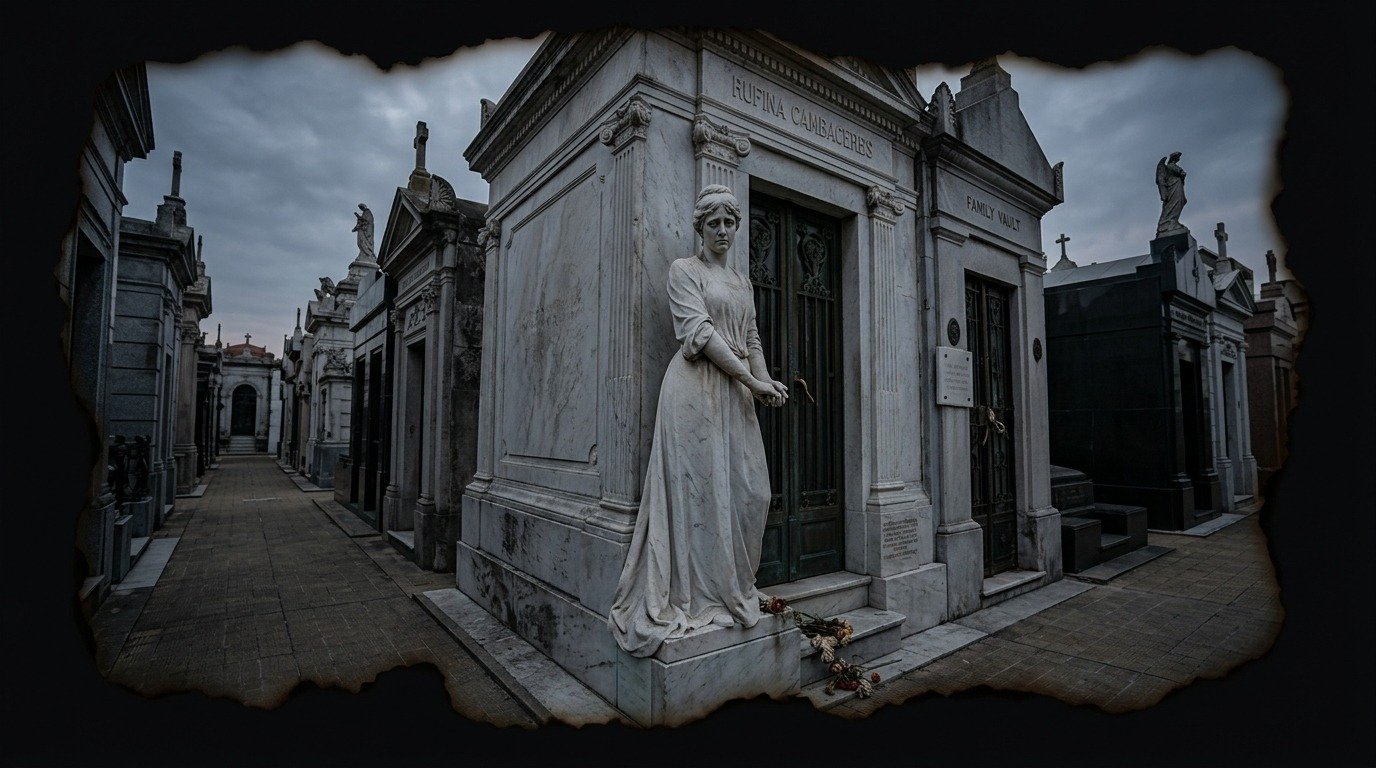
Recoleta Cemetery: The Empty Tomb of the Young Woman Who Woke Up Underground
The Cracked Marble
The morning after the burial, in May 1902, the caretaker of Recoleta Cemetery stopped in front of the Cambaceres family vault. He noticed something strange about the heavy iron and glass door: the lock had been forced, and the marble slab inside, which sealed the niche of young Rufina Cambaceres, was slightly displaced. Alarmed by a possible theft of jewelry, the caretaker called the family. Upon opening the nineteen-year-old girl's wooden coffin, they discovered that the horror did not come from the outside, but from within.
The Labyrinth of the Elite
Recoleta Cemetery was born in 1822 as Buenos Aires' first public cemetery, designed by French engineer Próspero Catelin on the former orchard of the Recoleto monks. With the outbreak of the yellow fever epidemic in the 1870s, the city's wealthiest families abandoned the south and settled in the north, turning Recoleta into their exclusive final resting place. The cemetery was transformed into a miniature city with tree-lined streets, diagonals, and plazas, where noble families competed to build the tallest mausoleums, using imported Carrara marble, black granite, and bronze sculptures brought from Europe.
Rufina's Despair
The legend of Rufina Cambaceres is the most famous tale of catalepsy in Argentine history. Rufina, daughter of writer Eugenio Cambaceres, collapsed in her room on the night of her nineteenth birthday. Three doctors confirmed her death from cardiac arrest and she was buried immediately. The legend goes that, after the caretaker's alert, the family found the coffin lid broken by the young woman's scratches. Rufina's face showed bloody wounds caused by her own fingernails in her desperate struggle to breathe, and her hands were injured from trying to force open the wood in the darkness of the tomb. She had awakened from a cataleptic fit under three meters (9.8 feet) of marble.
The Statue of the Sad Young Woman
To walk through Recoleta today is to tour an open-air museum of funerary art, where the scent of eucalyptus mixes with the humid air of the Río de la Plata. Rufina Cambaceres' tomb is a masterpiece of the Art Nouveau style. The sculpture depicts Rufina in full body, with an expression of deep sadness, holding the door of her own mausoleum with one of her hands, as if trying to open it to step outside. Those who visit Recoleta late in the afternoon claim that soft weeping can be heard coming from inside the vault, and that the flowers visitors leave in her hands change position on their own during the night.
The Fear of Catalepsy
Recoleta Cemetery is a national historical monument of the Argentine Republic. Rufina Cambaceres' death occurred at a time when medical death diagnoses lacked today's electroencephalogram technology, making catalepsy—a biological state where the body mimics the signs of death—a real and widespread fear. No known document confirms the scratched coffin, and some argue that the story was born from an attempted theft of the jewelry with which she was buried. But in Buenos Aires, legend carries more weight than the silence of paper.
The Hand on the Doorknob
Rufina's marble statue still has her fingers resting on the bronze doorknob of the mausoleum door. It is a silent image that reminds the living of the thin line separating deep sleep from the eternal grave.
Comments
Share information, an experience, or a source to help enrich this entry. They are automatically reviewed before being published.
Loading comments...