Belial
The King Without a Master, the Abyss of Matter, and Zero Autonomy
Origin and Legend
Belial is one of the oldest, most complex, and fearsome entities in the Western esoteric corpus. His name does not originally derive from a specific pagan deity, but from a compound Hebrew term: Beli-ya'al, which literally translates to "Without Value," "Without a Yoke," or "He Who Has No Master." In Second Temple texts, such as the Dead Sea Scrolls (in the War of the Sons of Light Against the Sons of Darkness), Belial is not a lesser demon, but the Prince of Darkness, the supreme antagonist of the celestial order, the embodiment of primordial chaos and the decay of dogma. His original myth places him as one of the highest angels, created immediately after Lucifer, falling due to his own nonconformist nature and his absolute refusal to submit to any authority outside his own essence.
Historical Evolution
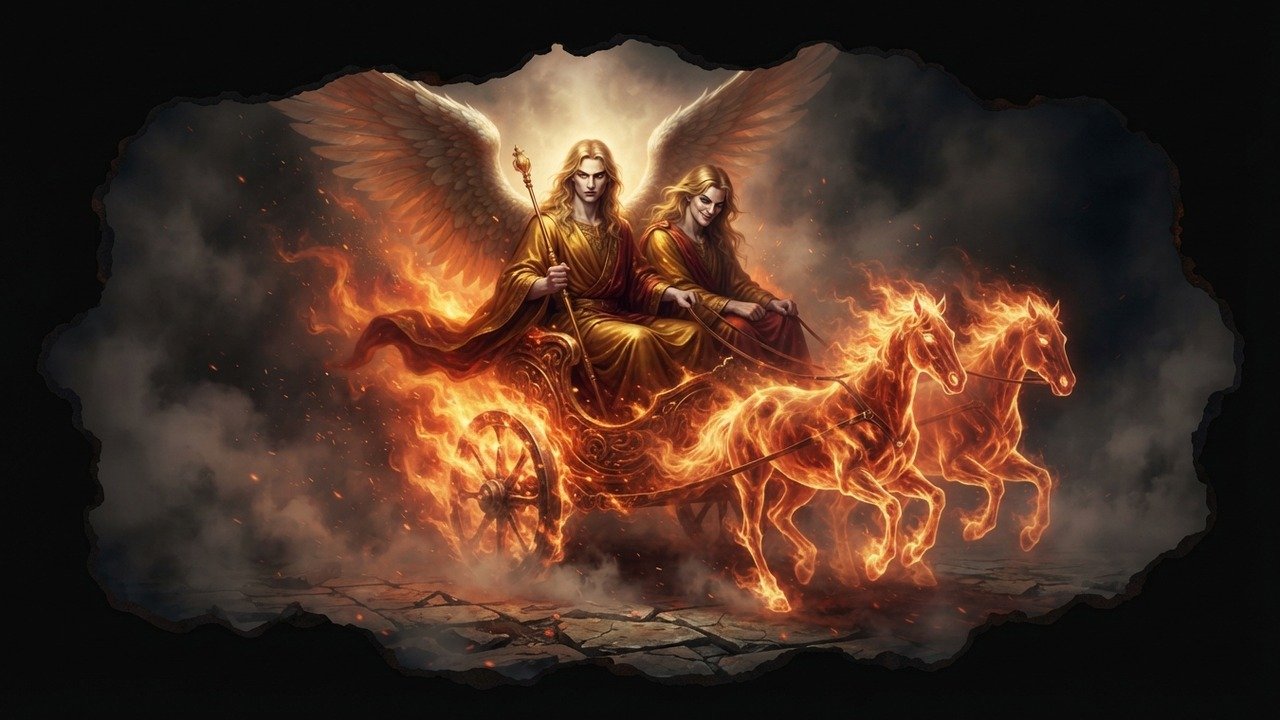
Throughout the intertestamental period and early Christianity, Belial was frequently equated with Satan himself or the Antichrist. However, in medieval and Renaissance grimoiric tradition, particularly in the Goetia, Belial reappears as a Great King of suprapersonal elegance, manifesting as two beautiful angels sitting in a chariot of fire, speaking with a soft, seductive, and perfectly articulated voice. Despite his serene appearance, ancient texts categorically warn that Belial is a false, extremely powerful spirit who requires constant sacrifices and offerings to speak the truth. In the 20th century, with the philosophy of Anton LaVey and the development of the Left-Hand Path (especially in the works of Current 218 and theistic Satanism), Belial was redefined as the Lord of the Earth, the king of the material plane, and the catalyst for absolute spiritual emancipation.
Esoteric Significance
Within the alchemical, cabalistic, and psychological framework, Belial is the archetype of Pure Matter and Independence Rooted in the Earthly Plane. He rules the Qliphothic sphere of Nahemoth (the demons of the earth) and is the guardian of the gates of the earthly abyss. Belial represents entropy, the shattering of all self-imposed moral or religious yokes, and the trial of earthly fire. He is not an abstract force dwelling only in the stars; he is the density of the earth, the law of the flesh, politics, temporal power, material wealth, and uncompromising self-sufficiency. Belial is the test of sovereignty: he demands that the individual destroy their spiritual illusions to build an empire upon the firm rock of matter and one's own will.
Practice and Manifestation
Belial's presence is massive, suffocating, erotic, and deeply earthly. It is perceived as a drastic increase in air density, an intense dry heat, and an unfathomable sense of power and imminent danger.
La Manifestación en el Individuo: Belial acts by shaking the structures of the practitioner's life. He destroys weak foundations, eliminates relationships of dependency, and forces the individual to fend for themselves on the material plane, granting in return a masterful dominion over economic resources, social influence, and willpower.
Abordaje y Soberanía: Dealing with Belial is the supreme art of diplomacy and esoteric mettle. Approaching him with submission, fear, or seeking a spiritual "master" results in the psychological destruction of the operator, for Belial abhors servants. The only way to interact with the King Without a Yoke is by embodying the very nature of being "Masterless." The magician does not kneel or submit; they offer mutual respect, maintain an iron discipline, and prove that they are the sole master of their destiny. The true protection against Belial's voracity is the total absence of self-deception and the unwavering firmness of one's own will.
Comments
Share information, an experience, or a source to help enrich this entry. They are automatically reviewed before being published.
Loading comments...