Berith
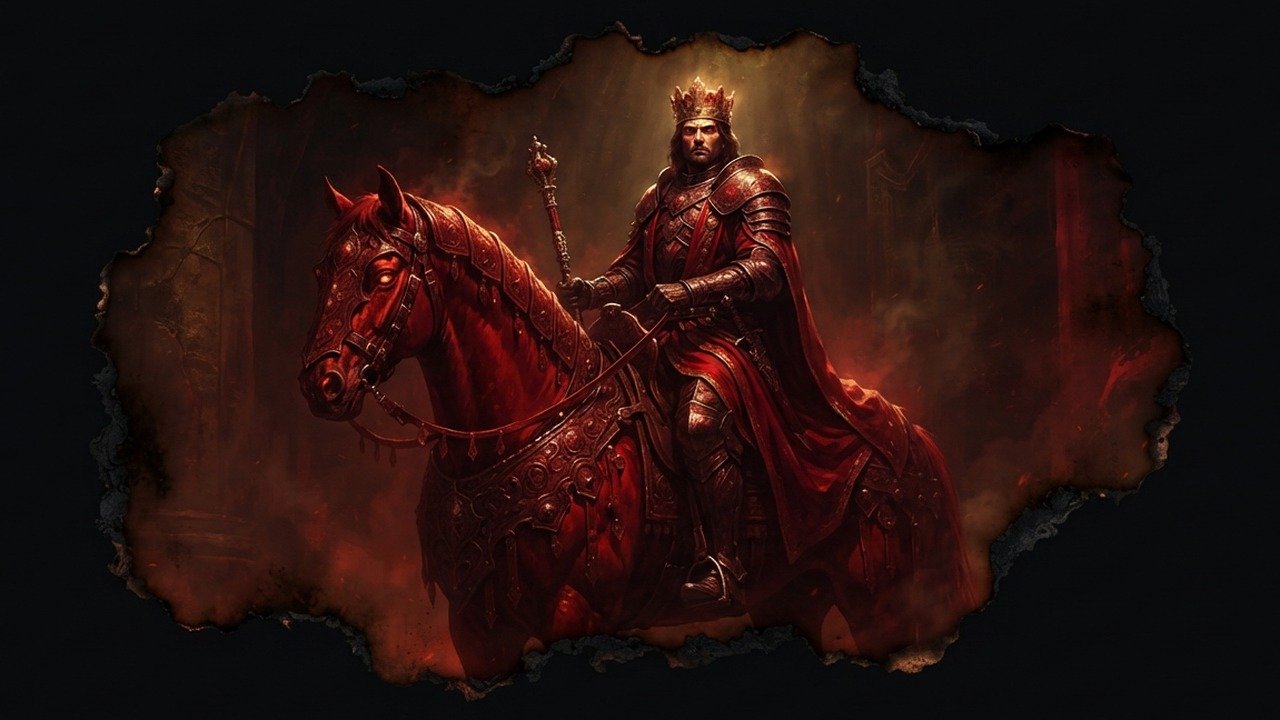
BERITH:
The Legacy of Berith: The King of the Covenant and Golden Transmutation
Origin and Legend: The Lord of the Covenant in Baal-Berith
The origin of Berith is unfathomable, tragic, and deeply documented in the oldest scriptures of Canaan. Before being demonized by the Hebrew theocracy, he was worshiped in the Phoenician city of Shechem under the name Baal-Berith or El-Berith, which literally translates to "The Lord of the Covenant" or "The God of the Alliance." He was a supreme deity of justice, commerce, sacred oaths, and community cohesion. The ancient Canaanites flocked to his temple to seal peace treaties, commercial alliances, and solemn exchanges that could not be broken without incurring divine wrath. However, with the consolidation of biblical monotheism, Baal-Berith was discredited, transforming the protector of ethical contracts into the great deceiver and the archdemon of lies in rabbinic and patristic texts.
Historical Evolution: From Syrian God to the Red Alchemist of Hell
In the Goetic hierarchy of the Renaissance, Berith appears as a fearsome and powerful Duke, also known by the names Beal, Bofi, or Bolfry. His iconographic description in medieval grimoires is one of the most imposing: a soldier surrounded by majesty, dressed in garments of absolute crimson red, crowned with gold, and riding a blood-red horse. Esoteric literature attributes to him the ability to transmute any metal into pure gold, bestow political dignities, and reveal the past, present, and future. However, demonologists like Collin de Plancy added a recurring warning: Berith is the great liar; his words are of a hypnotic beauty, but they are steeped in falsehood unless he is forced to speak within precise circles of containment.
Esoteric Meaning: The Illusion of Matter and Absolute Value
Esoterically, Berith represents the archetype of the "Covenant" in its deepest dimension: the irreversible relationship between individual consciousness and the illusion of the material plane (Maya). He is the embodiment of the fire of earthly ambition and the transmutation of base matter into precious metal (the alchemical process of Rubedo). In the Dark Kabbalah, he dwells in the spheres of domination and social structure, showing how human power is built upon agreements, symbols, and consensus. Berith teaches the somber lesson of discernment: the true magician must learn to distinguish between "real gold" (the transmutation of the will) and "false gold" (the transitory illusion of worldly success). He represents the test of personal sovereignty against the empty promises of the dense world.
Practice and Manifestation: The Red Fire and the Discipline of the Oath
The energy of Berith is fiery, imperious, aristocratic, and extremely demanding.
Manifestation in the Individual: It manifests as a voracious urge for ambition, authority, and a desire for social or material dominance. If not governed with temperance, it can induce paranoia, megalomania, and compulsive deceit. In the ritual temple, his presence is warm and oppressive, often accompanied by a coppery or reddish glow in subtle perception, and a metallic odor, similar to the iron of blood steam or red-hot sulfur.
Approach and Protection: Approaching Berith demands the highest level of spiritual authority from the operator. One must interact with him with the dignity of a monarch dealing with another monarch. It is imperative that the magician keep an impeccable word: never promise what will not be fulfilled, for Berith is the Lord of the Covenant and punishes inconsistency by dismantling the life of the reckless. The sacred protection against his illusions is radical skepticism and the integration of one's own shadow: not seeking vain shortcuts to wealth nor yielding control of one's own will to visions of grandeur, grounding the practice in internal transmutation and respect for the commitment made.
Comments
Share information, an experience, or a source to help enrich this entry. They are automatically reviewed before being published.
Loading comments...