The Beast of Gévaudan
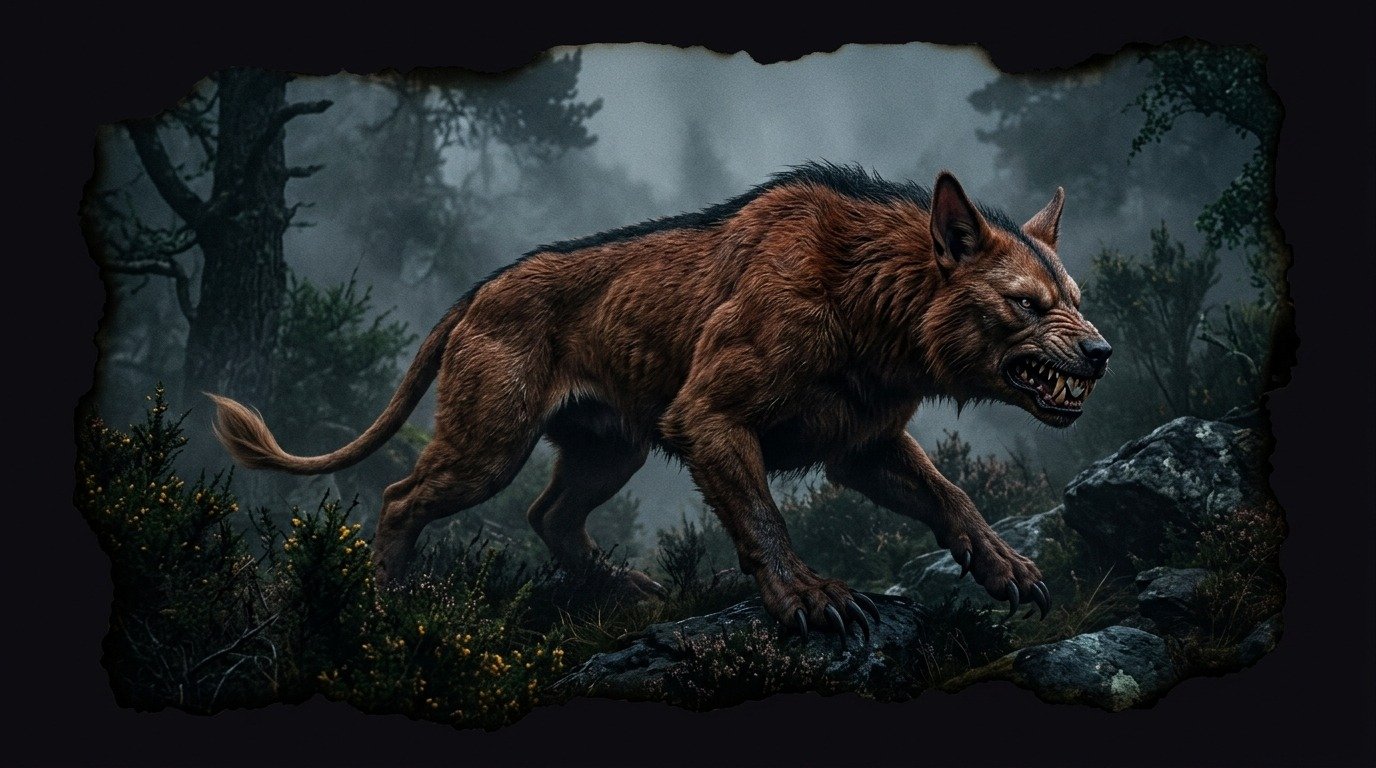
The Beast of Gévaudan: The Terror of the Moors of Lozère
The Scourge of the Ancien Régime (1764-1767)
Between the years 1764 and 1767, the remote and mountainous region of Gévaudan (present-day department of Lozère, in southern France) was the setting for one of the bloodiest and most histrionic monster-hunting campaigns in European history. More than a hundred people, mostly women and children herding livestock on the moors, were brutally murdered and partially devoured by a predator whose ferocity and cunning defied the social order of the Ancien Régime of Louis XV. The first official victim was Jeanne Boulet, a fourteen-year-old girl attacked on June 30, 1764, near Langogne. From that moment on, the attacks multiplied with terrifying frequency. Chronicles of the time describe that the "Beast" ignored livestock to concentrate exclusively on human beings, showing a troubling propensity to decapitate its victims and drink their blood. The panic soon captured the attention of the national and international press, which used the tragedy as a horror serial for a bourgeoisie hungry for sensationalism. King Louis XV himself, embarrassed by the inability of local authorities to resolve the crisis, sent his best hunters. First, the captain of dragoons Jean-Baptiste Duhamel, who mobilized thousands of men in massive hunts, and later the King's Grand Arquebus Bearer, François Antoine, who in September 1765 declared he had killed the Beast: a wolf of colossal size that was taxidermied and transported to the court of Versailles. However, after a brief period of calm, the attacks resumed with the same brutality in December of that same year, proving that the true monster remained at large.
Anatomy of a Chimera: Wolf, Hybrid, or Exotic?
The testimonies of survivors and the autopsies performed by doctors of the era outline a creature that did not fit the morphology of a common wolf (*Canis lupus*). It was described as an animal the size of a calf or a donkey, with reddish fur marked by a black line along its spine, an unusually wide chest, very long sharp claws, erect ears, and a long tail ending in a tuft of hair, similar to that of a lion. Its jaw was extremely wide, and it possessed an agility that allowed it to make jumps of several meters (yards), crossing rivers in a single stride. Modern historiography and forensic zoology have intensely debated the identity of the Beast. Three main hypotheses are considered: 1. **The striped or spotted hyena (*Hyaena hyaena* / *Crocuta crocuta*):** Its physiognomy fits the solid chest, sloping back, and jaw strength capable of crushing human bones that the Beast demonstrated. These exotic animals were exhibited in traveling fairs of the time, from which the specimen could have escaped. 2. **A canine hybrid:** The deliberate crossbreeding of a war mastiff or catch dog with a wolf, specifically trained to attack humans and protected by boar-skin armor, which would explain why direct shots from shepherds failed to seriously wound it. 3. **An aristocratic serial killer:** One of the darkest theories points to Antoine Chastel, son of the hunter Jean Chastel. Antoine, a sullen man who had traveled through Africa and mastered the art of taming wild animals, is said to have used an exotic beast (such as a large feline or a hyena) or a trained hybrid to commit the crimes, acting under the protection of local nobility disaffected with the crown.
The Myth of the Silver Bullet and Redemption
The end of the nightmare came on June 19, 1767, at Mount Mouchet. A local peasant and hunter, Jean Chastel, participated in a hunt organized by the Marquis of Apcher. According to popular tradition, which has strong esoteric and religious overtones, Chastel sat down to recite prayers to the Virgin Mary while holding a prayer book and a rifle loaded with silver bullets that he himself had melted down from consecrated medals of Saint John. When the Beast appeared before him, instead of fleeing or attacking immediately, it stopped and stared at the hunter. Chastel calmly finished his prayer, closed the book, and shot the beast in the chest, killing it instantly. The examination of this animal's corpse revealed that it possessed a monstrous morphology and that remains of its last human victim, a young girl, were still in its stomach. The body was taken to Paris, but due to its advanced state of decomposition and the insufferable stench, the king ordered it to be buried immediately in an unspecified location, depriving science of a rigorous analysis of its remains.
Psychosocial and Archetypal Significance
The Beast of Gévaudan transcends the realm of zoological mystery to become a sociological phenomenon. For the peasantry of Lozère, a deeply devout, impoverished population subject to the harshness of a hostile territory, the Beast was not simply a predator, but the "Scourge of God": a divine punishment sent to purge the sins of the community. The homilies of local priests reinforced this view, comparing the creature to the beasts of the Apocalypse. Likewise, the Beast served as a mirror for the class tensions of the Age of Enlightenment. The inability of the military aristocracy and the absolute monarchy to protect the most vulnerable serfs eroded the myth of the crown's paternal protection, sowing the seeds of discontent that would bear fruit two decades later in the French Revolution. The Beast was a bloody reminder that the enlightened reason of Paris had very clear limits in the dark moors of the French provinces.
Comments
Share information, an experience, or a source to help enrich this entry. They are automatically reviewed before being published.
Loading comments...