Skunk Ape
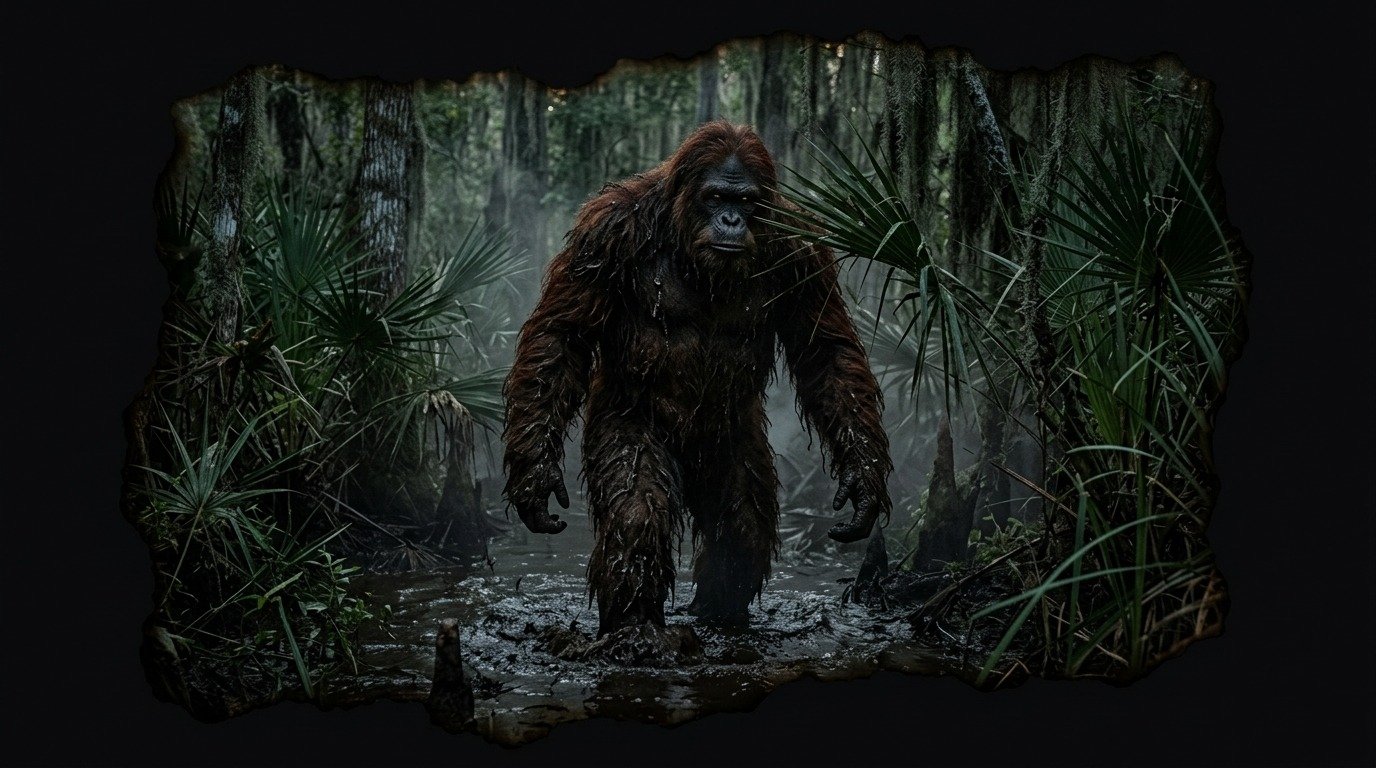
Skunk Ape: The Stench of the Primordial Swamp
Origin and Native Roots
In the colossal and suffocating depths of the Florida Everglades, the myth of the "Skunk Ape" sinks its roots into the cosmogony of the Seminole and Miccosukee nations. For these Indigenous peoples, the creature is not a mere cryptid of the modern era, but a liminal entity known in the Miccosukee language as *Esti Capcaki*, literally translated as "Tall Giant" or "Giant of the Forest". In the oral tradition of the swamp clans, this being is described as a guardian spirit of inaccessible areas, a mediator between the world of stagnant waters and that of dry land. Far from the caricature of a simplistic hominid, native legends grant it a silent intelligence and a deep connection with the cycle of decay and rebirth of the swamp.
Modern Sightings and Cryptozoology
Western chronicles began to formally record the presence of the Skunk Ape in the mid-20th century, coinciding with the colonization and partial drainage of the Florida wetlands. Sightings are concentrated in the Everglades National Park and the Big Cypress National Preserve. The specimen is consistently described as a bipedal primate between 1.80 and 2.40 meters (5.9 and 7.9 feet) tall, covered in a coarse, long coat that varies between dark reddish-brown and jet black. Unlike its mountain counterparts, the Skunk Ape is characterized by a unique anatomical adaptation: lower limbs adapted for wading through dense mud and, notably, an unbearable foul odor that precedes its physical manifestation. This effluvium, described as a mixture of methane, sulfur, stagnant water, and decayed carrion, is the direct result of its diet based on alluvial roots, small mammals, and alligators, combined with the ecosystem of anaerobic bacteria that thrives in its constantly damp fur. The famous "Myakka photographs" (2000), sent anonymously to the Sarasota County authorities, show an ape-like creature with reflective eyes stalking behind the palmetto brush, constituting one of the most disturbing and debated visual records of contemporary cryptozoology.
Ecology of the Stench and Symbolic Significance
From an esoteric and analytical perspective, the Skunk Ape represents the archetype of the alchemical *Nigredo*: the phase of decomposition, putrefaction, and descent into the densest matter. The swamp, as a liminal space that is not entirely land nor water, is the ideal setting for this manifestation. The intolerable odor emanating from the creature is not merely a biological byproduct, but a natural psychic barrier. The stench repels the ordinary consciousness of the human being, acting as a protective veil that preserves the sanctuary of the wild against the encroachment of urban profanation. It is the embodiment of untamed organic chaos, an olfactory warning that there are corners of creation that actively reject the domestication of reason.
Record of Encounters and Mitigation Protocol
The chronicles of trappers and park rangers suggest that the Skunk Ape is an eminently elusive but territorial entity. Its nests, constructed with interwoven cypress branches and palmetto leaves in the heart of hard-to-reach swamps, are the focal points of the highest concentration of its vibrational footprint. For those seekers or wanderers who venture into its domains, the following traditional and practical protection guidelines are prescribed: 1. **Attention to atmospheric changes:** A sudden drop in bird activity and the immediate cessation of amphibian croaking, accompanied by a gust of warm wind smelling of sulfur, indicates the immediate presence of the creature less than fifty meters (164 feet) upwind. 2. **Abstinence from aggression:** The Skunk Ape does not possess the active predatory nature of a large feline, but it will respond with acoustic violence (high-frequency guttural screams that induce disorientation and panic) if cornered. Retreat must be made backward, without abruptly breaking direct eye contact, but avoiding holding a defiant gaze. 3. **Smoke cleansing for purification:** Upon returning from the swamp, it is imperative to smoke cleanse your belongings and body with copal resin or rue to dissipate the "dense trail," an energetic residue of the stench that, according to locals, can cling to the subtle body and attract misfortune or ruminating madness.
Comments
Share information, an experience, or a source to help enrich this entry. They are automatically reviewed before being published.
Loading comments...