Onza
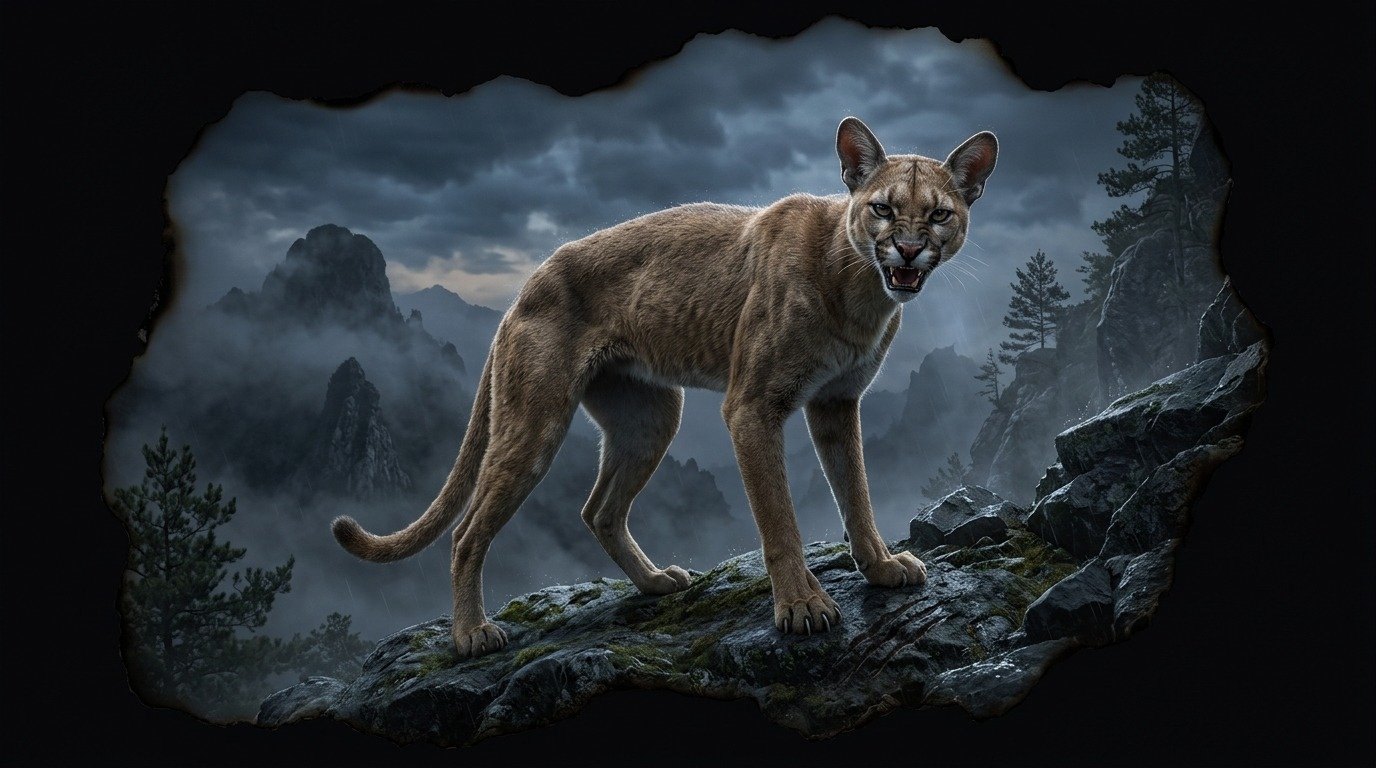
The Onza: The Ghost Feline of the Sierra Madre
Viceregal Chronicles and Historical Testimonies
The "Onza" is a cryptid feline whose presence has been historically reported in the most rugged and forested areas of the Sierra Madre Occidental, primarily in the Mexican states of Sinaloa, Sonora, Durango, and Chihuahua. Unlike other cryptids born of pure fantasy, the Onza possesses a highly documented historical foundation that dates back to the first contacts between the Spanish conquistadors and Mesoamerican civilizations. Bernal Díaz del Castillo, in his famous work *The True History of the Conquest of New Spain*, describes in detail the wild beasts that Emperor Moctezuma II kept in his private zoo in Tenochtitlan. Among pumas and jaguars, the chronicler expressly mentions felines called "onzas," which he describes as animals of a slender build, long legs, and an unusual aggressiveness compared to jaguars. Later, during the viceregal period, Jesuit missionaries who mapped and evangelized northwestern Mexico documented the existence of this animal as a physical entity well-differentiated from the common puma (*Puma concolor*). Father Johann Jakob Baegert, in his *Account of the American Peninsula of California* (1772), and the Jesuit historian Francisco Javier Clavijero, in his *The History of Lower California* (1789), described the Onza as a wild cat, extremely agile, tawny in color, which attacked deer and livestock with astonishing speed, using a long-distance pursuit technique that differed from the ambush attack typical of the puma.
Morphology and Zoological Identity
The description of the Onza according to the hunters of the Sierra Madre Occidental and ancient naturalists is highly specific and consistent throughout the centuries: * **Build:** A body notably more slender, elongated, and graceful than that of the puma. * **Limbs:** Long, thin hind legs reminiscent of a canid, giving it a taller posture. Its claws are not fully retractable, leaving characteristic marks in its tracks. * **Head:** A narrower skull, proportionally larger ears, and an elongated snout. * **Behavior:** Unlike the puma, which usually flees from human presence, the Onza is described as an extremely aggressive, territorial, and bold animal, capable of attacking hunters and their tracking dogs without prior provocation. Theoretical zoology has proposed various hypotheses regarding the nature of the Onza. The most fascinating is that it is a surviving taxon of *Miracinonyx* (the American cheetah), a prehistoric feline adapted for running that inhabited North America during the Pleistocene and was believed to have gone extinct about 10,000 years ago. The *Miracinonyx* shared precisely the morphological characteristics attributed to the Onza: long legs, semi-retractable claws, and expanded nasal cavities for efficient breathing during high-speed runs. Another hypothesis suggests that the Onza is not a new species, but rather a subspecies or genetic variety of the puma (*Puma concolor*), characterized by gracilism or a phenotypic mutation that alters its body proportions and temperament.
The Vega Specimen (1986) and the Scientific Verdict
The mystery of the Onza seemed to be definitively resolved in January 1986, when hunter Andrés Rodríguez Murillo shot an unusual feline at the San Ignacio ranch, near the town of Vega, in the state of Sinaloa. The animal had attacked the property and displayed unusual aggressiveness. Upon examining the carcass, Rodríguez noted that the feline did not match the physiognomy of the pumas he usually hunted in the region. The body of the Vega specimen featured extraordinarily long legs, large ears, a slender body 1.5 meters (4.9 feet) in length (not counting the tail), and a weight of just 37 kilograms (81.6 pounds), well below the weight of an adult puma of those dimensions. In addition, its hind legs possessed a thin, elongated bone structure, similar to that of a wolf or a cheetah. The carcass was transferred to the Autonomous University of Sinaloa and subsequently analyzed by scientists from internationally renowned institutions, such as Dr. Troy Best of Auburn University. Initial osteological and histological analyses confirmed that the specimen's bone structure differed significantly from that of a standard puma. However, genetic and mitochondrial DNA analyses conducted in the late 1990s revealed that the Vega specimen was not genetically distinct enough from the local puma population to be classified as a new species. The official scientific verdict was that the Onza is an extreme morphological mutation of *Puma concolor*, or perhaps a subspecies adapted for running in extremely rugged terrain that retains Pleistocene traits.
The Shadow of the Sierra: Symbolism and Local Myth
Despite the genetic verdict, for the inhabitants and hunters of the Sierra Madre Occidental, the Onza continues to exist as a real and distinct entity. In the cosmogony of the mountain communities, respect for the Onza borders on the sacred and the taboo; it is considered an animal of ill omen, a specter of the night that cannot be domesticated or subdued by the usual methods of the hunt. The Onza represents the mystery of the biodiversity hidden in the inaccessible canyons and gorges of Mexican geography. It is a reminder that nature does not easily allow itself to be pigeonholed by the rigid labels of modern taxonomy. As long as unexplored corners remain in the Sierra Madre, the Onza will continue stalking in the blurry boundary where science blurs with legend.
Comments
Share information, an experience, or a source to help enrich this entry. They are automatically reviewed before being published.
Loading comments...