Almas
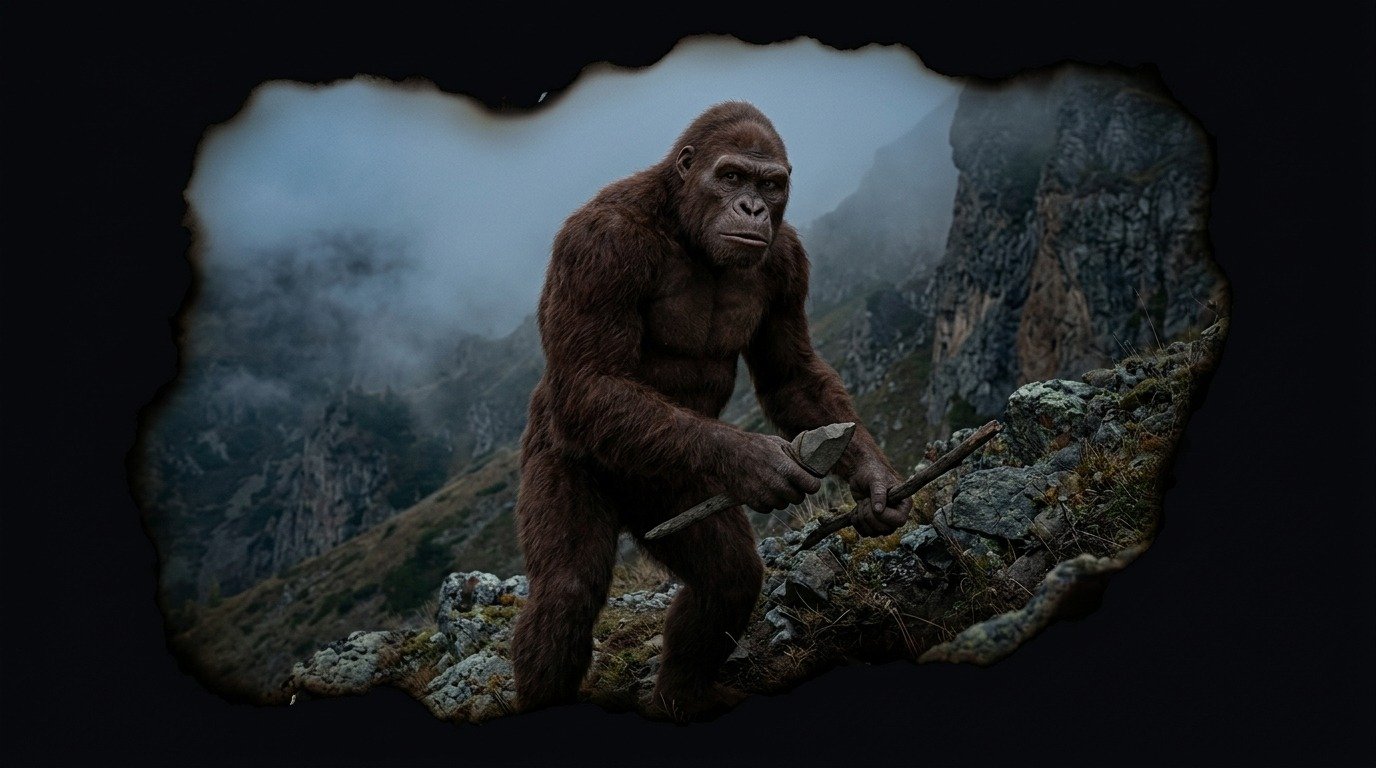
Almas: The Relict Hominid of the Mongolian Steppes
Chronicles of the Steppes and the Caucasus
In the vast Eurasian corridor stretching from the Altai Mountains and the Gobi Desert in Mongolia to the Caucasus mountain range, the documented account of the *Almas* (also written as *Alma* or *Almasti*) persists. In Mongolian folklore and that of the nomadic peoples of Central Asia, the term literally means "wild man." Unlike the Himalayan Yeti, often described as a gigantic being with adaptations for snow, the Almas is consistently portrayed as a hominid with proportions much closer to those of modern humans, sharing with them a steppe and mountainous adaptive niche.
Western historical documentation of the Almas began with the captivity of the Bavarian nobleman Hans Schiltberger in the 15th century. Taken prisoner by the Mongols in the 1420s, Schiltberger described wild people living in the Altai Mountains in his travel memoirs: beings covered in thick hair, except on their hands and faces, who fed on grass and roots, and who lacked articulate language, communicating through screams and whistles.
Relict Hominid Hypothesis
During the 20th century, Soviet scientists led by Dr. Jeanne Kofman and historian Boris Porshnev conducted intensive field research in the Caucasus and Mongolia, compiling thousands of testimonies and cataloging the Almas not as a fantastic myth, but as a relict hominid species, possibly surviving populations of *Homo neanderthalensis* or Denisovan hominins.
Descriptions compiled by Kofman and the Mongolian biologist Rinchen show a bipedal creature between 1.60 and 1.90 meters (5.2 and 6.2 feet) tall, of a robust yet agile build. Its head features a markedly conical skull with a receding forehead, highly pronounced brow ridges, and a massive jaw without a chin. The body is covered in short reddish, dark brown, or grayish hair. The Almas exhibit nomadic behavior, following the migration routes of wild ungulates and using natural caves as temporary shelters. They do not master fire technology nor do they wear elaborate clothing, but they have been observed using rudimentary stone tools and sticks to dig up roots, as well as displaying an extremely refined natural camouflage instinct that allows them to blend into the rocky landscape of the steppe.
Archetypal and Esoteric Dimension
The Almas embodies the "Shadow of Evolution." It is the manifestation of our own bloodline that remained in a state of mineral and animal purity, exempt from the spiritual fall and the historical weight of rational self-awareness. In Eastern esoteric philosophy, the Almas are sometimes seen as the "mutes of the earth," silent guardians of the precognitive knowledge that humanity sacrificed in exchange for language and intellect. They represent absolute biological resilience: the ability to survive in the planet's harshest climates through a perfect organic symbiosis with the rhythms of the steppe and the mountain.
The Silent Encounter
The Almas is a peaceful creature by nature, actively avoiding contact with permanent human settlements, although in times of winter famine they have been recorded stealing food from nomadic camps or grain storehouses in isolated villages of the Caucasus.
1. **Avoiding confrontation:** If a shepherd or explorer encounters an Almas in the Altai valleys, they must refrain from making sudden movements. The creature reacts with aggressive panic if cornered in an enclosed space such as a cave or gorge, using its immense physical strength (which far exceeds that of an ordinary human) to strike and force its way through. 2. **Respect for watercourses:** Encounters usually occur at mountain springs at dawn or dusk. It is recommended to maintain a safe distance from these water sources during twilight hours to allow local wildlife and the entities of the steppe to quench their thirst without interference. 3. **Salt offerings:** In the Caucasus, some traditional highlanders used to leave salt blocks near rocky passes. Salt is a precious commodity for the metabolism of wild hominids, and this gesture of silent benevolence ensures conflict-free passage through the highlands.
Comments
Share information, an experience, or a source to help enrich this entry. They are automatically reviewed before being published.
Loading comments...