Týr
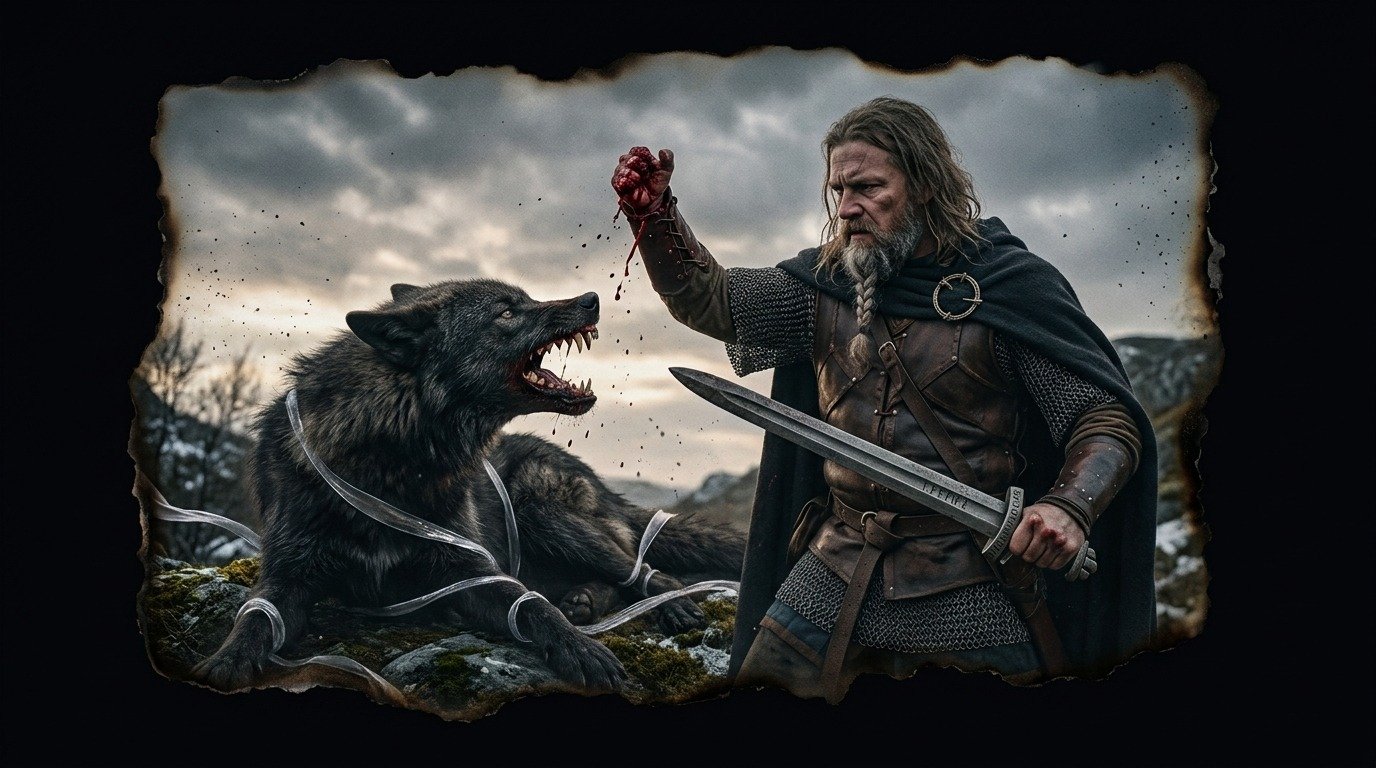
Týr: The Fang of the Law
The Lord of the Assembly and Battle
Long before Odin became the Allfather in the songs of the poets of the hills, Týr was already worshiped as the sovereign of the sky and law among the peoples of the north. Unlike other gods who find their glory in the blind frenzy of combat, Týr represents war as an act of order, discipline, and justice. He is the patron of the *Thing*, the assembly of free men where disputes were resolved under the protection of the laws and not by the blow of axes. Týr does not seek slaughter for pleasure, but rather the defense of what is right. His sword is not drawn to conquer empires, but to seal treaties and punish those who break sacred oaths. His character is stern, silent, and unshakeable; he is the god whose namesake rune warriors carved onto the hilts of their weapons before marching into battle, knowing that he only favors those who fight for a just cause.
The Deception of Gleipnir
The myth that defines the essence of Týr is that of the taming of the wolf Fenrir. This monstrous beast, fathered by Loki, grew at such an alarming rate that the gods feared he would end up devouring the entire universe. Only Týr had enough courage to approach the wolf and feed him every day, gaining a precarious trust based on mutual respect between two beings of immense power. When the gods decided to bind the wolf, they failed twice with ordinary iron chains that the beast shattered as if they were threads of straw. Desperate, they commissioned the dwarves to craft Gleipnir, a magical fetter made from six impossible ingredients: the sound of a cat's footfall, the beard of a woman, the roots of a mountain, the sinews of a bear, the breath of a fish, and the spittle of a bird. The ribbon was as thin and soft as a silk ribbon, which aroused Fenrir's suspicions.
The Price of Order
The gigantic wolf agreed to be bound with the magical ribbon only under one extreme condition: that one of the gods place his right hand inside his jaws as a guarantee that there was no trickery and that he would be freed if he failed to break the bond. The gods looked at one another in silence, shrinking back from the thought of losing a limb or unleashing the monster's wrath. Only Týr stepped forward. Without hesitation, he extended his right hand and placed it between the wolf's sharp fangs. Fenrir began to struggle, but the more he pulled, the tighter the dwarves' magical ribbon bound him. Realizing he had been betrayed and that the gods had no intention of freeing him, the wolf clamped his jaws shut with brutal violence, tearing Týr's hand clean off. While the rest of the gods laughed to see the monster finally subdued, Týr remained in silence, holding back the pain of his bleeding stump. He knew he had sacrificed his own physical integrity to ensure the survival of the world. Since that day, the one-handed god rules over oaths with a left hand that holds the scales of destiny and a right arm that reminds everyone of the true cost of maintaining order over chaos.
Comments
Share information, an experience, or a source to help enrich this entry. They are automatically reviewed before being published.
Loading comments...