Loki
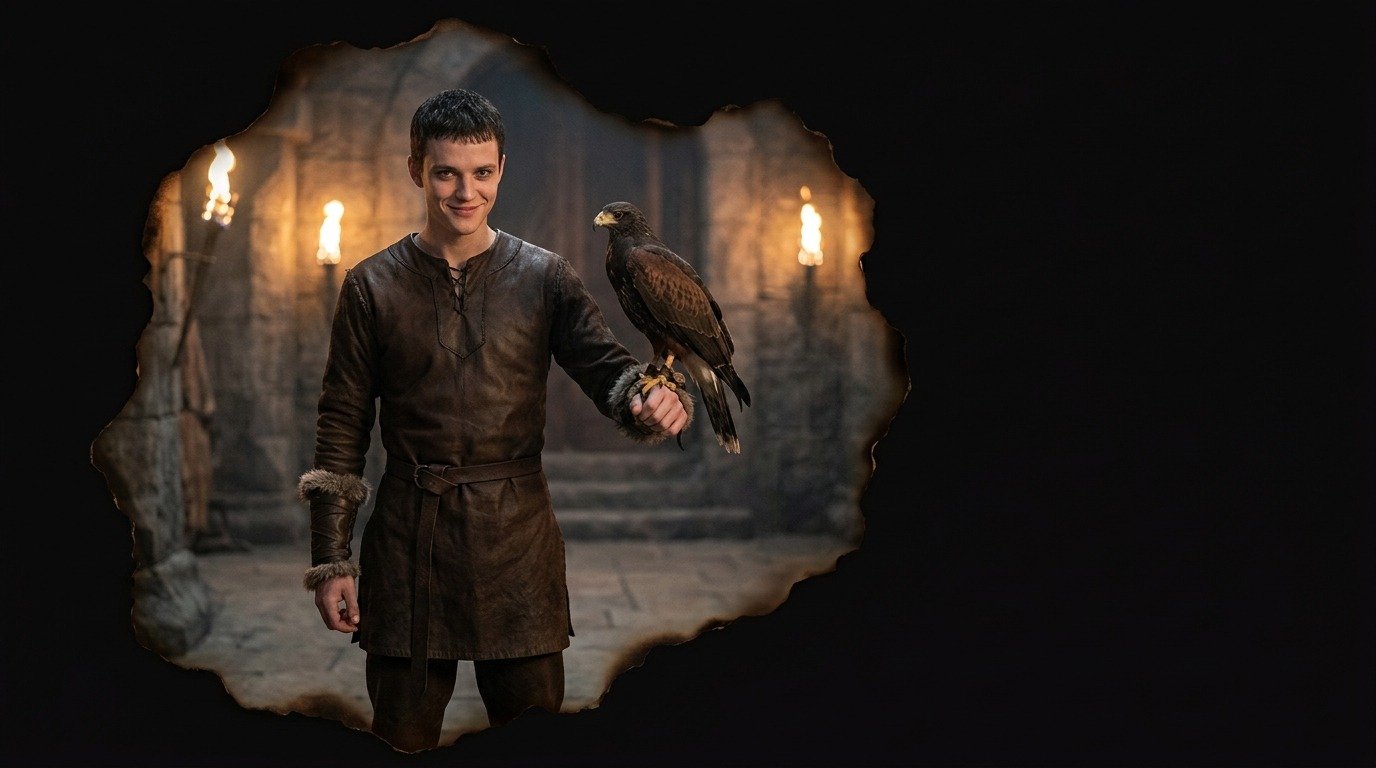
Loki: The Spark That Consumes the Forest
Son of Fire and Frost
In Loki's veins runs not the blood of the gods, but the cold of the frost giants and the unpredictable fire of fallen stars. Son of the giant Farbauti and of Laufey, a mystical figure associated with pine needles and dry leaves, Loki was accepted into Asgard not by birthright, but by an irrevocable blood oath with Odin. At the dawn of time, both mixed their essences in the earth, promising that neither would ever drink unless a cup was also offered to the other. That pact forever bound the fate of the Allfather with that of the greatest trickster in creation. Loki is not a monster of brute strength, but a mind sharp as a scalpel. He is handsome of face, elegant in manners, and speaks words so sweet they can make a king surrender his crown believing he is receiving a gift. However, behind his green eyes and mocking smile dwells a fickle spirit, unable to content itself with the order of the gods. He is the catalyst of mythology: where the gods stagnate in their own solemnity, Loki introduces discord, change, and chaos that force the world to move.
The Forked Tongue of Asgard
Loki's relationship with the inhabitants of Asgard is an eternal cycle of sabotage and redemption. It is he who gets the gods into the worst predicaments, and it is he himself who, under threat of death or torture, must use his wits to save them. When greed led him to help a giant kidnap Idunn and her apples of youth, plunging the gods into premature old age, Loki took the form of a falcon to rescue her from the enemy's clutches, defying the icy winds to restore eternal life to his companions. The vast majority of the treasures that define the power of the gods exist thanks to Loki's schemes. After shearing the golden hair of Sif, Thor's wife, out of pure amusement, and finding himself cornered by the fury of the thunder god, Loki descended into the depths of the earth to challenge the dwarves to a crafting contest. From that intrigue were born Odin's spear Gungnir, the folding ship Skidbladnir, Thor's own hammer Mjölnir, and Freyr's golden-bristled boar. Loki is the great indirect creator, the one who extracts wonder from conflict. His very nature is mutable; he can transform into a fly, a mare—even giving birth to Sleipnir, Odin's horse—or a salmon to escape the net of justice.
The Monstrous Heritage
Despite his coexistence with the gods, Loki's true loyalty always belonged to the shadows from which he came. In the darkest corner of Jotunheim, alongside the giantess Angrboda, he fathered offspring that embody the worst nightmares of the cosmos: the wolf Fenrir, whose growth threatened to devour the sky; Jörmungandr, the serpent that surrounds the world biting its own tail; and Hel, the ruler of the dead with a frigid gaze and decaying skin. The gods, fearful of this lineage, chained the wolf, cast the serpent into the ocean, and banished Hel to the underworld, sowing a hatred in Loki's heart that fermented for centuries. The ultimate tragedy began with a whisper of envy. Jealous of Baldr, the god of light and beauty whom everyone loved and nothing could hurt, Loki discovered the young god's sole weakness: mistletoe. With the patience of a spider, he guided the hand of the blind god Höðr to throw a branch of the plant at his brother, piercing his chest before the horrified gaze of the celestial court. When the gods attempted to rescue Baldr from the realm of the dead and Hel promised to return him if all things in the world wept for him, Loki disguised himself as an old giantess hidden in a cave who refused to shed a single tear, condemning the god of light to eternal exile in the darkness.
The Tide of Ragnarok
The punishment for Baldr's death was as ruthless as the crime. The gods captured Loki in a waterfall, transformed one of his sons into a wolf to disembowel the other, and used the still-warm entrails of his own offspring to chain Loki to three sharp rocks in the depths of a cavern. Above his face, they placed a venomous serpent that drips corrosive acid onto his eyes. Only the loyalty of his wife, Sigyn, eases his torment, holding a bowl over his face to catch the poison; but every time she withdraws to empty the vessel, the acid burns Loki's skin, whose convulsions of pain make the earth tremble in what mortals call earthquakes. But the chains will not last forever. When the end of days arrives, the cords of entrails will break and Loki will be free. There will be no more jokes or clever disguises: only a pure and incandescent thirst for vengeance. Loki will sail toward Asgard at the helm of Naglfar, the ship built from the nails of the dead, leading the hosts of chaos. On the final battlefield, he will face Heimdall, the guardian of the gods, in a duel to the death. Both will pierce each other with their weapons, falling lifeless as the world Loki helped to build and destroy is consumed under the fire of Ragnarok.
Comments
Share information, an experience, or a source to help enrich this entry. They are automatically reviewed before being published.
Loading comments...