Hel
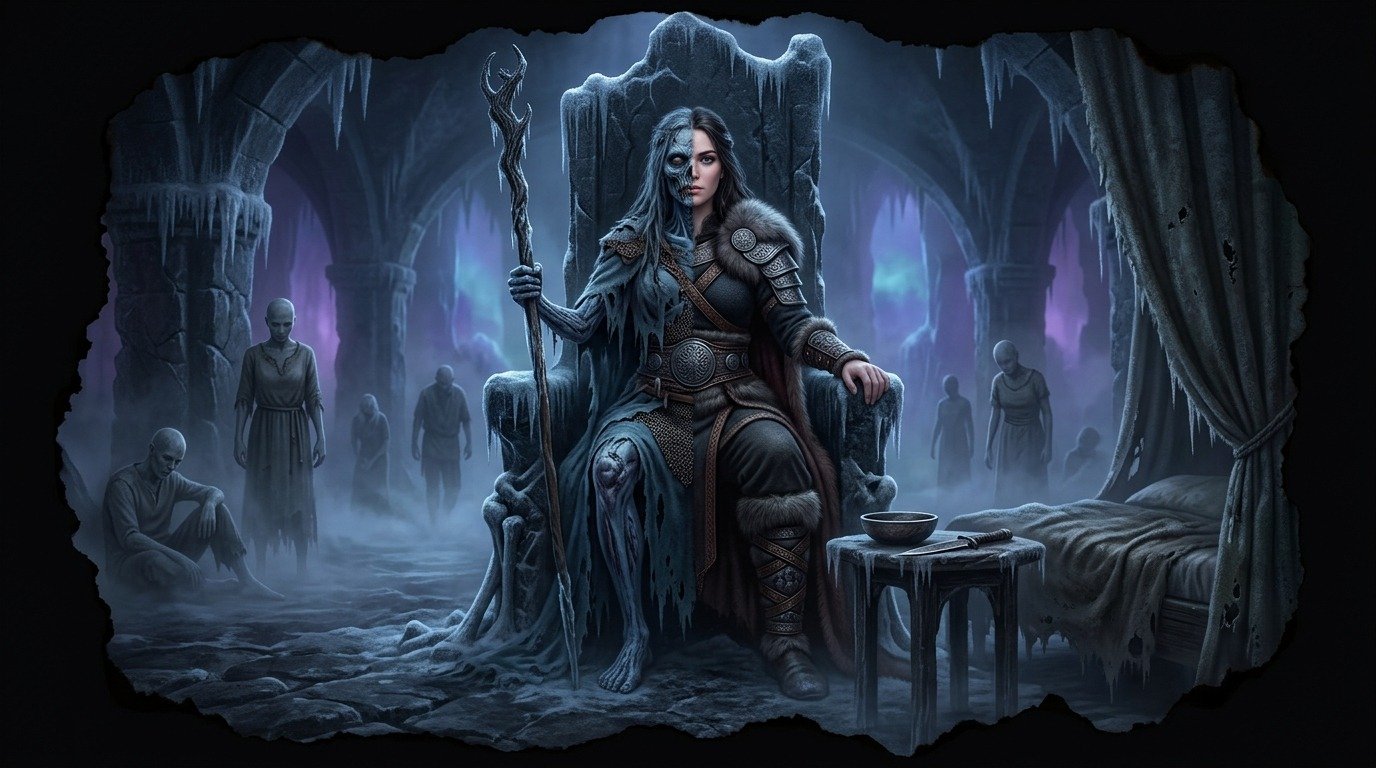
Hel: Queen of the Gloom and Eternal Cold
The Outcast of the Abyss
In the depths of the worlds, where sunlight is nothing more than a distant fable, lies the realm of Niflheim, and there Hel rules. Born of the forbidden union between the cunning Loki and the giantess Angrboda, Hel shared blood with terrible monsters: the devouring wolf Fenrir and the world serpent Jormungandr. When the gods beheld the birth of this nightmarish triad, they panicked at the prophecies foretelling the end of days at the hands of Loki's offspring.
Odin, seeking to ward off the danger, took the young Hel and mercilessly cast her into the deepest abysses of the cosmos, granting her sovereignty over the ninth world. However, this was not an act of mercy, but a condemnation: she was given dominion over all those who died of old age, sickness, or everyday accidents; the gray souls who did not achieve the glory of swords on the battlefield and, therefore, were barred from entering Valhalla.
The Divided Face of Death
Hel is no ordinary deity; her very physiognomy is a reflection of the threshold she guards. From head to toe, her body is divided into two perfect and terrifying halves. One side displays the smooth, rosy, and beautiful skin of a noble-born maiden; the other side exhibits the decaying, bluish, and withered flesh of a corpse consumed by the grave. Her gaze is as icy as the frost that covers the stones of her palace, called Eljudnir, which translates to "the one of misery."
In her domain, Hel is the absolute law. Her table is called Hunger, her knife is Famine, her bed is Sickness, and the curtains that surround her are Burning Pain. Unlike other underworld rulers from different cultures, Hel does not actively judge or punish her guests; she simply welcomes them into an eternity of gloom, silence, and constant cold, sheltering them under the mantle of an endless melancholy.
The Weeping That Sealed Baldr's Fate
The myth that defines Hel's unyielding will occurred after the death of the beloved god Baldr, a victim of Loki's intrigues. The grief in Asgard was so immense that Hermod, the messenger of the gods, rode for nine nights through dark valleys and crossed the golden bridge over the river Gjöll to beg the queen of death to allow the god of light to return to the world of the living.
Hel listened to the request, seated upon her throne of shadows. Unmoved by the emissary's pleas, she handed down a sentence that would test the very fabric of creation: Baldr would return to Asgard only if all things in the universe, both living and dead, wept for his departure. The gods mobilized the entire cosmos; stones, trees, beasts, and men shed tears for the fallen god. However, a giantess named Thokk—who was none other than Loki in disguise—refused to weep, declaring that death should keep what was its own. Hel, true to her word and showing not a shred of compassion, kept Baldr in her dark halls, proving that not even the love of the gods can bend the laws of the abyss.
The Banner of the End of the World
Hel waits patiently for the end of the cycles. In the prophecies of Ragnarok, her figure emerges from the shadows not as a mere passive specter, but as a force of cosmic retribution. When the bonds of the world are broken and the wolf Fenrir runs free, the gates of Niflheim will swing wide open.
Hel will march toward the plain of Vigrid aboard Naglfar, the ship built from the nails of the dead who arrive in her realm. At her side will sail an army of pale specters, the fallen of past centuries, ready to clash with the hosts of Asgard. She represents the final and inevitable destiny, the wasteland where all earthly glory ultimately withers under the gaze of two eyes: one that saw life, and another that contemplates, from eternity, the decay of all things.
Comments
Share information, an experience, or a source to help enrich this entry. They are automatically reviewed before being published.
Loading comments...