Instrumental Transcommunication
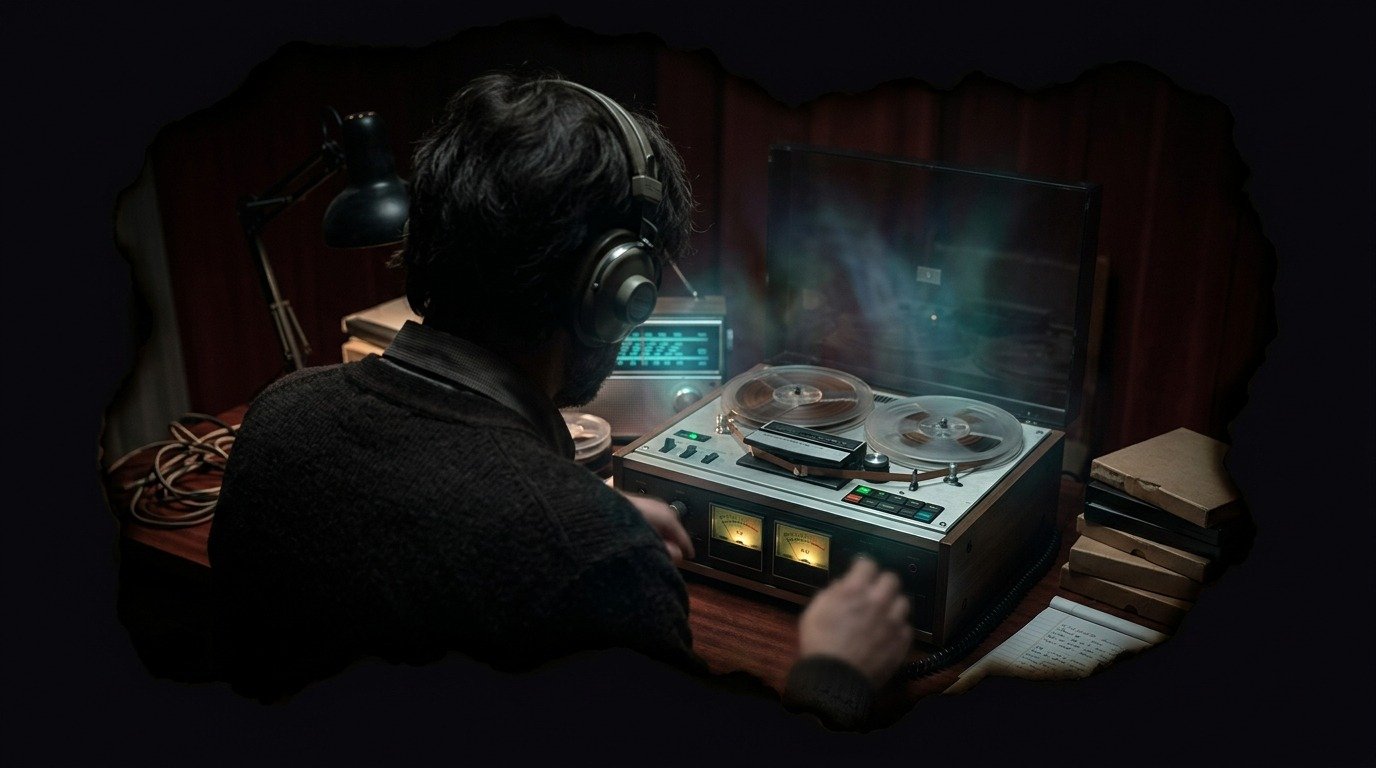
Instrumental Transcommunication: The Technological Bridge to the Spiritual Plane
What It Is
Instrumental transcommunication is the establishment of contact between the physical plane and spiritual or non-physical dimensions through the use of electronic devices. Unlike traditional mediumship, which uses the human body as a channel, this practice employs radios, televisions, audio recorders, computers, and specialized software to capture voices, images, and texts coming from incorporeal entities.
How It Manifests
The phenomenon presents itself through various technical modalities. In audio, it manifests as voices superimposed on white noise or constantly sweeping radio frequencies; these voices are usually brief, direct, and answer questions asked by the operators. In video and photography, faces or three-dimensional figures are observed forming amidst the static of television screens with no signal or on reflective surfaces. In computers, text files or emails are recorded, generated spontaneously without human intervention on the keyboard.
History and Traditions
The foundation of instrumental transcommunication lies in the desire of nineteenth- and early twentieth-century inventors to apply technology to spiritualism. Thomas Alva Edison documented his attempts to design a telephone device to communicate with the dead. In 1959, Swedish film producer Friedrich Jürgenson accidentally discovered the phenomenon while recording birdsong; upon playing back the tape, he heard the voice of his deceased mother.
The Latvian psychologist Konstantīns Raudive systematized the study of these recordings in the 1960s, recording more than one hundred thousand voices under laboratory conditions. In the 1980s, German physicist Ernst Senkowski coined the term "instrumental transcommunication" to group together all spiritual interactions obtained through human-made devices.
Famous Cases
The case of the Spiricom system, developed in 1980 in the United States by inventor George Meek and medium Bill O'Neil. Using a shortwave radio frequency transmitter and a set of thirteen tone generators, O'Neil maintained more than twenty hours of fluid conversations with Dr. George Jeffries Mueller, a NASA physicist who died in 1967.
The case of the Luxembourg transcommunication station, operated by Maggy and Jules Harsch-Fischbach in the late 1980s. Through the use of modified radios and televisions, the couple received extensive text messages, clear images of deceased beings, and high-quality audio transmissions from a dimension self-styled as "Timestream."
What Explains It
The esoteric explanation defines instrumental transcommunication as a direct manipulation of electromagnetic energy by spirits. Discarnate entities lack vocal cords or physical bodies, so they use white noise, static, and the electrical currents of devices as raw material to modulate sound waves and images that the human eye and ear can perceive.
The scientific explanation associates the phenomenon with auditory and visual pareidolia. The human brain possesses an evolutionary mechanism that seeks familiar patterns in chaos; when faced with the static noise of a radio or the snow of a television, the cognitive system unconsciously organizes random stimuli to construct intelligible words or faces. Commercial radio wave interference and residual signals are also pointed out as the origin of the voices.
Connections
This phenomenon is directly related to Electronic Voice Phenomena (EVP), spirit photography, physical mediumship, poltergeist manifestations, and the modern use of the Spirit Box in field investigations.
Comments
Share information, an experience, or a source to help enrich this entry. They are automatically reviewed before being published.
Loading comments...