Ectoplasm
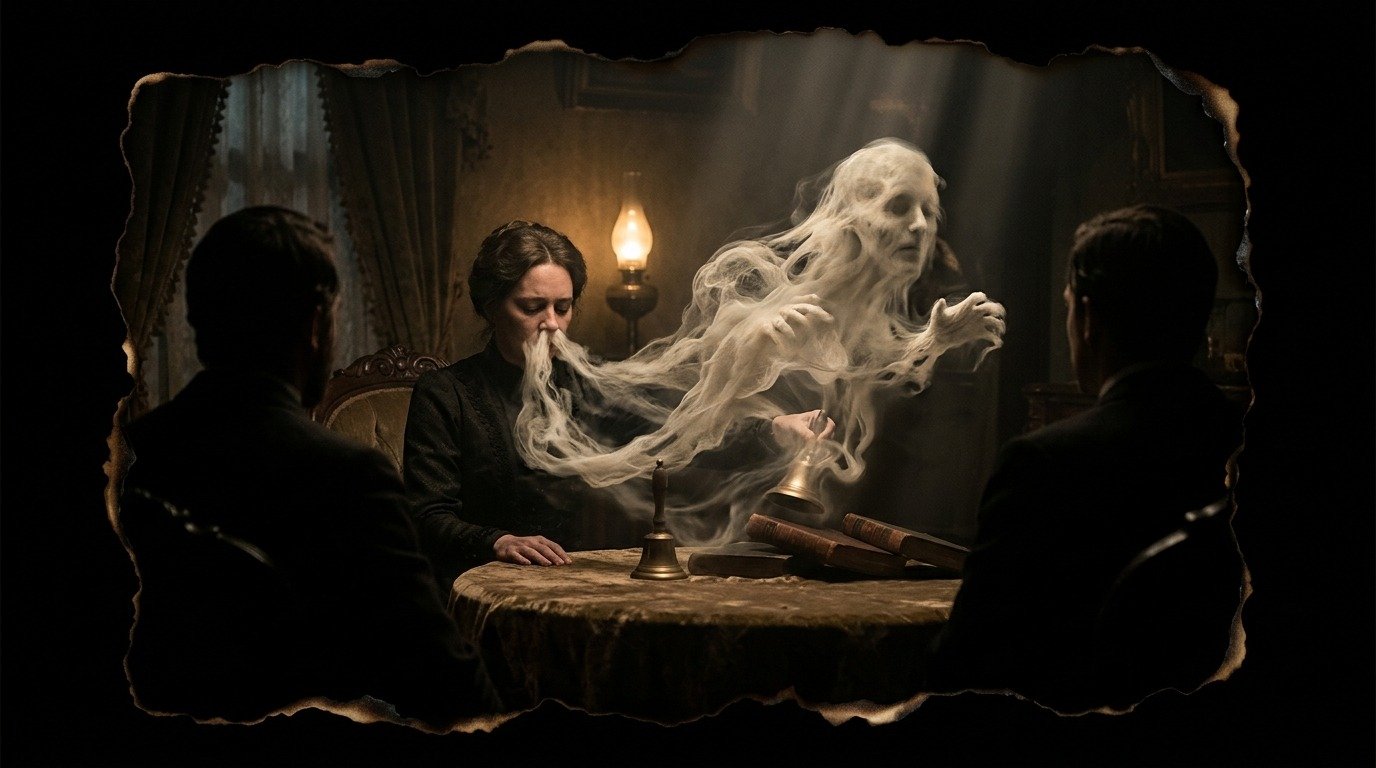
Ectoplasm: the physical substance of spirits
What it is
Ectoplasm is a semi-solid, fluid, or vaporous substance of organic and spiritual origin that physical mediums secrete during seances to allow incorporeal entities to act physically, materialize, or communicate on the material plane.
How it manifests
The substance emanates from the bodily orifices of the medium in a trance state, mainly from the mouth, nose, and ears. Its physical appearance varies from a whitish, ethereal mist to a dense net similar to gauze, or a gelatinous mass cold to the touch with an odor similar to ozone or copper. Ectoplasm is extremely sensitive to white light; sudden illumination causes its violent retraction back into the medium's body, which can cause internal hemorrhages or severe physical shock to the operator. Within the ectoplasmic mass, faces, hands, and limbs with realistic relief often form, performing actions such as playing instruments or moving objects.
History and traditions
The term "ectoplasm" was coined in 1894 by the French physiologist Charles Richet, winner of the Nobel Prize in Medicine, to describe the unknown biological substance he observed in his investigations with mediums. During the golden age of Spiritualism (late 19th and early 20th centuries), the study of ectoplasm attracted prominent scientists such as the chemist William Crookes and the physician Albert von Schrenck-Notzing.
Researchers analyzed the substance in makeshift laboratories and under strict control measures to rule out fraud, using scales to demonstrate that the medium's weight decreased proportionally to the volume of expelled ectoplasm.
Famous cases
The case of the seances of the French medium Eva Carrière (Eva C.) in Paris at the beginning of the 20th century. Under the supervision of Baron von Schrenck-Notzing, the medium consistently produced masses of ectoplasm that transformed into fully formed faces and hands, which were photographed and documented under conditions of strict scientific surveillance.
The case of Mina "Margery" Crandon in Boston during the 1920s. Her ectoplasmic manifestations included the formation of appendages in the shape of rudimentary hands capable of pressing buttons and leaving perfect fingerprints on warm wax plates, a phenomenon subjected to scrutiny by committees of the magazine Scientific American.
What explains it
The esoteric explanation defines ectoplasm as the bridging matter between the dense plane of matter and the subtle plane of spiritual energy. It is composed of cells from the medium's body, bodily fluids, and vital energy (ectene). Spirits use this moldable substance as a temporary garment to cover their subtle energetic structure, achieving the necessary density to physically interact with the matter of our plane.
The scientific explanation classifies historical ectoplasm as a mechanical fraud devised through illusionism techniques. Skeptical investigations showed that mediums hid materials such as gauze, muslin, toilet paper, animal tissue, or egg whites in their underwear or swallowed them before the seance, only to regurgitate them later in the darkness of the seance room, simulating the emanation of spiritual substance from their mouth.
Connections
This phenomenon is directly related to physical mediumship, seances, poltergeists, materialization, and energy transmutation.
Comments
Share information, an experience, or a source to help enrich this entry. They are automatically reviewed before being published.
Loading comments...