Rhea
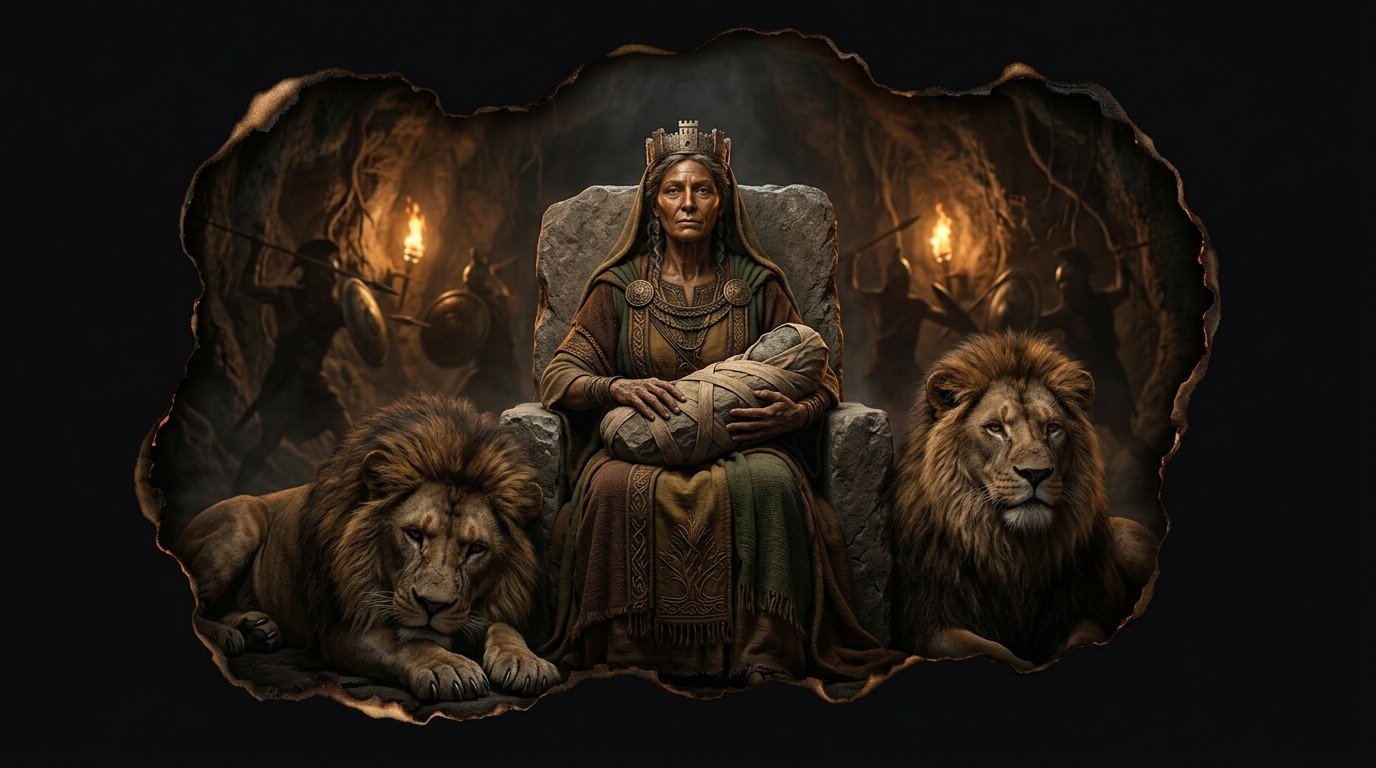
Rhea: The Great Mother of the Stone Throne
The Bridge Between Two Eras
If the primeval universe was defined by the masculine violence of the sky and time, Rhea represented the undercurrent that allowed the continuity of existence. Born from the union of earth and sky, this Titaness personified the constant flow of life, the unstoppable fertility, and the motherhood that resists tyranny. While her husband Cronus ruled with an iron fist, obsessed with immutability, Rhea was the river that wore away the rock.
Her presence did not manifest in thunder or cataclysm, but in the weight of the mountains and the heartbeat of the fertile soil. She was often depicted in a chariot drawn by lions, animals of sharp claws and untamable sovereignty that submitted docilely to her passing. She was the power that sustained divine dynasties, the queen who had to watch her own children be consumed by paternal fear, patiently waiting for the moment to break the cycle.
The Whisper in the Caves of Ida
The story of Rhea is one of silent resistance. Enduring the loss of five children devoured by Cronus tempered her character like bronze. When she felt the heartbeat of her sixth child in her womb, she decided that Mount Othrys would never again hear the cry of a newborn silenced by the Titan's jaws. Guided by her mother's advice, she retreated to the island of Crete under the cover of night.
In the deep cave of Mount Ida, amidst the scent of damp clay and ancient roots, Rhea gave birth to Zeus. To hide the baby's crying from Cronus's attentive ears, she summoned the Curetes, young warriors who danced around the cradle, striking their bronze shields with the tips of their spears, drowning out any sign of new life with a din of metal. The final deception of the swaddling clothes and the stone proved that the mother's cunning was infinitely deeper than the brute force of the monarch of the universe.
The Crown of Towers and the Roar of the Lions
After the fall of the Titans and the rise of the Olympians, Rhea did not seek to rule the new order, but instead retreated to the margins of the inhabited world, merging with the cults of the lands of Phrygia and the mountains of Asia Minor. Mortals worshipped her to the din of tambourines and bronze cymbals, associating her figure with that of Cybele, the Mother of the Gods. Her head was crowned with a tiara in the shape of a turreted wall, a symbol of the cities she protected under her mantle of earth.
Her cult was a telluric experience, celebrated in dense forests and wind-swept peaks, where the roar of her sacred lions reminded men that, beneath the laws and temples of the new gods, there still beat the untamed and wild force of the mother who had nursed them all.
Comments
Share information, an experience, or a source to help enrich this entry. They are automatically reviewed before being published.
Loading comments...