Myrtles Plantation
Myrtles Plantation: The Mirror That Traps the Dead
The Oleander Cake
According to Louisiana's most widely told legend, on the afternoon of September 15, 1823, an enslaved woman named Chloe walked from the outdoor kitchens to the main dining room of the Myrtles Plantation in St. Francisville, Louisiana. In her hands, she carried a freshly baked cake for the birthday dinner of the owner's wife, Sara Woodruff. To prepare it, Chloe had boiled oleander leaves, an extremely toxic ornamental shrub that grew in the property's gardens, and had mixed the poisonous extract into the batter. A few hours after eating the dessert, Sara and her two young daughters suffered violent convulsions and died in their beds. Fearing the punishment of their master, Clark Woodruff, the other enslaved people of the plantation dragged Chloe away that very night, hanged her from an oak tree near the entrance, and threw her body into the Mississippi River.
The Mansion of the Hanging Oaks
The Myrtles Plantation was built in 1796 by General David Bradford, a fugitive from justice who was seeking a safe haven in the Spanish territory of Louisiana. The house, an imposing French Colonial-style structure with a thirty-seven-meter (121-foot) carved wood veranda, was built, according to local tradition, over an ancient burial ground of the native Tunica tribe. Throughout the 19th century, the property changed hands several times, accumulating family tragedies, financial bankruptcies, and premature deaths caused by yellow fever and post-Civil War violence. The house quickly earned a reputation as one of the most somber properties in the American South.
The Reflection of the Woodruffs
The most feared object inside the house is a large, gold-framed French mirror located in the main foyer. According to the custom of the era, when a family member died, all the mirrors in the home had to be covered with black cloth to prevent their souls from becoming trapped in the earthly world. Legend has it that, following the deaths of Sara Woodruff and her daughters, the foyer mirror was left uncovered due to the servants' oversight. Since then, visitors claim to see children's handprints appearing on the glass from the inside—marks that no cleaner can erase—and the faces of a woman and two girls dressed in 19th-century clothing reflected in the shadows of the hallway.
The Appearance of the Green Turban
Guests staying at the plantation today, which operates as a historic hotel, report constant encounters with the ghost of Chloe, whom they describe as a dark-skinned woman wearing a bright green turban on her head—the same accessory she wore in life to conceal the ear her master had cut off as punishment for eavesdropping behind doors. The heavy footsteps of William Winter, an attorney who was shot and killed on the house's porch in 1871, are also recurrently reported. Witnesses hear him laboriously climbing the steps of the main staircase, shuffling his feet, only to always stop on the seventeenth step—the exact spot where he died in his wife's arms.
Between Myth and Archive
Historical research reveals that the story of Chloe contains significant inconsistencies. Although Sara Woodruff and two of her daughters passed away at the plantation in the 1820s, parish records from the time list yellow fever—a common epidemic in the Mississippi Delta during those years—as the official cause of death. There are no records of any enslaved woman named Chloe in the property inventories of Colonel Woodruff. However, the murder of William Winter is fully documented: he was attacked by an unknown assailant on horseback in January 1871 and died on the house's interior stairs, just as the family chronicle recounts.
The Profile on the Porch
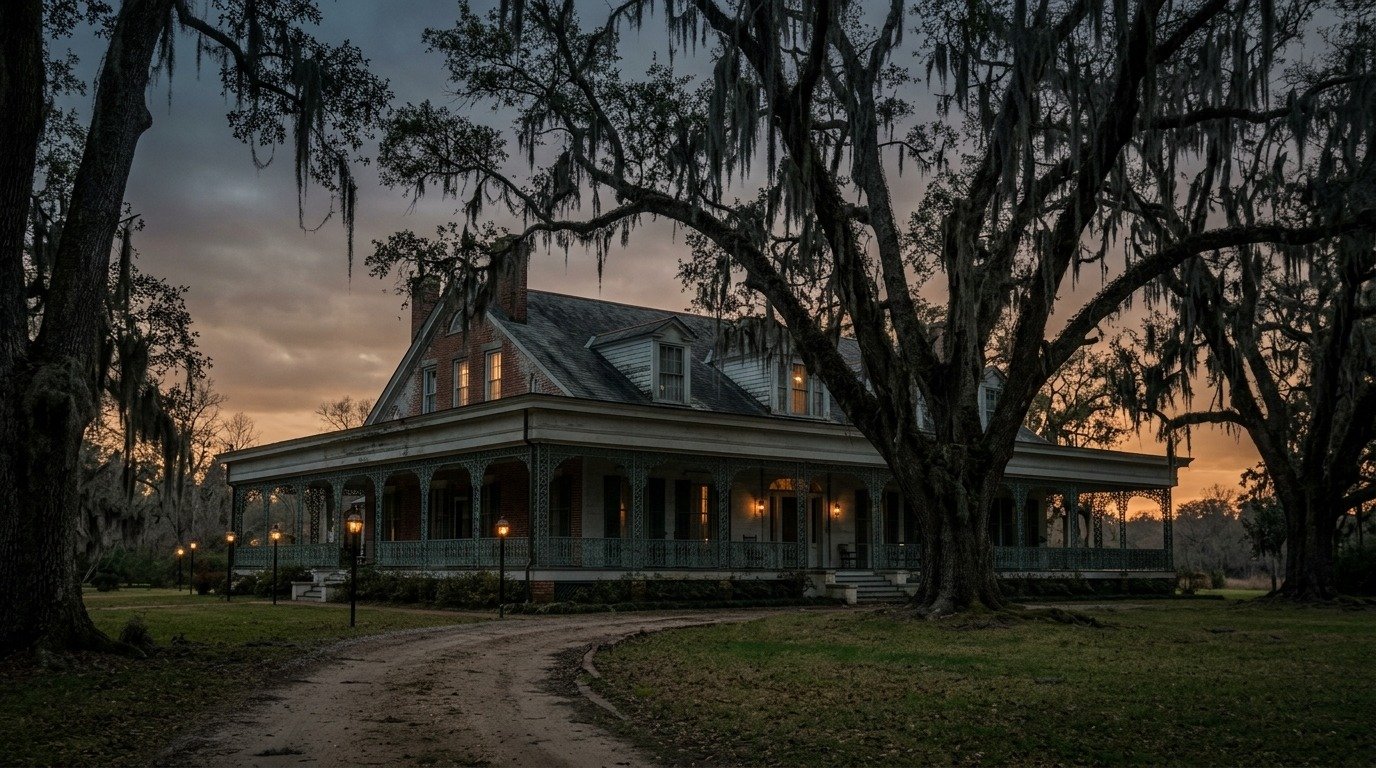
As the sun sets, the branches of the immense, centuries-old oak trees draped in Spanish moss cast long shadows across the facade of the Myrtles. On the upper floor, the lace curtains of the windows drift slightly, tracing the silhouette of a woman gazing out at the driveway, waiting for the return of those who never came back.
Comments
Share information, an experience, or a source to help enrich this entry. They are automatically reviewed before being published.
Loading comments...