Trans-Allegheny Asylum
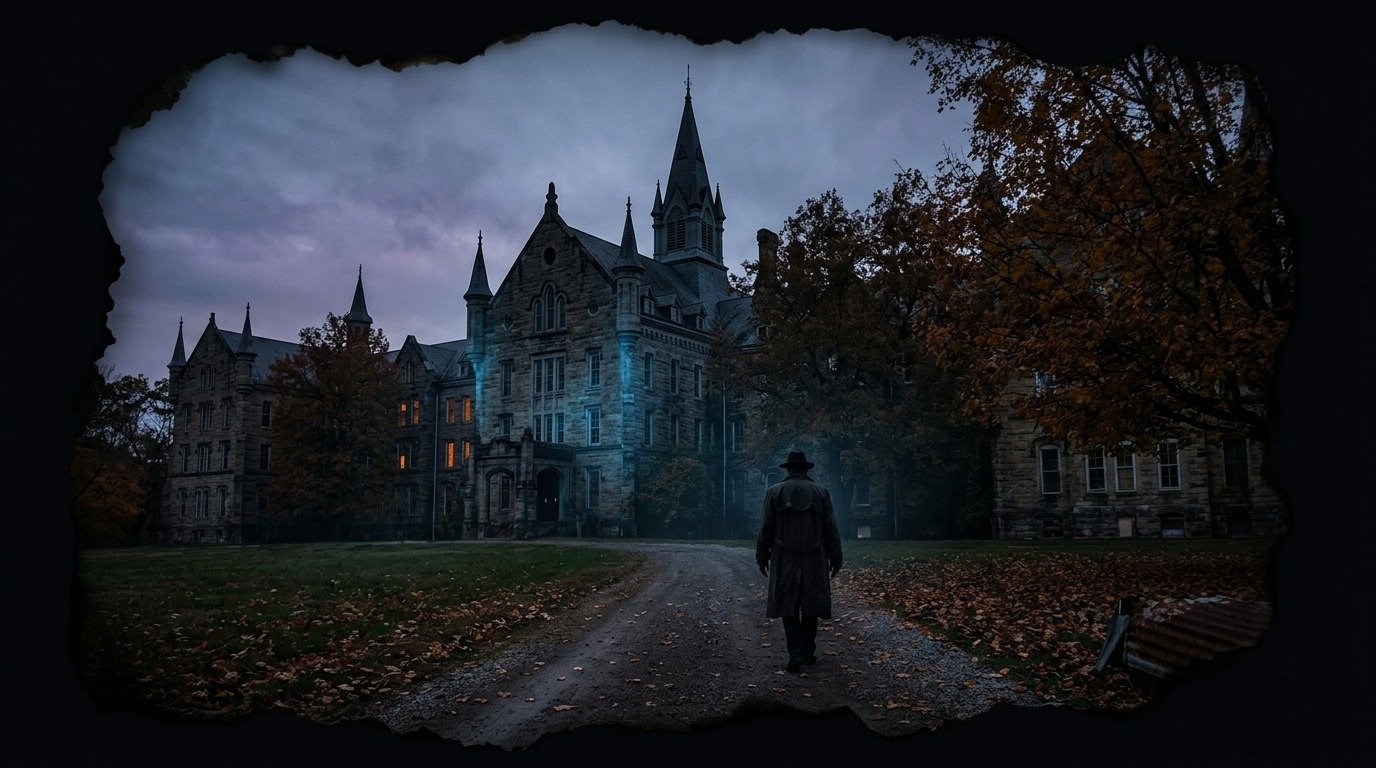
Trans-Allegheny Asylum: The Lost Souls of Weston
On a cold autumn afternoon in the town of Weston, West Virginia, the wind whistles through the thousands of broken glass panes of a monumental stone structure. Inside the forensic ward, a heavy silence is interrupted by the metallic echo of a door closing on its own. In one of the isolation rooms, a group of visitors watches as a blue plastic ball, placed in the center of a decaying wooden floor, begins to roll slowly toward them, defying gravity and logic, as if invisible hands were playing once again.
The Palace of Madness and Overcrowding
Designed by architect Richard Snowden Andrews and constructed under the Kirkbride Plan concept, the Trans-Allegheny Lunatic Asylum opened its doors in 1864. Its limestone structure is the largest hand-cut stone building in North America, originally designed to house two hundred and fifty patients in a therapeutic environment of natural light, fresh air, and high ceilings.
But reality quickly shattered those good intentions. By the 1950s, the hospital housed more than two thousand four hundred patients. Overcrowding turned the place into a hell of concrete and bars. The sick slept huddled together on urine-soaked floors, the hallways became impassable, and a lack of staff led to the most violent patients being locked in metal cages or chained to the walls for days on end.
In this chaotic setting, Dr. Walter Freeman performed hundreds of his famous transorbital lobotomies, using an ice pick that he inserted through the patient's eyelid to destroy the frontal lobes. Many of these procedures were performed without adequate anesthesia and with absolute disregard for human life. Suicides, murders among patients, and deaths from hypothermia were part of the asylum's daily routine.
The Spirits of the Abandoned Wards
When the hospital permanently closed its doors in 1994, the souls of thousands of people who died within its walls seemed to remain trapped in the stone. Among the many entities described in the place, the most famous is "Lily," the ghost of a nine-year-old girl who materializes in the youth ward. Witnesses claim she can be heard laughing, running, and that she often interacts with the toys visitors leave in her room.
Another recurring specter is that of "Ruth," a violent patient who hated men and who, according to the site's guides, continues to manifest her fury by pushing male visitors, throwing heavy objects, and causing electrical failures in filming equipment. In the wings designated for the criminally insane, shadows move quickly through the corridors, and wails of agony echo with such clarity that they force visitors to leave the building before finishing the night tours.
What Happens Today
Today, the asylum operates as a historical and tourist attraction, offering historical tours and overnight paranormal investigation stays. Investigators from all over the world have recorded electronic voice phenomena of male voices screaming "Help!" or "Let me out!", in addition to recording drastic temperature changes of more than fifteen degrees Celsius (27 degrees Fahrenheit) in a matter of seconds.
The testimonies of those who spend the night in the former lobotomy rooms describe an intense feeling of physical heaviness, sudden nausea, and the unmistakable sound of hurried footsteps stopping just before crossing the threshold of the iron doors.
The End of the Asylum
The closure of the Trans-Allegheny Asylum was decreed in 1994 due to changes in psychiatric treatments, the arrival of new drugs, and constant reports of the subhuman conditions and extreme overcrowding suffered by patients. State investigations confirmed that the facility lacked basic resources to guarantee the dignity of the inmates, turning mental health treatment into a system of forced confinement and institutionalized torture.
The building remains today as a physical reminder of a dark era in medicine. Its endless corridors, where sunlight barely manages to dispel the shadows of the limestone, hold the echo of thousands of broken lives that never found their way back home.
Comments
Share information, an experience, or a source to help enrich this entry. They are automatically reviewed before being published.
Loading comments...