Waverly Hills Sanatorium
Waverly Hills Sanatorium: The Hill of the White Plague and the Tunnel of No Return
The Slide in the Shadows
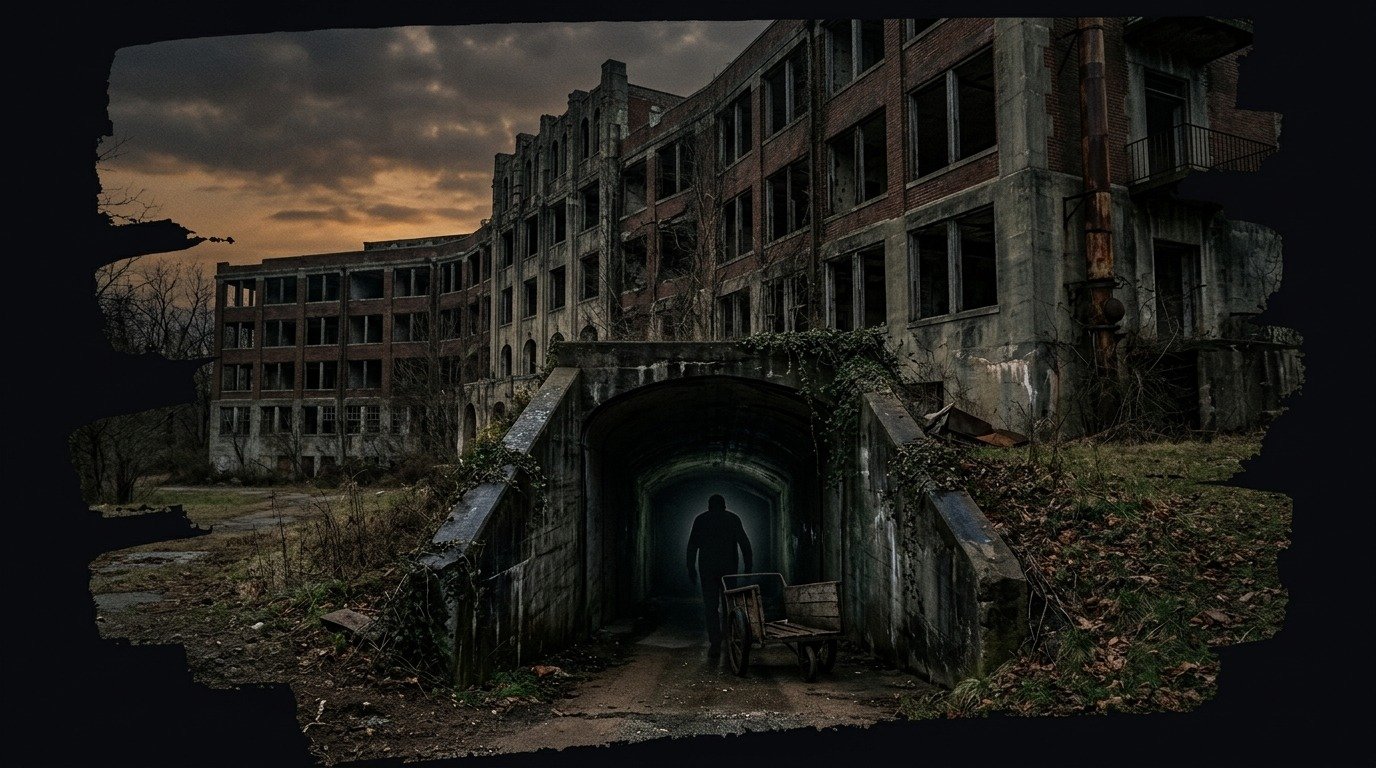
One night in the 1930s, a wooden cart slid noiselessly across the concrete floor of an underground tunnel in Louisville, Kentucky. Resting on the planks was the body of a forty-year-old man who had coughed up blood until he died two hours earlier. The cart driver pushed the load along the one hundred and fifty meters (492 feet) of dark slope that connected the hospital to the railway tracks at the foot of the hill. The transfer was made in absolute silence, with no external lights and under strict orders not to speak. The corpse had to be removed before the other patients saw it. At Waverly Hills, seeing a coffin leave through the front door meant losing the last hope of surviving the white plague.
The Bastion of Consumption
Waverly Hills Sanatorium began as a small wooden structure in 1910, but the tuberculosis epidemic that ravaged Jefferson County forced authorities to erect a five-story concrete monster in 1926. In an era when streptomycin did not yet exist, the only known treatment for consumption consisted of rest, fresh air, and sunlight.
The building was designed with immense windows and open terraces where the sick spent the entire day, even during the harshest winters, exposed to the cold under frozen blankets. For the most severe cases, doctors applied brutal methods: they collapsed patients' lungs using surgical balloons or removed several ribs so the diseased organ would have room to "rest." Death was a daily occurrence. It is estimated that thousands of people died within these walls before the discovery of antibiotics emptied the sanatorium, forcing its permanent closure in 1961.
The Souls of Room 502
The east wing of the fifth floor houses the sanatorium's darkest legend. In Room 502, legend has it, the nursing staff lived under unbearable pressure. In 1928, a twenty-nine-year-old nurse was allegedly found hanging from a pipe support in that room; it is said she was pregnant and unmarried, and suffering from deep depression. Four years later, in 1932, another nurse from the same ward allegedly fell from the balcony of the same room to the entrance courtyard below.
To these events is added the story of Timmy, the ghost of a six-year-old boy who, according to the property's caretakers, plays in the hallways of the third floor with a leather ball that visitors leave on the floor for him. The toy moves on its own, rolling in a straight line down the hallway without a single draft of air blowing.
Footsteps in the Concrete Hallway
Those who walk through the ruins of Waverly Hills today experience an immediate physical oppression upon crossing the building's threshold. On the fourth floor, paranormal investigators record black silhouettes crossing the hallways from side to side, known as "shadow people."
Witnesses claim to have heard heavy footsteps on the dry leaves covering the floor, the sudden smell of baking bread and hospital disinfectant in empty rooms, and the distant echo of a gurney—the metal stretcher—rolling down the concrete ramps. The death tunnel, now damp and covered in mold, maintains a temperature remarkably lower than the rest of the property, and those who walk through it claim to feel invisible hands brushing against their shoulders in the pitch black.
The Reality Behind the Walls
Documented history confirms that Waverly Hills functioned as a mass isolation facility and that the death tunnel—whose official name was the "service duct"—was built specifically to transport supplies during the winter and discreetly remove corpses. Records disprove the mythical figure of sixty-three thousand deaths: the sanatorium's historians estimate that a few thousand patients died in total, a terrible figure but far from the myth. As for the nurses of Room 502, no document from the era has ever surfaced to confirm either of the two deaths.
The Last Watch
Waverly Hills still stands on the hill, its red-brick Gothic facade dominating the Kentucky landscape. As evening falls and the wind filters through the broken windows, the building seems to breathe with difficulty, a dull echo of the thousands of lungs that went out under its roof.
Comments
Share information, an experience, or a source to help enrich this entry. They are automatically reviewed before being published.
Loading comments...