LaLaurie Mansion
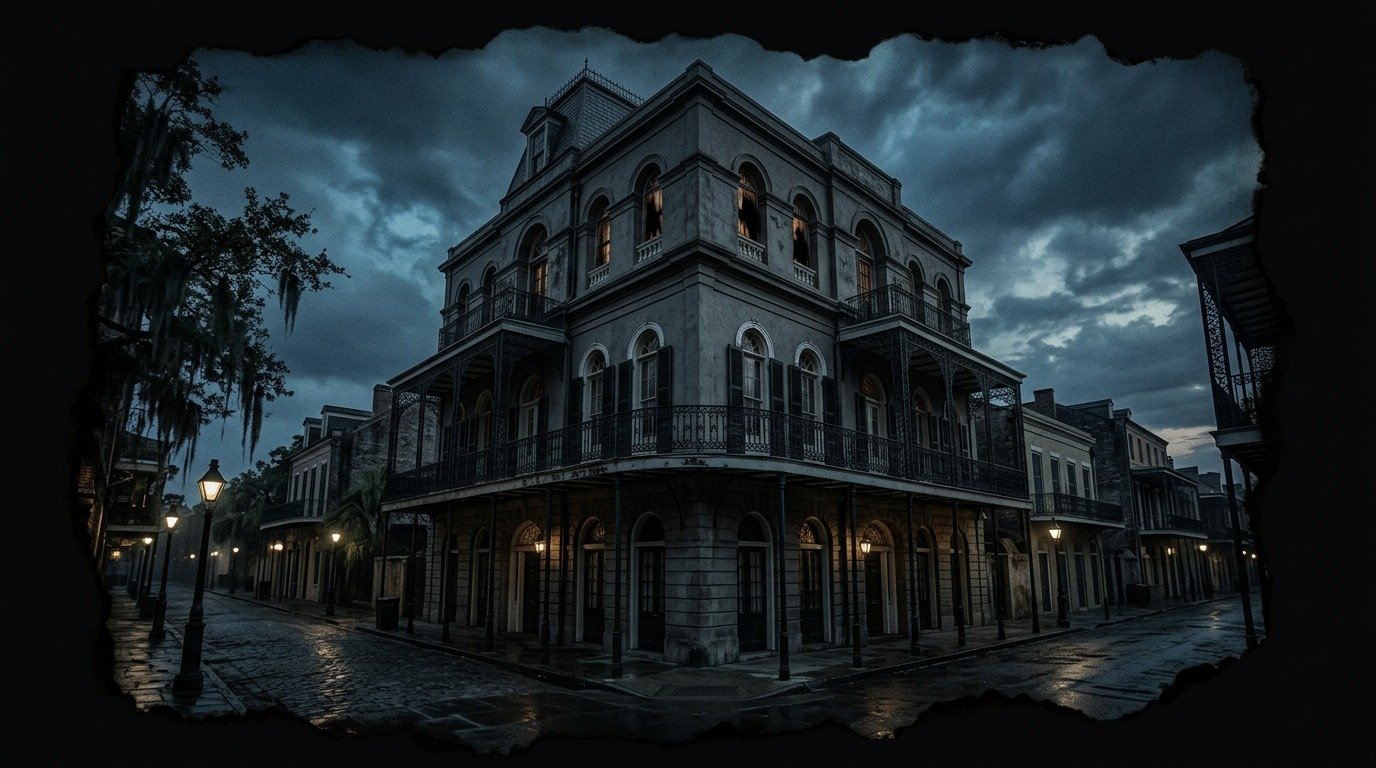
LaLaurie Mansion: The House of Horrors of New Orleans
On the night of April 10, 1834, flames began to lick the windows of the imposing residence on Royal Street, in New Orleans' French Quarter. When neighbors and firefighters broke down the doors to extinguish the fire, a seventy-year-old slave was found chained to the kitchen. She had started the fire herself: she preferred to burn to death rather than be taken to the attic, the place from which no one returned. Upon climbing the stairs and forcing the lock of that upper floor, the rescuers encountered a scene that froze their hearts and would change the city's history forever.
The Secrets of High Society
Delphine LaLaurie was a woman of high Creole society, respected for her elegance, her wealth, and her sumptuous parties. Along with her third husband, the physician Leonard Louis Nicolas LaLaurie, she inhabited the three-story mansion that stood as a symbol of power. However, behind the stucco walls and crystal chandeliers, a methodical sadism was hidden.
Rumors about Delphine's treatment of her servants circulated in hushed tones through the city's parlors. The breaking point occurred before the fire, when a slave girl named Leah, just twelve years old, was brushing Delphine's hair. By accidentally pulling on a tangle, she unleashed her mistress's fury. The girl, terrified of the woman's whip, ran to the roof of the mansion and leaped into the void. Her body was shattered on the cobblestone courtyard. The authorities fined the family and confiscated several slaves, but Delphine, through family influence, managed to buy them back through intermediaries and returned them to her private hell.
The Horror Revealed in the Attic
What the rescuers discovered on the night of the fire surpassed any imaginable nightmare. In the upper-floor quarters, they found seven slaves chained, starved, with open wounds and torture marks; some could not even stand. The smell of rotting flesh and excrement filled the air. Over the years, the accounts added horrors that no 1834 document mentions—sewn bodies, limbs broken to mimic animals, surgical operations—but what they saw that night was enough to set the entire city ablaze.
The fury of New Orleans' citizens was immediate. An angry mob looted the mansion and destroyed much of the furniture. Delphine and her husband managed to escape in a carriage before being lynched. They fled to the port and boarded a ship bound for Paris, where she lived out the rest of her days without ever paying for her crimes.
The Shadows That Never Left
Today, the LaLaurie Mansion is considered one of the most active epicenters of paranormal activity in the world. Those who walk along the sidewalk of Royal Street claim to feel a tightness in their chest and a sudden drop in temperature when passing in front of its grayish facade.
Over the decades, the property passed through different hands, functioning as a girls' school, an apartment building, and private property (the actor Nicolas Cage even bought it in 2007 and lost it in 2009 due to debt). The apartment tenants reported heartbreaking cries in the early morning hours, the sound of chains dragging through the hallways, and the appearance of a female figure dressed in period clothing violently dragging visitors in their beds. The current owners keep the house closed to the public, but the testimonies of the security guards agree: the attic continues to vibrate with the pain of those who suffered there.
The Truth Behind the Myth
Official history confirms the existence of the fire on April 10, 1834, and the subsequent popular looting that destroyed the interior of the property. The archives of the *New Orleans Bee* newspaper recorded with horror what was found in the house, and confirm that the tortures were not an invention of Gothic fiction. Delphine died in France, far from American justice; a plaque in New Orleans' St. Louis Cemetery No. 1 gives the date as 1842. Her name was forever engraved as a synonym for the purest human cruelty.
The current building is not exactly the same one that burned that night, as it was rebuilt and modified in the 19th century, but the foundations and the basement retain the original stones. Those same stones which, according to local investigators, having absorbed so much agony, have not stopped emanating their characteristic cold.
Comments
Share information, an experience, or a source to help enrich this entry. They are automatically reviewed before being published.
Loading comments...