Naga
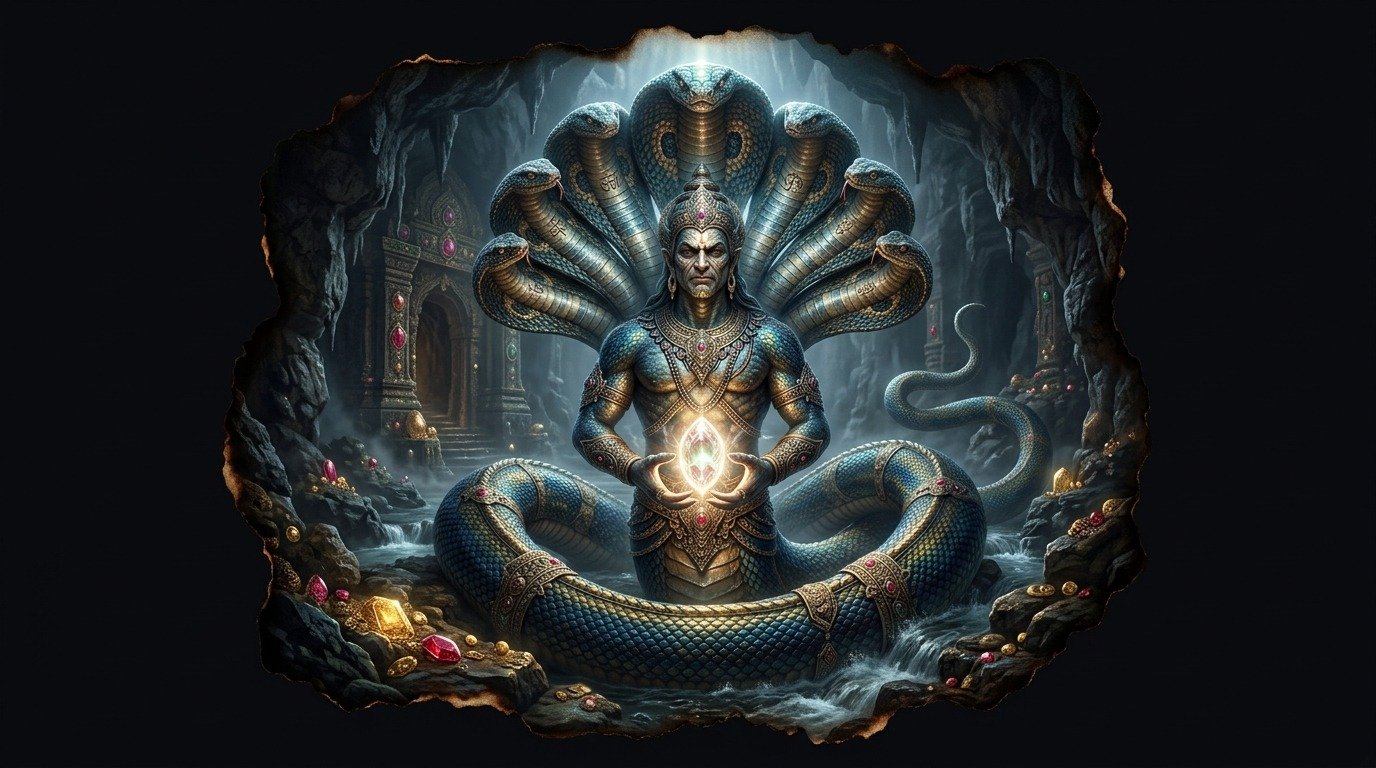
Naga: Lords of the Underground Current and Custodians of the Hidden Gem
Origin and History in Asian Cosmology
The *Nagas* (feminine: *Nagini*) are semi-divine entities that take the form of snakes of colossal proportions, king cobras with multiple hoods, or hybrid beings with a human torso and a serpentine tail. In the cosmological scheme of Hinduism and Buddhism, the Nagas are the children of the sage Kasyapa and Kadru (the mother of serpents), placing them at the dawn of creation, long before the appearance of modern humanity. Their primary home is *Patala* (the seven-layered underworld), specifically in the realm of *Bhogavati*, a subterranean metropolis paved with gold and precious gems, and perpetually illuminated by the resplendent light emanating from the foreheads of the Naga kings themselves, such as Shesha (Ananta), Vasuki, or Takshaka.
Cultural Variations and Geographical Adaptation
The perception of the Nagas varies deeply depending on the geography of the Asian continent, oscillating between sacred veneration and reverent awe: * **The Indian Tradition:** Here, the Nagas are consorts and servants of the major gods. Vasuki serves as the rope for churning the ocean of milk (*Samudra Manthan*) around Mount Mandara; Shesha is the thousand-headed cosmic serpent upon whom Vishnu rests in the cosmic ocean; and a serpent adorns the neck of Lord Shiva as a symbol of his dominion over death and the poison of time. * **Southeast Asia (Thailand, Cambodia, Laos):** In the Mekong River basin, the *Phaya Naga* is considered a deity of water and rain, vital for rice agriculture. Cambodian kings traced their royal dynastic lineage back to the foundational union of a foreign Brahmin, Kaundinya, with Soma, the queen of the Nagas, establishing a pact of sovereignty over the wet land. * **Theravada and Mahayana Buddhism:** The Naga king Mucalinda is recorded as having emerged from the depths of the earth to wrap his body around the body of Siddhartha Gautama and spread his seven hoods as a canopy to protect him from a storm that lasted seven days during his enlightenment under the Bodhi tree.
Esoteric Significance: Kundalini and Hidden Knowledge
Esoterically, the Naga represents the power of latent primordial energy. In the tantric system, it is the symbol par excellence of *Kundalini*, the spiritual energy that lies coiled three and a half times at the base of the spine (*muladhara chakra*). The ascent of the Kundalini mimics the upward movement of the cobra unfolding its hood at the crown of the head (*sahasrara*), granting enlightenment and mastery over the subtle planes. Likewise, the Nagas are the eternal custodians of esoteric knowledge that humanity is not yet ready to receive. In the history of Mahayana Buddhism, it is said that the great philosopher Nagarjuna descended to the realm of the Nagas beneath the sea to retrieve the *Prajnaparamita* sutras (the perfection of wisdom), which the historical Buddha had entrusted to the lords of the deep because the humans of his era were incapable of assimilating their profound emptiness (*shunyata*). The Naga, therefore, is the guardian of the *Chintamani* (the wish-fulfilling gem that grants all spiritual desires).
Interactions, Offerings, and the Danger of *Naga-Dosha*
Nagas control terrestrial weather patterns: rain, floods, droughts, and the purity of freshwater sources (wells, springs, and rivers). Offending a Naga—whether by polluting their waters, destroying their anthills (which serve as physical portals to their underground realm), or killing land snakes—unleashes their immediate wrath, which manifests as: 1. **Skin diseases:** Leprosy, vitiligo, extreme eczema, and unexplained scabies, conditions that in traditional Ayurvedic medicine are diagnosed under the influence of *Naga-Dosha* (serpent affliction). 2. **Meteorological disasters:** Prolonged local droughts or flash floods that destroy entire crops. **Pacification and Worship Protocols:** * **Naga Panchami:** An annual sacred festival where direct worship is offered to the Nagas. They are offered bowls of fresh milk, honey, red sandalwood paste, lotus flowers, and turmeric directly at the entrances of their burrows or anthills. Turmeric is especially cooling to counteract the heat of their mystical venom. * **The Use of Mantras and Gems:** To repel the venom of an angered Naga or neutralize their negative astral influence in the astrological chart, priests prescribe the use of specific gemstones such as cat's eye (*Lahsuniya*) or red coral, along with the recitation of the *Naga Gayatri Mantra* or the invocation of Garuda, the mythical giant eagle who is the natural enemy and cosmic devourer of the Nagas, whose mere mention dissolves the power of any serpent.
Comments
Share information, an experience, or a source to help enrich this entry. They are automatically reviewed before being published.
Loading comments...