Eligos
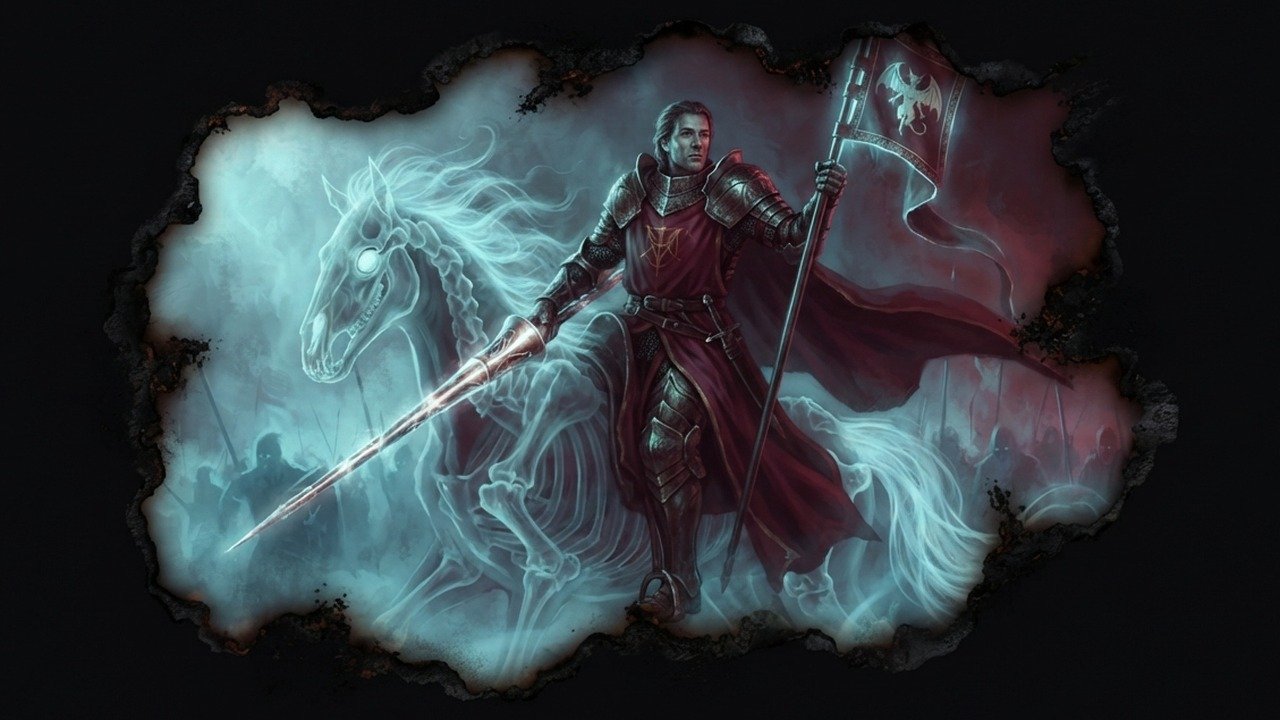
The Legacy of Eligos: The Great Duke of the Divinatory Lance and Martial Strategy
The Art of Invisible Warfare: Its True Origins To trace the true roots of Eligos—also cataloged in occult tradition as Abigor or Eligor—it is indispensable to go back to the ancient empires of Mesopotamia and the Fertile Crescent, where war was not seen as blind chaos, but as a divine science governed by intellect, foresight, and esoteric astrophysics.
In the Ancient Near East, victory on the battlefield depended as much on the steel of swords as on the art of pre-combat divination. Gods like Ningirsu or the warlike aspect of the planet Mars did not only grant physical strength, but also bestowed upon kings tactical vision, the ability to read omens before moving armies, and knowledge of the enemy's secret movements. Eligos is the heir to that superior martial intelligence: the embodiment of the strategic genius that foresees the outcome of conflicts before the first drop of blood falls.
When the Christian theocracy restructured the pagan cosmos, it eliminated the concept of tutelary spirits of the diplomatic military art. The entities that granted favor before kings, glimpsed palace conspiracies, and calculated the movements of armies were reduced to the category of warrior demons in the service of Hell.
The Lance and the Scepter: Eligos in Classical Demonology The passage of centuries immortalized Eligos as the fifteenth spirit of the Lemegeton: Clavicula Salomonis and of the Pseudomonarchia Daemonum, holding the high dignity of Great Duke and commanding sixty legions of martial spirits.
The literature of medieval and Renaissance grimoires describes his appearance with unmistakable military solemnity:
The Manifestation: He appears as a gallant rider, a noble knight carrying a lance, a banner, or a royal scepter, mounted upon a monstrous creature or a spectral horse of great stature (often associated in folklore with the winged steed of the abyss).
The Knowledge of the Occult: He possesses the faculty to discover hidden things and reveal the secrets of what is to come, especially regarding war and great battles for power.
The Favor of the Powerful: Grimoires attribute to him the ability to grant the favor of kings, lords, judges, and men of great influence, in addition to attracting the loyalty of soldiers and subordinates in times of conflict.
The gaze of traditional grimoires focused on the material and political benefit of his favors. However, for the initiatory vision, the scepter and lance of Eligos represent the perfect duality between political command (coercive diplomacy) and tactical execution (direct military impact).
Esoteric Significance: The Psychology of Strategy and the Martial Intellect
In High Magic and the study of Qliphothic currents, Eligos represents the synthesis between the severity of Mars and the expansive vision of Jupiter. He is the force of the Astral Strategist and the catalyst of Mental Foresight.
In the Dark Kabbalah, the influence of Eligos balances the destructive fury of Golachab (The Burners) with the organizational vision of Gha'agsheblah (The Devourers). While other martial spirits react with blind violence to conflict, Eligos represents the cold, calculating mind that analyzes the board before moving a piece.
From the prism of depth psychology, Eligos symbolizes the Archetype of the Strategist Mage and the integration of the Intellect in crisis resolution:
Tactical Clairvoyance: His ability to predict the future is not passive mystical divination, but the result of an implacable analysis of causes and effects. He teaches how to read the enemy's Shadow, identifying their weaknesses, intentions, and conspiracies before they materialize.
The Magnetism of Authority: The "favor of kings" granted by Eligos reflects the projection of a mind that understands the dynamics of power. He who masters his mind and does not act on emotional impulse instinctively wins the respect of those who hold command.
Practice and Manifestation: War Diplomacy in Reality
The energy of Eligos does not manifest with clamor or uncontrolled fury. His presence is sober, aristocratic, cold, and deeply penetrating. When his current is activated in an environment or in the psyche of the practitioner, the chaos of confrontation stops to make way for analytical calculation.
In everyday reality, the force of Eligos acts as a mental clarifier. Under his influence, the fog of panic, anger, and uncertainty disappears. The individual acquires the ability to distance their ego from the conflict, observing the situation from an elevated perspective, like a general contemplating the topography of the battlefield.
Physiologically, his manifestation generates a slowing of the heart rate under pressure, a hyper-focus of the gaze, and a sense of temperance in the nervous system. It allows for drastic decisions to be made with the precision of a surgeon and the calm of a monarch.
Protection, Sovereignty, and Mastery of the Board To invoke or seek attunement with the current of Eligos out of desperation, personal drama, or impulsiveness is a contradiction that nullifies the operation. Eligos is a Great Duke and only responds to the discipline of the educated mind.
The practitioner who seeks to integrate this force must be guided by the principles of Conscious Command:
First, it demands Emotional Detachment in the face of Conflict. To benefit from Eligos's strategic vision, the operator must be willing to see things as they are, not as they wish them to be. Self-pity and self-deception are the first casualties on this Duke's terrain.
Second, Fidelity to the Plan is required. Eligos's energy does not reward chaotic improvisation, but rather meticulous preparation, diplomatic silence, and relentless execution at the right moment.
If the current of this entity becomes distorted in the individual, it can lead to cold Machiavellianism, conspiracy paranoia, or an inability to connect empathetically with others, seeing the world solely as a board of pawns. The correction and protection against this excess consists of balancing the strategic mind with personal ethics and the sovereignty of the spirit. The seeker who understands Eligos does not seek war for the pleasure of destruction: they master the art of conflict to win it before it has even begun.
Comments
Share information, an experience, or a source to help enrich this entry. They are automatically reviewed before being published.
Loading comments...