The Theater Ghost
The Theater Ghost: Shadows in the Wings and Applause from the Past
The Stage as Purgatory: The Origin of Theater Superstition
Few places concentrate as much accumulated emotional charge as a theater. Night after night, for decades or centuries, actors and audiences gather to experience fear, love, betrayal, and death. These emotions, though fictional for the script, are experienced with real intensity by those who perform them and those who watch. For scholars of urban folklore, this constant feedback loop of energy makes theaters the perfect containers for the manifestation of residual energies.
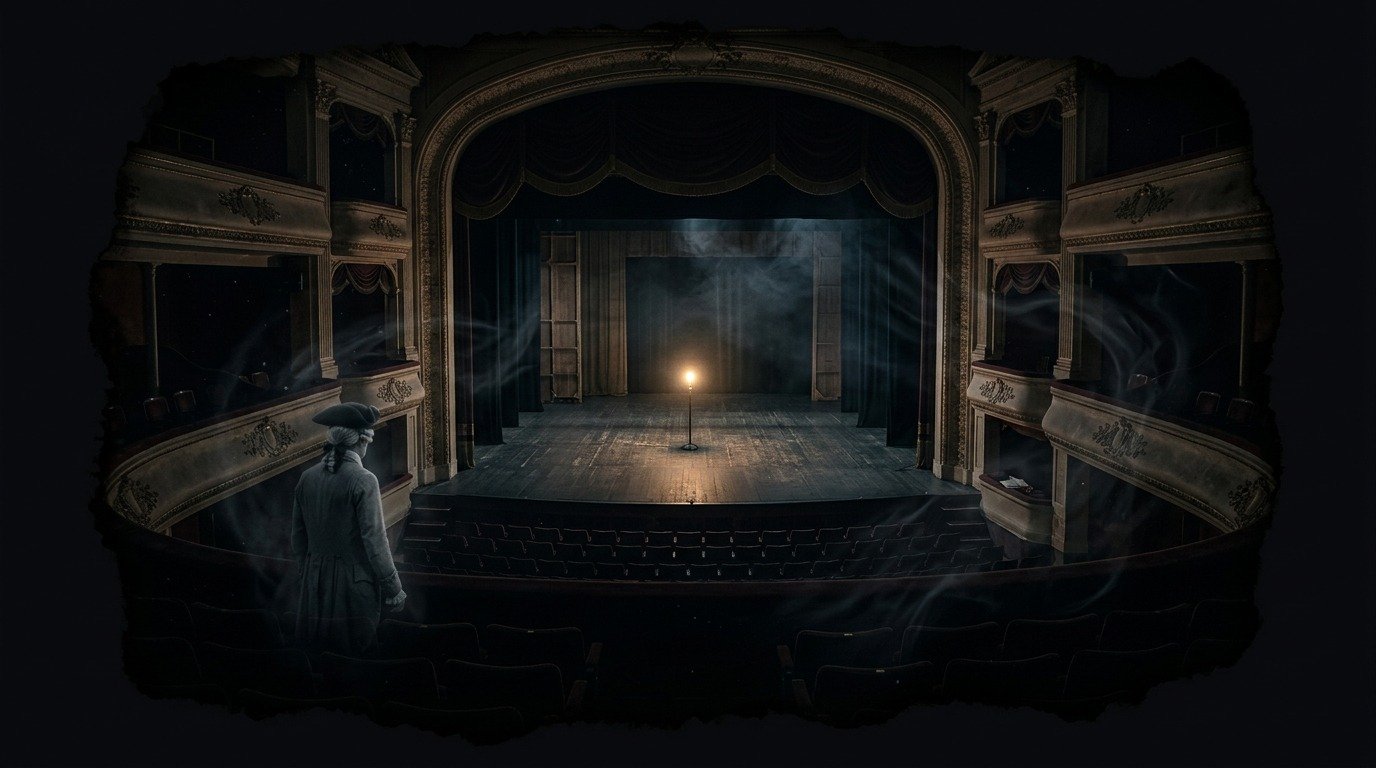
The tradition of theater ghosts is as old as dramatic art itself, but it took its modern form on the stages of London's West End and the opera houses of Paris during the nineteenth century. The workers of these venues, highly superstitious people by nature due to the unpredictability of their profession, quickly learned that they were not alone when the house lights went down. From this was born the custom of the *ghost light* (courtesy light): a solitary bulb mounted on a metal stand left burning in the center of the empty stage overnight. Officially, it serves to prevent accidents in the dark; ritually, it is placed so that the theater ghosts have light to perform and are not tempted to sabotage the productions of the living.
Manifestations Behind the Curtain: Footsteps, Drafts, and the Empty Seat
The activity of a theater ghost is rarely harmful, but it is highly disturbing to casts during rehearsals or performances. Those who work in maintenance or stage crews often report the sound of solitary applause coming from the completely dark orchestra section, the murmur of voices rehearsing archaic dialogue in the dressing room hallways, or a sudden drop in temperature on stage, known among actors as "the specter's breath."
One of the most consistent apparitions in this realm is the "Man in Grey" of London's Theatre Royal Drury Lane. This specter wears eighteenth-century attire, a powdered wig, and a tricorn hat. Unlike other spirits, his appearance is not associated with tragedy, but with success: actors consider it a harbinger of good luck and full houses if the Man in Grey is seen walking through the upper boxes during dress rehearsals. In other theaters around the world, it is customary to leave one or two seats permanently empty in the preferred row, reserved for deceased former directors or performers who refuse to leave the only place where they ever felt truly alive.
The Pact of Coexistence: Respect, Offerings, and the Final Act
Unlike what happens in haunted houses, where the living inhabitants try by all means to exorcise or cleanse the space, in the theater world there is an implicit pact of coexistence with its dead. Actors understand that the ghost is part of the building's history, just another colleague who has remained trapped in their own infinite performance.
They are respected, greeted upon entering the venue, and occasionally left small offerings in the oldest dressing rooms: a rose, a glass of wine, or a copy of the script of the play currently running. The mystery of the theater ghost lies in its melancholy nature; it is the physical reminder that the show must go on, even when the body has already left the stage of life. For these spirits, the silence of the empty auditorium is the true hell, and the dim glow of the ghost light on the wooden stage is the only beacon keeping them connected to the glory of their past applause.
Comments
Share information, an experience, or a source to help enrich this entry. They are automatically reviewed before being published.
Loading comments...