The Knocking Specter (Classic Poltergeist)
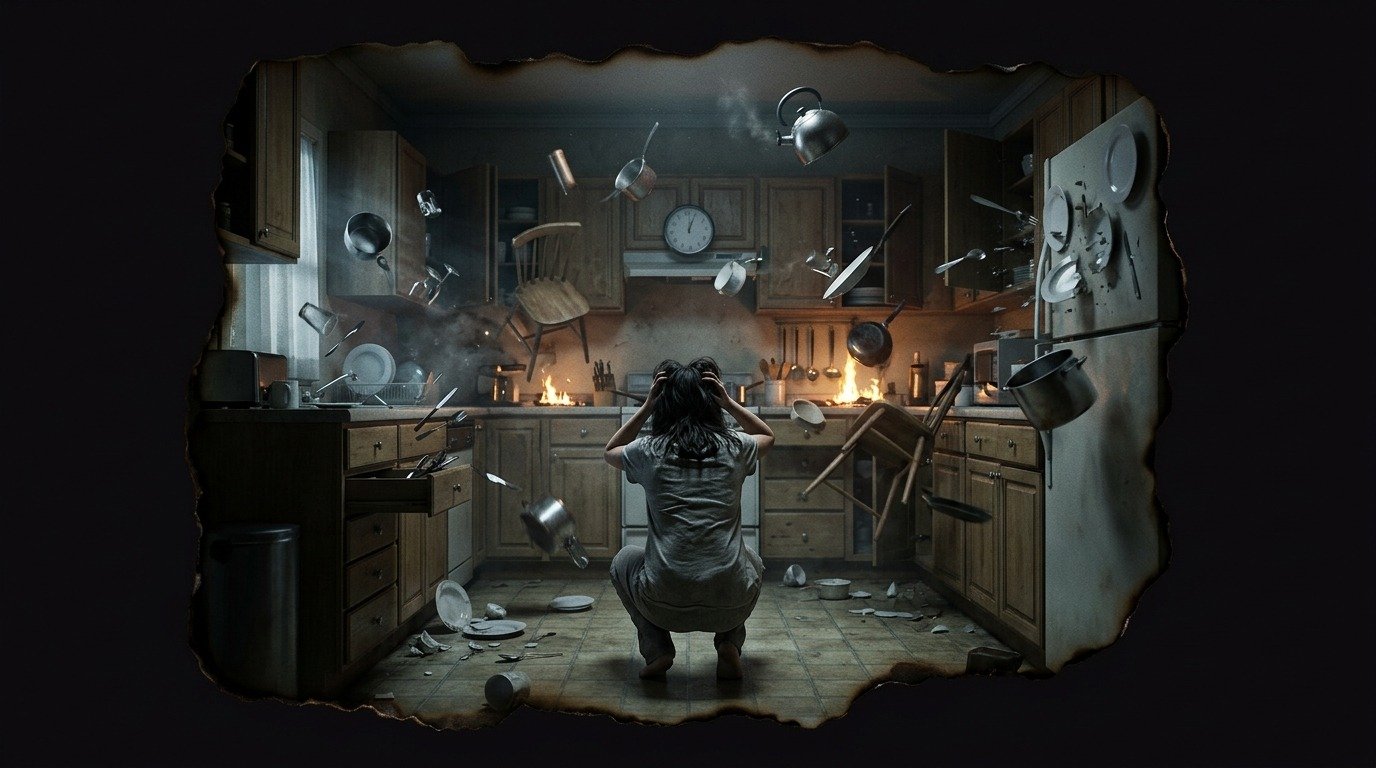
The Knocking Specter (Classic Poltergeist): The Invisible Storm That Shatters the Calm
The Outburst from Nothingness: The Origin of the Noisy Force
The word comes from the German *poltern* (to make noise, to rumble) and *geist* (spirit). Unlike traditional apparitions that limit themselves to manifesting ethereally or whispering warnings from dark corners, the poltergeist is a physical and violent force. It does not seek to go unnoticed; its primary objective seems to be the absolute disruption of the domestic environment, turning the home—humanity's safest space—into a stage of chaos and panic.
The chronicles of this phenomenon are not modern. As early as 355 AD, in the Roman Empire, cases of inexplicable stone showers inside closed dwellings were recorded. In the Middle Ages, monks wrote about "throwing demons" that made monastery beds shake and hurled dishes against the walls. For centuries, witches or the devil himself were blamed, but as paranormal research began to take structure in the late 19th century, experts started to notice a recurring pattern that distanced these manifestations from classical demonology and brought them closer to a mystery of the human mind.
The Cycle of Disturbance: Noises, Stones, and Flying Objects
A case of classic poltergeist never begins with extreme violence; it develops progressively, almost methodically. At first, the inhabitants of the house perceive faint noises: scratches behind the walls, sharp knocks under the floor (the famous *raps*) that seem to answer the questions of the living. As the days go by, the energy builds up and the phenomenon becomes kinetic.
Silverware vibrates in drawers, closet doors slam open and shut violently, and small everyday objects, like keys or lighters, disappear only to turn up hours later in impossible places. The climax of the disturbance arrives with the levitation and throwing of heavy objects. Witnesses often describe that these objects do not fly as if thrown by a human arm; they often seem to float slowly, turning corners in mid-air before accelerating and crashing to the ground, or they become inexplicably hot to the touch shortly before moving. In the most acute phases, puddles of water are reported welling up from ceilings without any leaks, or small spontaneous fires break out and extinguish themselves without leaving any trace of logical combustion.
The Human Focus: The Agent Theory and the Paranormal Controversy
The great breakthrough in understanding this archetype occurred when researchers noticed that the poltergeist, unlike a common ghost, is not tied to a place, but to a person. In nearly ninety percent of documented cases throughout history, there is a "central agent": a teenager, frequently a young girl going through puberty, or someone subjected to extreme emotional and intellectual stress.
This observation gave rise to the theory of psychophony or recurrent spontaneous psychokinesis (RSPK). According to this school of parapsychology, the poltergeist is not a spirit from the beyond, but a discharge of repressed psychic energy. The mind of the teenager, trapped in internal conflicts and frustrations they cannot verbalize, would project a physical force outward, capable of interacting with matter. However, skeptics maintain that the vast majority of these cases are explained by conscious fraud, collective hysteria, or low-frequency underground vibrations. Even so, the persistence of identical testimonies across different cultures and eras, where the pattern of knocks, stones, and fires repeats without variation, keeps the knocking specter as one of the most unsettling and difficult phenomena to demystify.
Comments
Share information, an experience, or a source to help enrich this entry. They are automatically reviewed before being published.
Loading comments...