Soul in Pain, Wandering Spirit
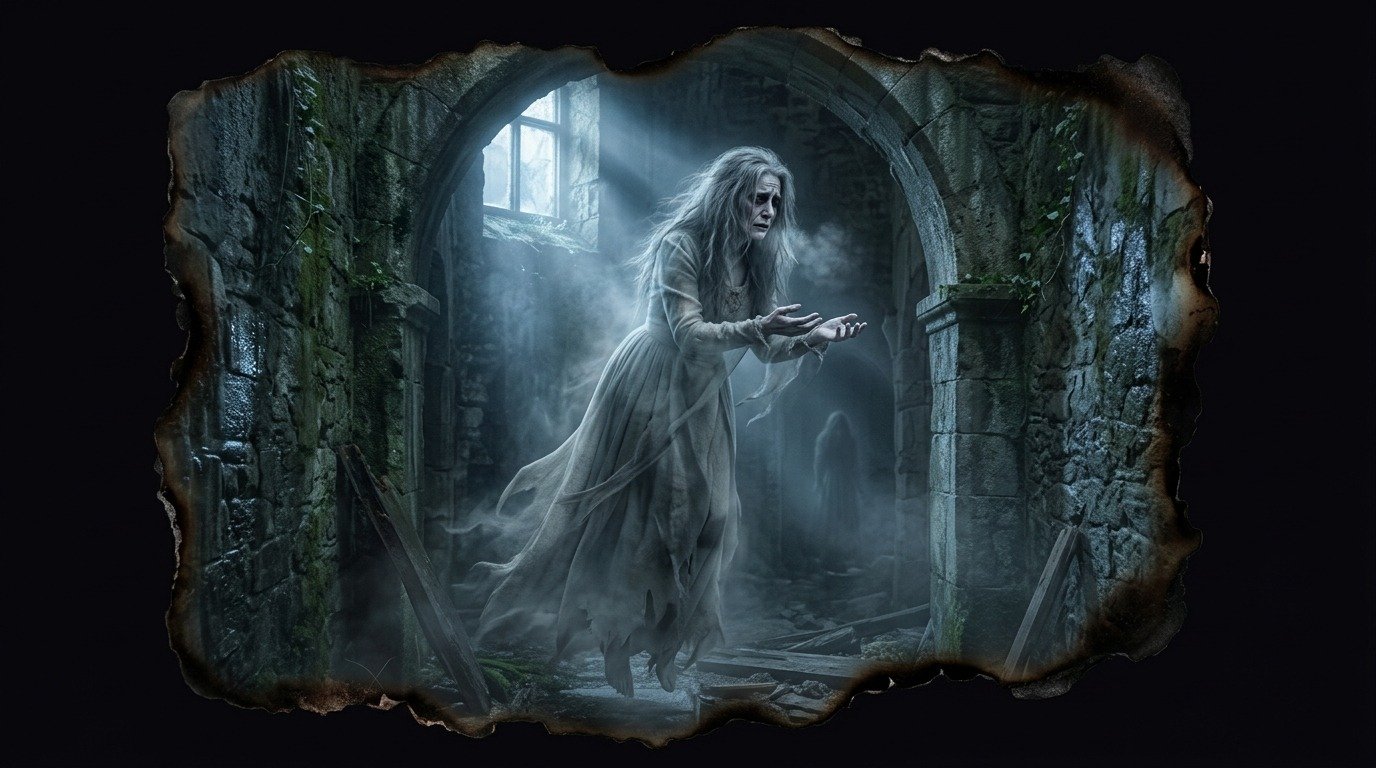
Soul in Pain: The Eternal Whisper of Those Who Cannot Depart
The Limbo of Memory: The Origin of the Eternal Return
The Soul in Pain is, perhaps, the most universal and ancient archetype of all ghostly mythology. Present in the clay tablets of Mesopotamia, in Greek tragedies, and in the folklore of every corner of the Earth, it represents the deceased who has remained trapped in the plane of the living. It is not a demon, nor a chaotic force like the poltergeist; it is a residual consciousness, a fragment of humanity that cannot cross the threshold of eternal rest due to unfinished business, a violent and unexpected death, or a broken oath.
The popular theology of the Middle Ages helped shape this concept through the doctrine of Purgatory. Wandering souls were seen as spirits that needed prayers, masses, and the redress of their grievances by the living in order to purify themselves and ascend. If a man was murdered and his body remained unburied, or if he hid a treasure that should belong to his family, his specter was condemned to wander the site of the trauma, repeating his final moments in a melancholy and eternal loop.
The Weight of Guilt: Apparitions and Laments in the Night
Anyone who encounters a soul in pain does not usually experience direct physical aggression, but rather a deep and invasive sensation of sadness and cold. These spirits manifest as misty figures, translucent silhouettes that retain the clothing from the moment of their death. Their presence is usually preceded by a sudden drop in ambient temperature and a smell of dampness, withered flowers, or wet earth.
Testimonies agree that these entities seem trapped in an eternal routine. They are seen walking down the same stairs, peering out of the same windows, or searching for something on the ground in silent desperation. Laments, sighs, and the sound of muffled crying are their most common acoustic manifestations. They do not seek to frighten out of malice; their terror stems from their own inability to communicate effectively with the world of the living. They try to touch humans to ask for help, but the contact translates only into a gust of freezing air that makes the skin of the recipient crawl, leaving behind a feeling of desolation that can take days to disappear.
The Thousand Faces of Grief: From La Llorona to the Ladies in Gray
This archetype adopts different names and garments depending on the geography it traverses. In Latin America, it wears the white rags of La Llorona, the woman condemned to eternally search for the children she herself drowned in a fit of madness and spite. In the British Isles, it manifests as the Grey Lady or the White Lady, aristocratic specters that guard the ruins of medieval castles where they were betrayed by their lovers or walled up alive by their families.
In Japan, the soul in pain is the *Yūrei*, a legless spirit that floats in the twilight, recognizable by its long, disheveled black hair over its face and its limp hands, driven by the *reikon*, the force of a violent emotion such as jealousy or resentment that prevents it from dissolving into the void. All these regional variants are nothing more than branches of the same human anguish: the fear of being forgotten, the horror of leaving the world with unfinished business, and the terrible suspicion that, sometimes, death is not the end of suffering, but the beginning of an endless condemnation.
Comments
Share information, an experience, or a source to help enrich this entry. They are automatically reviewed before being published.
Loading comments...