The Brown Lady of Raynham Hall
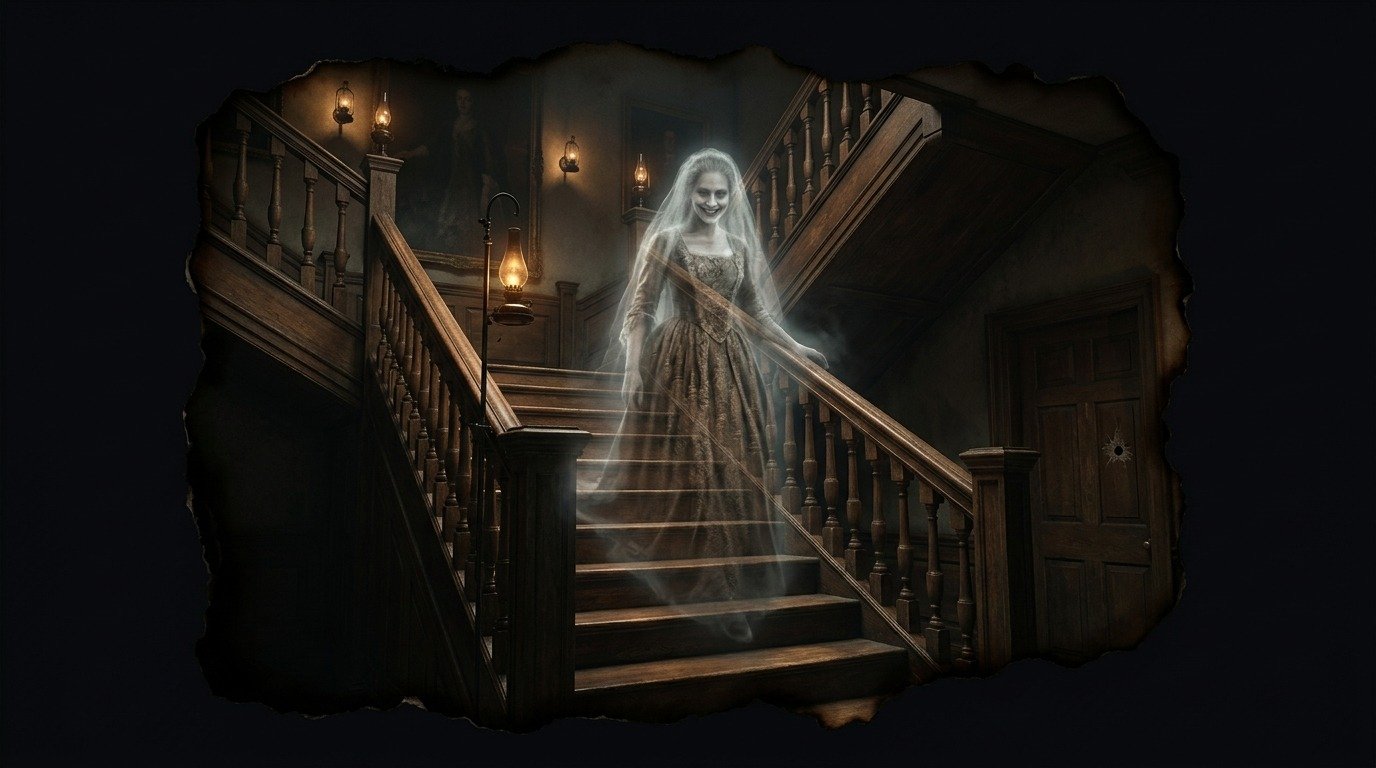
The Brown Lady of Raynham Hall: The Portrait of the Void
The Viscount's Prisoner
Raynham Hall, a majestic country mansion in Norfolk, England, is the setting for one of the most famous and debated ghost stories in British history. The identity of its most famous apparition is closely linked to Lady Dorothy Walpole (1686–1726), sister of Great Britain's first prime minister, Robert Walpole. Dorothy married Charles Townshend, 2nd Viscount Townshend, a man known for his choleric temperament and pathological jealousy. Legend has it that the viscount discovered his wife had been unfaithful to him before their marriage—or that she was maintaining a secret relationship with a local nobleman—and, as punishment, confined her to her private rooms at Raynham Hall. She was forbidden from seeing her own children and isolated from the outside world until her death in 1726, officially attributed to smallpox, though gossip of the time whispered that she had been pushed down the stairs or starved.
The Apparition That Defied Lead
Dorothy's specter, dubbed the "Brown Lady" due to the brown brocade dress she wore according to witnesses, began to manifest shortly after her burial. The first documented sighting of significance occurred during the Christmas celebrations of 1835. Guests of Baron Charles Townshend claimed to have seen a woman in antique clothing and with a pale face walking the upper corridors. But the most violent and famous encounter was experienced by Captain Frederick Marryat, a well-known writer and Royal Navy officer, in the 1830s. Determined to prove the apparition was a hoax, Marryat asked to sleep in the supposedly haunted room. One night, accompanied by two of the homeowner's nephews, he came face-to-face with the brown figure in a corridor lit by oil lamps. The captain described how the woman stopped before him and gave him a malicious, inhuman smile. Overcome with panic, Marryat drew his pistol and shot the figure at point-blank range. The bullet passed through the specter without any resistance and ended up lodged in the wooden door behind her; the apparition simply vanished into thin air.
The Flash of 1936
The consecration of the Brown Lady in the annals of paranormal research occurred on September 19, 1936. Two photographers from *Country Life* magazine, Captain Hubert C. Provand and Indre Shira, were at Raynham Hall working on a feature about the mansion's architecture. While Shira was preparing to photograph the grand oak staircase, he spotted an ethereal, misty silhouette starting to descend the steps. He quickly ordered Provand to take the shot. The result was the famous photograph showing a translucent figure, shrouded in what looks like a wedding veil or a shroud, majestically descending the stairs. Although skeptics have tried to explain the image as a double exposure or light manipulation using grease on the lens, technical analyses from that era and later have failed to find conclusive evidence of fraud. Today, the mansion still belongs to the descendants of the Townshend family, and although sightings of the Brown Lady have become extremely rare, her pale silhouette remains immortalized in what many consider the most important ghost photograph of the twentieth century.
Comments
Share information, an experience, or a source to help enrich this entry. They are automatically reviewed before being published.
Loading comments...