The Flying Dutchman
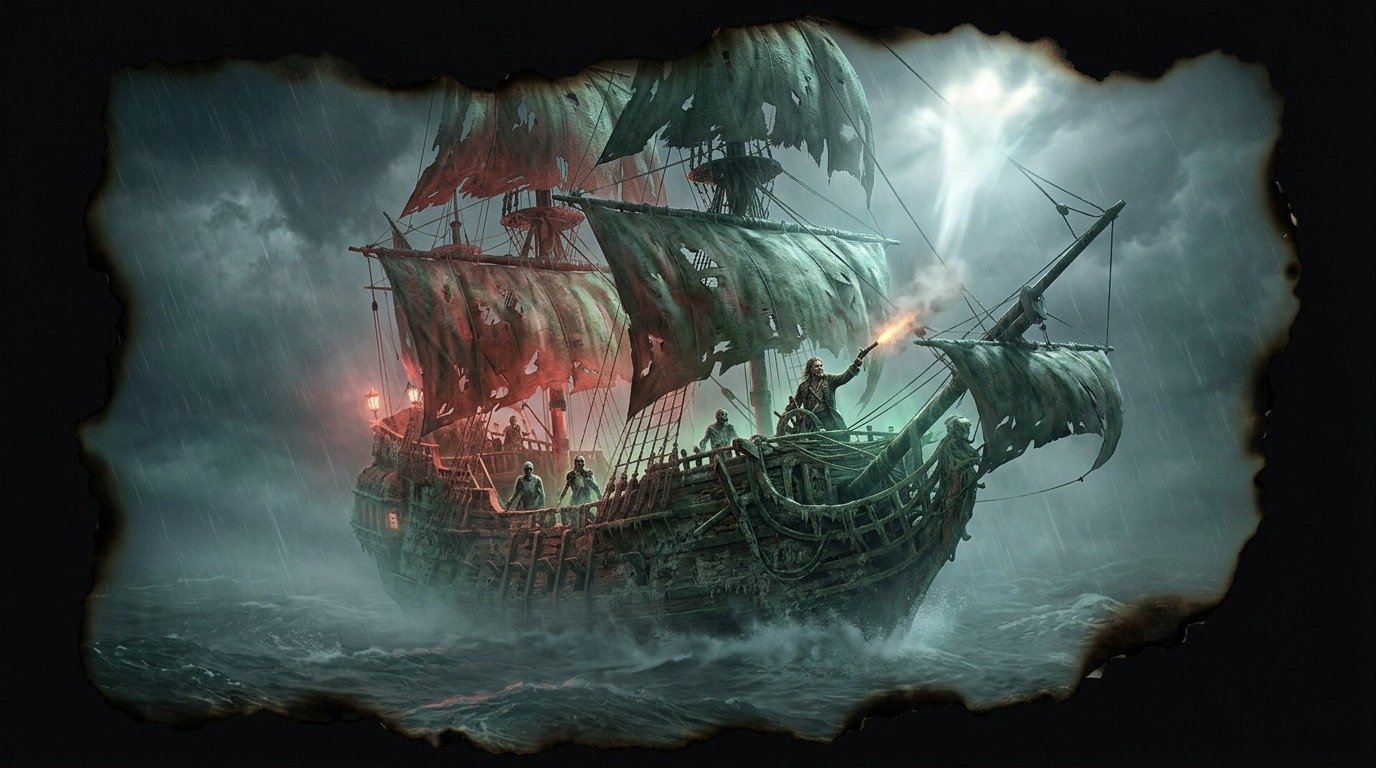
The Flying Dutchman: The Curse of Wood and Salt Upon the Ocean
The Blasphemous Oath: The Origin of the Doomed Ship
In the 17th century, when the oceans were vast deserts of water where men faced real and wooden monsters, the sea legend most feared by mariners was born. The Flying Dutchman is the ghost ship par excellence, an apparition condemned to sail the waters of the Cape of Good Hope for all eternity, with no hope of ever touching land.
The origin of the curse centers on the figure of Captain Hendrick van der Decken. During a return voyage from the East Indies, while attempting to round the dreaded South African cape, the ship ran into an apocalyptic storm that threatened to shatter the hull and drown the crew. The terrified sailors begged the captain to seek shelter in a nearby bay. Van der Decken, consumed by pride and possibly maddened by alcohol, refused. He bound himself to the helm and openly challenged the wrath of God, swearing that he would round the cape even if he had to sail until Judgment Day. Legend has it that the heavens opened and a luminous figure descended onto the deck; the captain shot at it with his pistol, but the weapon exploded in his hand. The sentence was pronounced: the ship and its crew would be frozen in time, turned into specters of salt and mist.
The Ghost Ship in the Mist: Spectral Lights and Omens of Death
Encounters with the Flying Dutchman are described with reverent dread. The ship does not appear on clear days, but in the midst of dense sea mists or during the most violent storms, when visibility is near zero. Suddenly, amidst the waves, the silhouette of an ancient galleon emerges, sailing at full sail against the wind, something physically impossible for any wooden vessel.
The hull of the spectral vessel glows with a strange phosphorescent light of a reddish or greenish hue, similar to St. Elmo's fire but of gigantic proportions. Its sails appear torn and rotted, yet fully billowed by an invisible wind. Sailors who claim to have seen it up close maintain that on its deck, the silhouettes of skeletal crew members can be glimpsed working in silence, mute and with their gaze lost in the ocean. On occasion, the ghost ship attempts to approach other vessels to deliver letters addressed to people dead for centuries. If a crew makes the mistake of accepting these messages, the fate of their own vessel is sealed: shipwreck or plague will consume them before they reach port.
A Myth Forged in Water: Sightings Through the Centuries
Unlike other tavern legends, the Flying Dutchman boasts a record of sightings extending well into the 20th century, made by seafaring men of irreproachable reputation. One of the most famous testimonies was recorded in the logbook of the HMS Bacchante, a British Royal Navy ship, in July 1881. On board was the young Prince George, who would later become King George V. The log details how, at four in the morning, the ghost ship crossed their path enveloped in a purplish-red glow. Thirteen people witnessed the apparition simultaneously. Hours later, the lookout who had first spotted the ship fell from the mainmast and died instantly.
Science has attempted to explain these sightings as the optical phenomenon of *Fata Morgana*, a complex mirage in which thermal inversion distorts light and projects the image of real ships located beyond the horizon, making them appear suspended in the air or shrouded in misty halos. However, for the man who spends months in the solitude of the ocean, the sight of that wooden structure defying the currents remains the purest reminder that the sea holds secrets that dry land will never manage to comprehend.
Comments
Share information, an experience, or a source to help enrich this entry. They are automatically reviewed before being published.
Loading comments...