Žemyna
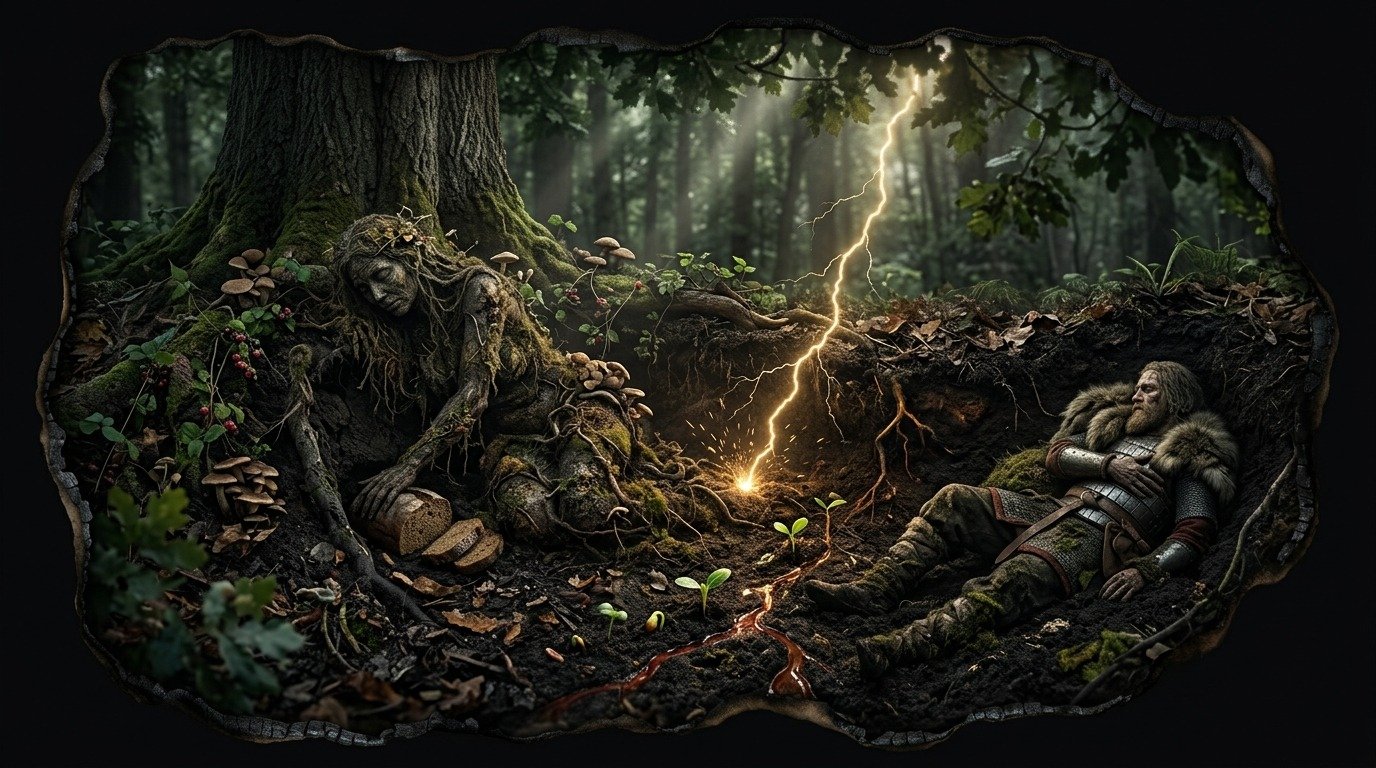
Žemyna: The Black Womb of the Forest
The Flesh of the Earth
Under the roots of the sacred oak, where the light of Saulė barely manages to filter through the thick canopy of leaves, dwells Žemyna. She is not a goddess who resides in the heavens or in distant palaces; she is the very earth upon which one steps, the black, damp, and fertile humus that smells of decayed leaves and mushrooms after the rain. Žemyna is the great mother, the silent nursemaid of everything that breathes, walks, or takes root in the Baltic plains. Reverence for her is physical and visceral. Ancient farmers did not begin sowing without first kneeling, kissing the damp ground, and consecrating a piece of bread directly into a crack in the earth, asking Žemyna for permission to wound her flesh with the plow. She does not only allow the grain to germinate; she is the mistress of abundance, the one who decides whether the harvest will be prosperous or if famine will strike the villages. Her presence is felt in the weight of the ears of rye and in the sweetness of the wild berries that grow in the depths of the forest, where none but she rules.
The Embrace of the Lightning and the Sowing of Life
The fertility of Žemyna is not a solitary act, but the result of a celestial drama repeated every spring. During the winter months, the goddess lies cold, rigid, and barren, wrapped in a shroud of snow that keeps her in a death-like lethargy. It is forbidden to disturb her during this time; striking the frozen ground is considered a sacrilege, for it is the time when the mother rests. Spring awakens with a burst of creative violence. Perkūnas, the lord of thunder, crosses the skies and hurls his golden lightning bolts against the ground. This impact, far from being destructive, is the nuptial embrace that Žemyna awaits. The fire of the sky penetrates the damp earth, releasing underground waters and warming her womb. From this sacred coupling, the goddess awakens pregnant with life. Seeds break their dormancy, trees cover themselves with green buds, and sap runs once more like warm blood through the veins of nature. It is the triumph of life brought about by the union of celestial fire and the patience of the earth.
The Wayfarer's Last Refuge
But Žemyna's role goes far beyond sowing and blossoming. Just as her womb is the cradle from which all existence springs, it is also the grave that reclaims everything that has completed its cycle. She is the ultimate recipient of life, welcoming with the same tenderness the fallen leaf, the weary animal, and the warrior who expires on the battlefield. For the men of the forests, death does not represent a journey into a terrifying abyss, but a return to the mother's lap. By burying the dead directly in the ground, without coffins to isolate the body from the earth, the aim is to facilitate this final embrace. Žemyna dissolves the flesh, cleanses the pains of the spirit, and transforms dead matter into fertilizer for the oaks of tomorrow. In this way, the goddess closes the eternal circle: nothing is lost under her custody, and every grave in her soil is, secretly, a promise of resurrection in the coming spring.
Comments
Share information, an experience, or a source to help enrich this entry. They are automatically reviewed before being published.
Loading comments...