Perkūnas
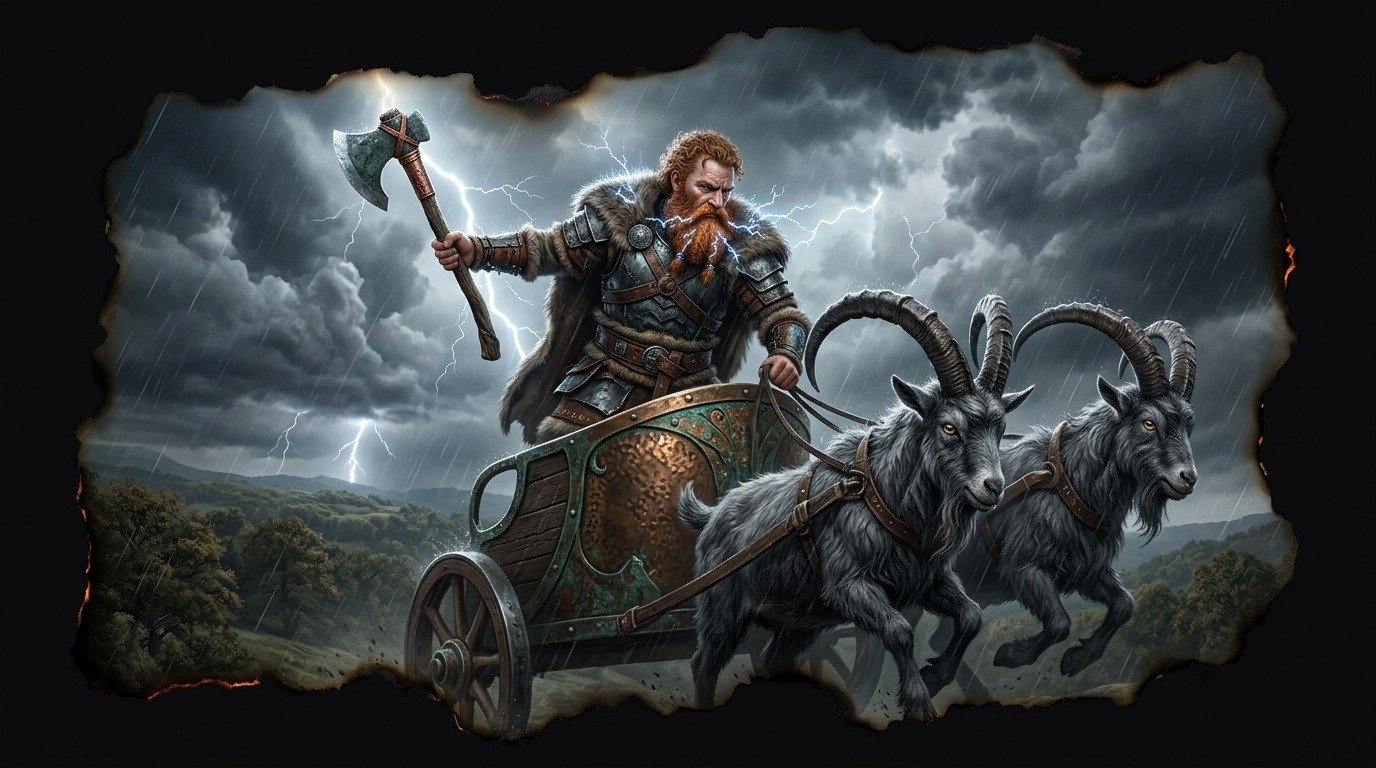
Perkūnas: The Flashing Axe of the Oak
The Thunder That Shakes the Sacred Hill
When gray clouds gather over the Baltic hills and the scent of ozone saturates the damp forest air, the animals of the forest fall silent and men seek shelter under thatched roofs. This is the moment when Perkūnas, the supreme god of thunder, rain, and justice, descends from the heavens. He is not a deity who acts in the shadows; his presence is a burst of blinding light and a roar that shakes the very foundations of the earth.
Perkūnas is depicted as a middle-aged warrior, with a curly red beard that sparkles with sparks of static fire. He travels across the celestial vault in a bronze chariot pulled by he-goats with iron horns, producing a deafening roar that mortals mistake for thunder. In his right hand, he wields a stone or copper axe that returns to his hand after being thrown, a lethal weapon with which he strikes the treetops and mountain peaks to purify the world from the forces of chaos.
The Scourge of the Demon Beneath the Earth
The great myth that defines the existence of Perkūnas is his eternal enmity with Velnias, the deity of the underworld, stagnant water, and deceit. Velnias is a cunning being who constantly seeks to steal men's cattle, hide the rain in the depths of the earth, or sow discord among the clans. To escape the wrath of Perkūnas, Velnias disguises himself as various animals, hides under stones, inside hollow trees, or even beneath the feet of human beings.
But the Thunder God is relentless. With his all-seeing eyes of fire, Perkūnas tracks his enemy without rest. Every lightning bolt that strikes the earth is one of his blows aimed at Velnias; when lightning tears through an ancient oak or splits a rock in two, men know that Perkūnas has located his rival's hiding place and forced him to retreat once more into the dark depths of the underworld. This constant pursuit is what maintains balance in the world, preventing the chaos of the depths from claiming the surface.
The Sacred Oak and the Eternal Fire
For the ancient Baltic peoples, Perkūnas was the protector of social order and law. The most sacred oaths were made beneath the branches of centuries-old oaks, the trees consecrated to the god, as it was believed that their wood was the only kind capable of resisting the fire of his lightning without being immediately consumed. To break a promise made in the presence of Perkūnas's oak was to invoke a curse of fire that would destroy the traitor's home and lineage.
In the sacred sanctuaries, known as Romuva, located in the heart of the most impenetrable forests, priests maintained a sacred fire fed exclusively with oak wood. This fire had to burn day and night, never to be extinguished; if, through the negligence of the guardians, the embers died, it was considered the worst of omens, a sign that the god had withdrawn his protection and that the community would be ravaged by plague, drought, or war.
The Rain That Restores Life
Despite his destructive and fearsome nature, Perkūnas is not a god of death. On the contrary, his wrath is necessary for life to continue. His spring storms cleanse the air of winter vapors and awaken the earth from its long slumber. The rain that follows his lightning is considered the "water of life," a heavenly blessing that fertilizes the fields and fills the rivers with fish.
Today, the name of Perkūnas continues to resonate in the traditional songs of the Baltic lands, the *dainas*, where he is described not only as the bringer of lightning, but as the stern yet just father who watches over his earthly children, reminding everyone that justice, like thunder, will sooner or later fall from the heavens to bring order to the world of men.
Comments
Share information, an experience, or a source to help enrich this entry. They are automatically reviewed before being published.
Loading comments...