Stribog
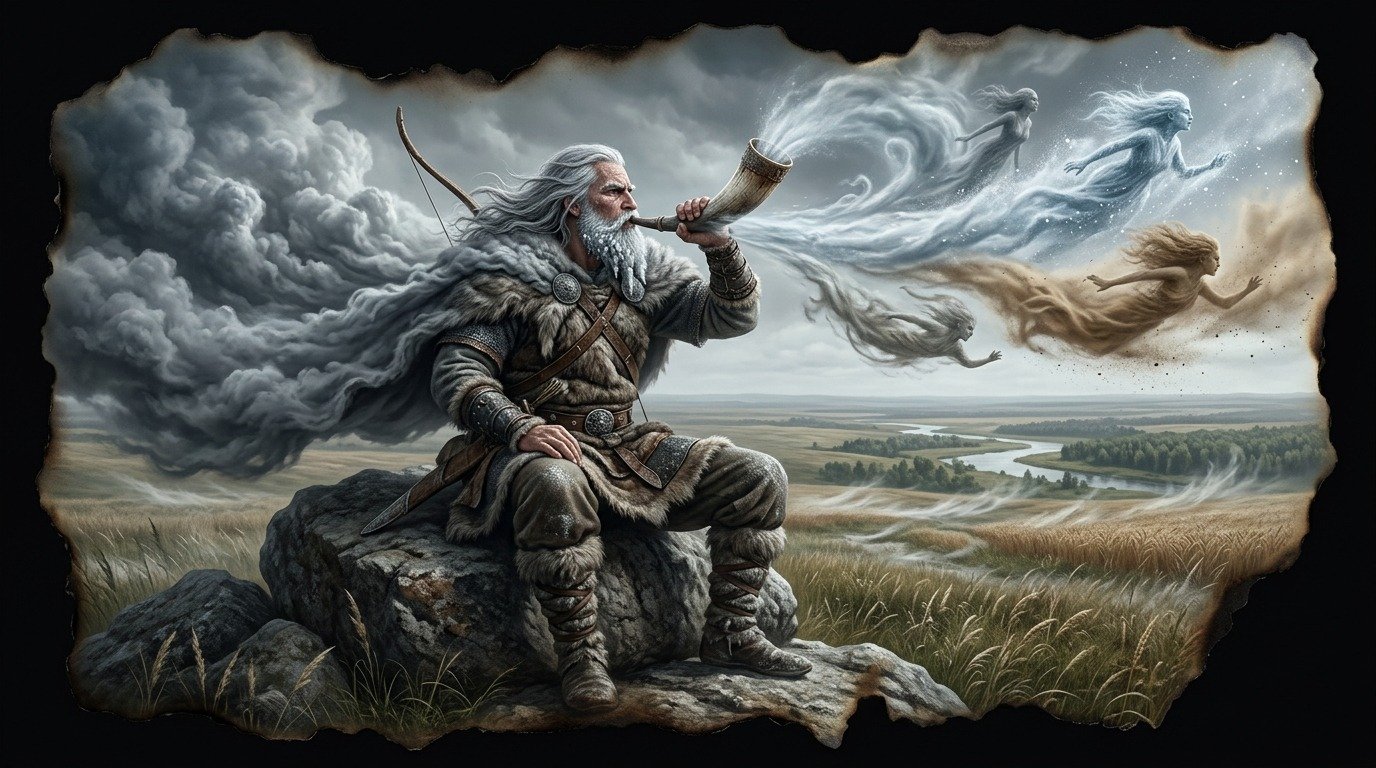
Stribog: the untamed breath of the steppe
The first breath of the cosmos
In the beginning, when the celestial blacksmith struck his anvil to shape the foundations of the world, the sparks that flew from the hammer blows did not only ignite the stars; they also shaped the invisible currents that enveloped the earth. From that friction between the creative fire and the void, Stribog was born, the ancient god of wind, air, and storms. He did not emerge in the form of a young and arrogant warrior, but as a silver-haired patriarch with a beard of frost who blew life and death with the same indifference.
It is said that his home lies at the edge of the world, on the mythical island of Buyan, a place where all the forces of nature converge. There, seated upon a sacred rock, Stribog holds a horn carved from the bone of a primordial beast. When he presses the instrument to his chapped lips, the air trembles. From his throat and his horn spring his children and grandchildren: the cardinal winds, each with their own temperament, ready to scatter across the infinite plains.
The eight directions of the gale
Stribog does not rule from a static throne; his domain is perpetual motion. He controls the gentle breezes that pollinate the rye fields and carry the scent of summer rain, but he also unleashes the freezing blizzards that freeze the blood of travelers in the middle of the steppe. For mortals, he is the space that separates the earth from the sky, an invisible giant whose footsteps are felt in the creaking of the treetops.
When the god grows angry, his messengers sweep the earth. The north wind, icy and merciless, brings with it the shroud of winter; the south wind drags the fever and dust of the desert; the east wind cleanses the skies with its dry lash, and the west wind roars with the moisture of unknown seas. Stribog rides upon these currents, invisible yet omnipresent, wearing a cloak made of gray clouds and carrying a bow of ash wood with which he shoots gusts that fell entire forests.
The scourge upon the fields and the sails
Ancient sailors and farmers knew that defying Stribog was a death sentence. Before launching wooden canoes into turbulent rivers, men threw offerings of flour and grain into the air, hoping the god would disperse his gusts with benevolence and push the sails instead of sinking them. A single contemptuous gesture toward the sky could cause Stribog to summon a whirlwind, a wild dance of dust and leaves that the peasants called "the devil's wedding," where the air became so thick it prevented breathing.
In the sagas of the steppe warriors, the god is the silent ally who deflects enemy arrows in mid-flight or whispers warnings into the ears of sentinels through the whistling of the tall grass. Those who knew how to listen to the wind could decipher the voice of Stribog, an indecipherable murmur to the uninitiated that announced the arrival of distant armies or the inevitable change of seasons.
The echo that dwells in the void
Unlike other deities who demanded stone temples and blood sacrifices, Stribog always preferred the freedom of open spaces. His shrines were the summits of desolate hills, where the wind blew strongest and where men erected wooden posts carved with his stern face, letting the elements wear down the wood until returning it to the earth.
Today, when winter covers the eastern plains with its white shroud and the wind howls through the cracks of wooden houses, the elders still say it is Stribog riding past, reclaiming his sovereignty over the air and reminding men that, long before they built their empires, the wind already ruled the earth.
Comments
Share information, an experience, or a source to help enrich this entry. They are automatically reviewed before being published.
Loading comments...