Mokosh
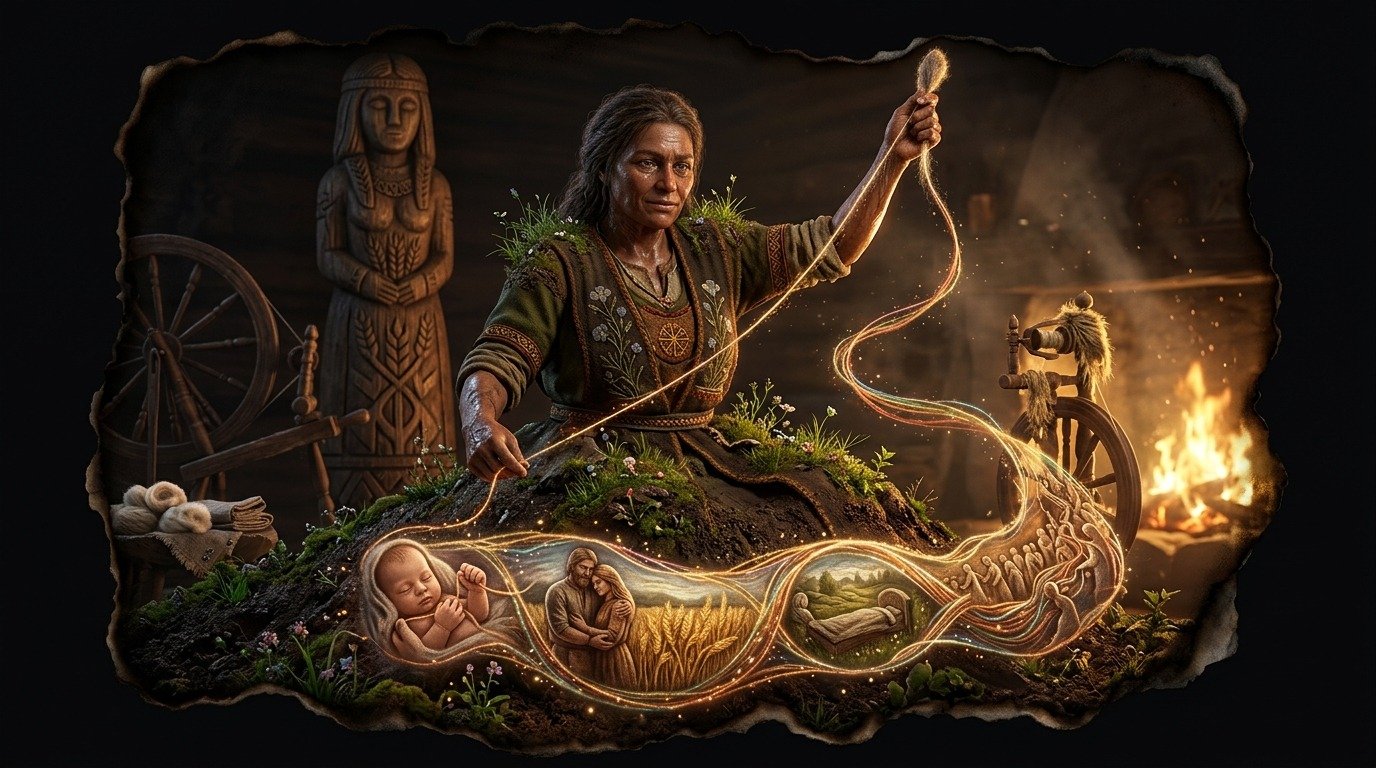
Mokosh: The Mother of the Moist Earth and the Threads of Destiny
The Womb of the Living Earth
Before temples existed, humans already worshipped the ground they walked upon, not as a mere inert surface, but as a living, warm, and sacred body. She is Mat Zemlya, the Moist Mother Earth, the deity whose body shudders with tremors and opens with spring to give way to life. Her presence is the smell of wet earth after the first rain, the softness of moss, and the strength of wheat fields bending under the wind. She is the only female figure that stood in the pantheon of great wooden idols, a testament that without her fertile womb, the weapons of warriors and the thunder of the heavens lack purpose.
For the village folk, harming the soil without need was an unforgivable sacrilege. It was forbidden to strike the earth with sticks or spit upon it; to do so was to hurt the face of one's own mother. Disputes over field boundaries were resolved by swallowing a handful of sacred earth: the liar would fall dead from the weight of the soil in their entrails, while the righteous would be blessed by the strength of the deity who does not tolerate deceit in her lap.
The Weaver of Human Lives
When the nights grow long and the winter cold forces the community to take refuge around the hearth fire, the goddess withdraws from the fields and enters the homes. There, she transforms into the protector of women's work, especially spinning and weaving. The rhythmic sound of the spindle is her nightly heartbeat. It is believed that the goddess herself sits at the spinning wheel when the women sleep, spinning not only wool, but the invisible threads of each newborn's destiny.
The goddess holds the thread of life. If the thread is strong and even, the mortal's existence will be prosperous and long; if it becomes tangled or is abruptly cut, misfortune and death will knock at the door. For this reason, women left her offerings of wool and tufts of flax next to the spinning wheel before going to rest, asking that their hands would not err in the design of the blankets and that their lives would be woven with threads of good fortune.
The Refuge of Birth and Death
As a universal mother, the goddess rules over the most sacred and vulnerable moments of existence: childbirth and the final return. It is to her that women entrust their wombs during the pains of labor, asking that the child spring forth in the same way a seed breaks through the spring clod. And when life comes to an end, the body of the deceased is not surrendered to an unknown abyss, but is returned to her loving arms to rest in her eternal bosom, completing the cycle from which no one can escape.
Her devotion ran so deep in the popular soul that the arrival of new faiths could not erase her. Her figure merged with representations of maternal compassion and the protection of homes, keeping alive the ancient respect for the earth that nurtures and the thread that binds all living beings under the same sky.
Comments
Share information, an experience, or a source to help enrich this entry. They are automatically reviewed before being published.
Loading comments...