Sekhmet
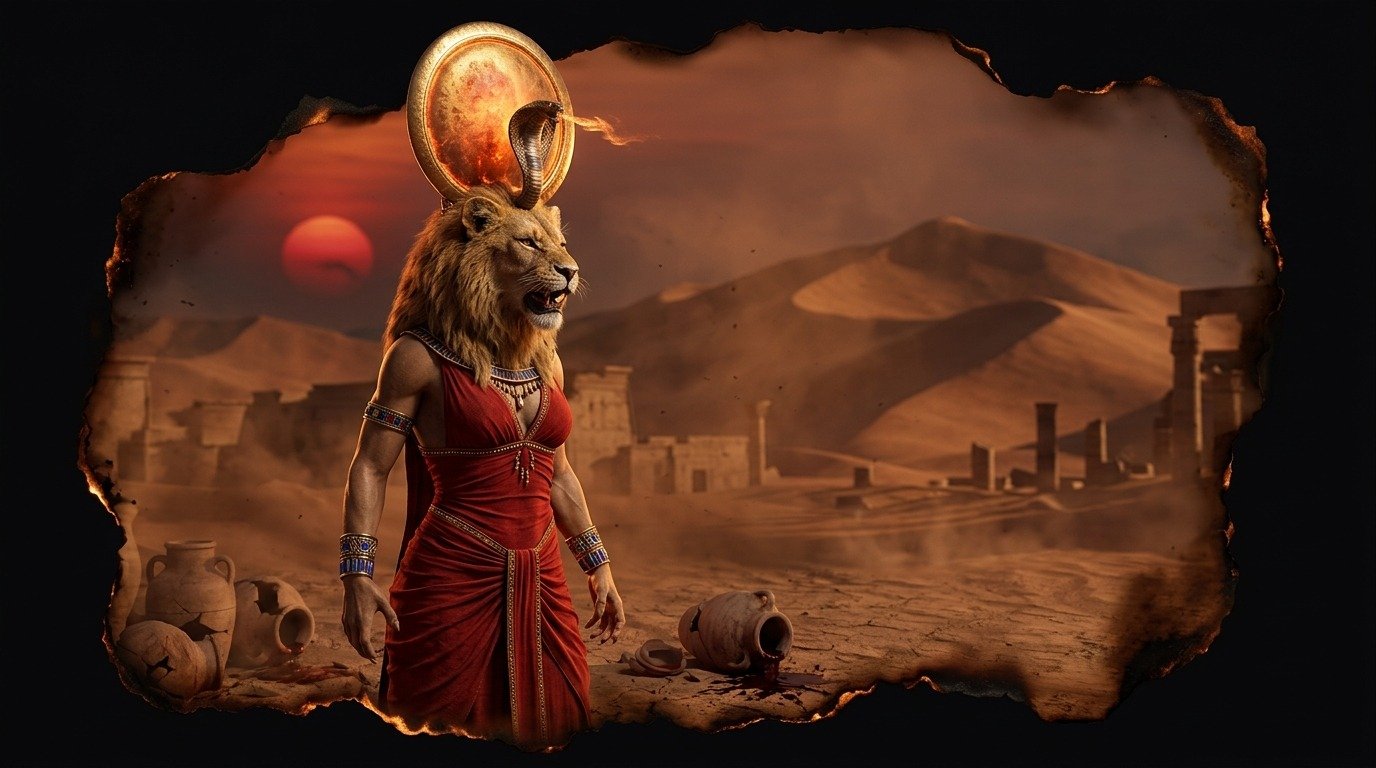
Sekhmet: the breath of fire of the desert
The lioness born from the solar eye
When the evening sun becomes a red ember and the desert air burns the throat, the breath of Sekhmet is felt. She was not born from a mother's womb, but from the accumulated fury of Ra, the solar god. When men conspired against the creator at the dawn of time, Ra detached his eye—the destructive force of his own light—and cast it to the earth. That eye, upon touching the sand, took the form of a golden lioness of colossal proportions. She was no ordinary beast; she was the embodiment of the midday heat, the purifying fire that consumes everything it touches.
Her mere presence on the battlefield makes the dunes tremble. She is depicted with the body of a woman of regal bearing, dressed in bright red like fresh blood, crowned by the solar disk and the erect cobra that spits fire upon her enemies. Her lioness claws and jaws are the last sight of the wicked, and her roar is the east wind that withers crops and dries up wells.
The red feast in the sand
The myth that defines her wild nature is that of the near-total extinction of humanity. Sent by her father to punish the rebels, Sekhmet fulfilled her task with terrifying zeal. Once she tasted the first drop of human blood, a slaughter-lust took hold of her. Punishment turned into butchery. Day after day, the lioness hunted and devoured, staining the waters of the Nile a thick red. Ra, beholding the devastation from the heavens, felt pity for his creations, but he knew that no one, not even he, could stand in the way of the lioness stricken with bloodlust.
Salvation came through cunning. By Ra's command, the priests prepared thousands of vessels of barley beer mixed with red ochre from Elephantine and pomegranate, mimicking the color and density of blood. They flooded the fields with this brew before the goddess awoke to continue her hunt. As the sun rose, Sekhmet saw her own reflection in the red lake. Believing it to be the blood of her victims, she drank greedily to the last drop. The intoxication weakened her, her claws loosened, and she fell into a deep sleep. Upon waking, her fury had dissipated, transforming into a warm and protective breeze. Since then, this feast of red beer is recreated every year to keep the lioness at peace.
The double edge of the plague and the cure
Sekhmet is the mistress of the most extreme duality of existence. She is the bringer of plagues, the pestilential winds that travel with the summer heat and which the Egyptians call "the messengers of Sekhmet". However, the very hand that unleashes disease possesses the absolute knowledge to eradicate it. Her priests are not only guardians of her temple, but the most skilled physicians and surgeons of the empire, capable of appeasing fever and healing war wounds by invoking the compassionate aspect of their mistress.
Under her protective gaze, armies march into battle knowing that the lioness runs by their side, instilling panic in the hearts of invaders. For the pharaohs, she is the shield that repels arrows and the force that tears enemy chariots to pieces. Feared by the gods and adored by men, Sekhmet continues to stalk on the boundary where life yields to the relentless heat of the desert.
Comments
Share information, an experience, or a source to help enrich this entry. They are automatically reviewed before being published.
Loading comments...