Ptah
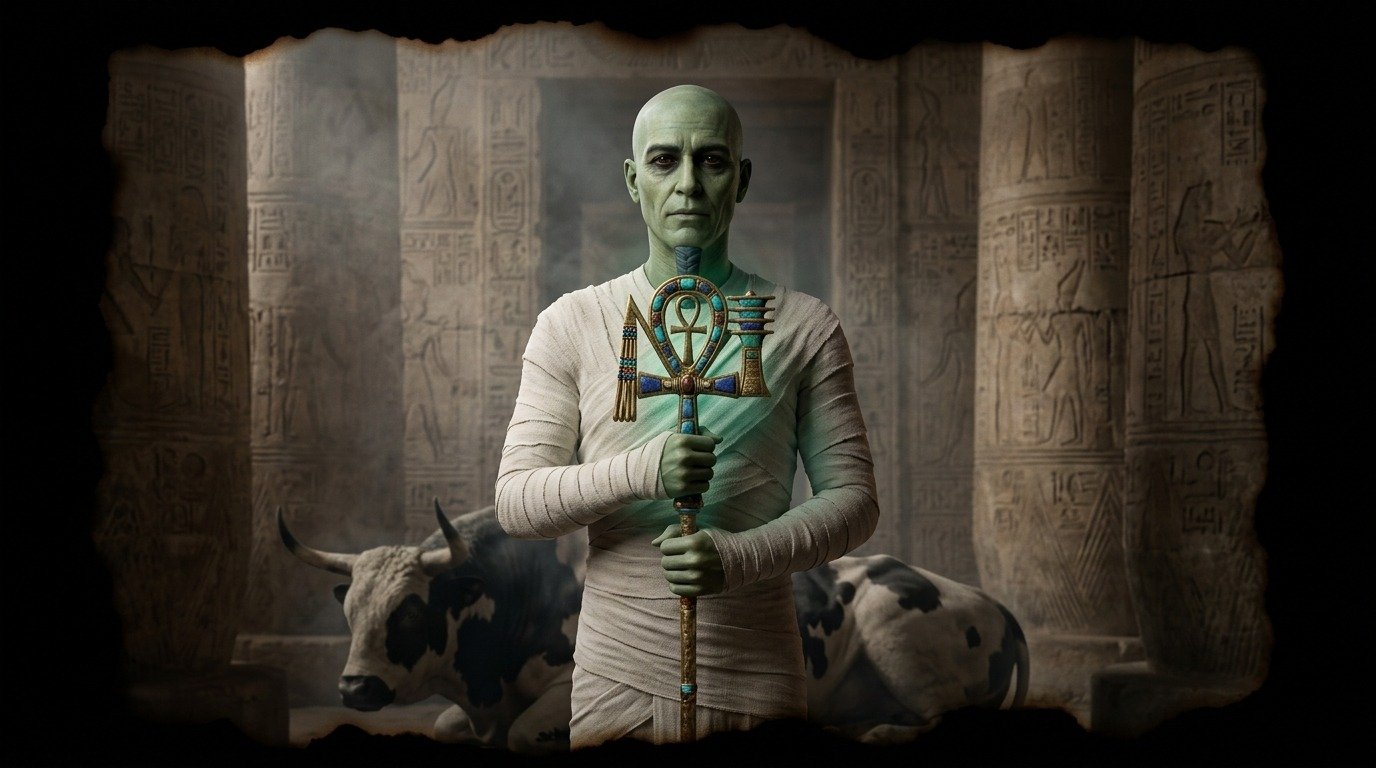
Ptah: The Architect of Thought and the Word
The Silent Creator of Memphis
While other Egyptian gods mold the world with their hands, fight in colossal battles, or are born from the violence of nature, Ptah creates from the absolute silence of the mind. He is the supreme god of Memphis, the ancient capital of the empire, and the patron of all artisans, sculptors, architects, and builders who give physical form to stone and metal. Ptah is not a destructive force; he is the intellectual order, the master design behind every mountain, every temple, and every living being.
His physical appearance reflects this contained and profound nature. He is represented as a mummiform figure, his body wrapped in a white shroud from which only his hands emerge. His hands hold a unique scepter that combines three of the most powerful symbols of eternity: the Ankh (life), the Was (power), and the Djed (stability). His skin is usually painted pale green or blue, the colors of regeneration and of the depths of the earth from which the metals and precious stones modeled by his artisans are extracted.
The Chisel of the Cosmos and the Living Word
The cosmogony of Ptah is of an astonishing conceptual beauty. In the beginning of time, before the sun or the stars existed, Ptah conceived the idea of the universe in his heart (the seat of thought for the ancient Egyptians). Once the image was complete and perfect in his mind, he pronounced the names of things with his tongue. By giving them a name, thought became tangible matter. The sun, the moon, the temples, the animals, and the gods themselves were born from the vibration of his divine voice.
This creation myth places Ptah above the purely physical plane. He is the "Great Carver" who sculpts the destiny of men and nature. Every time an architect traces the lines of a pyramid or an artisan sculpts the statue of a pharaoh, it is the spirit of Ptah that guides their hands. For this reason, the high priest of Ptah bears the honorary title of "The Greatest of the Master Craftsmen," a man who knows not only the sacred rites, but the physical secrets of stone carving and bronze casting.
The Great Mystic of Matter
The cult of Ptah is closely intertwined with that of Apis, the sacred bull that embodies his physical and generative strength in the mortal world. The Apis bull, recognized by specific markings on its black coat, lives in the courtyards of his great temple in Memphis, treated like a king. Upon the bull's death, it is mummified in a process that lasts seventy days and is buried in the Serapeum, the gigantic underground necropolis carved into the living rock of the Saqqara desert.
Ptah is the god of permanence. In a world where everything flows like the water of the Nile, he represents the stone that does not wear away, the structure that supports the roof of heaven, and the word engraved in hieroglyphs that defies the passage of centuries. His whisper is heard neither in the desert wind nor in the roar of the river, but in the rhythmic strike of the mallet on the chisel, where dead matter comes to life and eternal form.
Comments
Share information, an experience, or a source to help enrich this entry. They are automatically reviewed before being published.
Loading comments...