Samigina
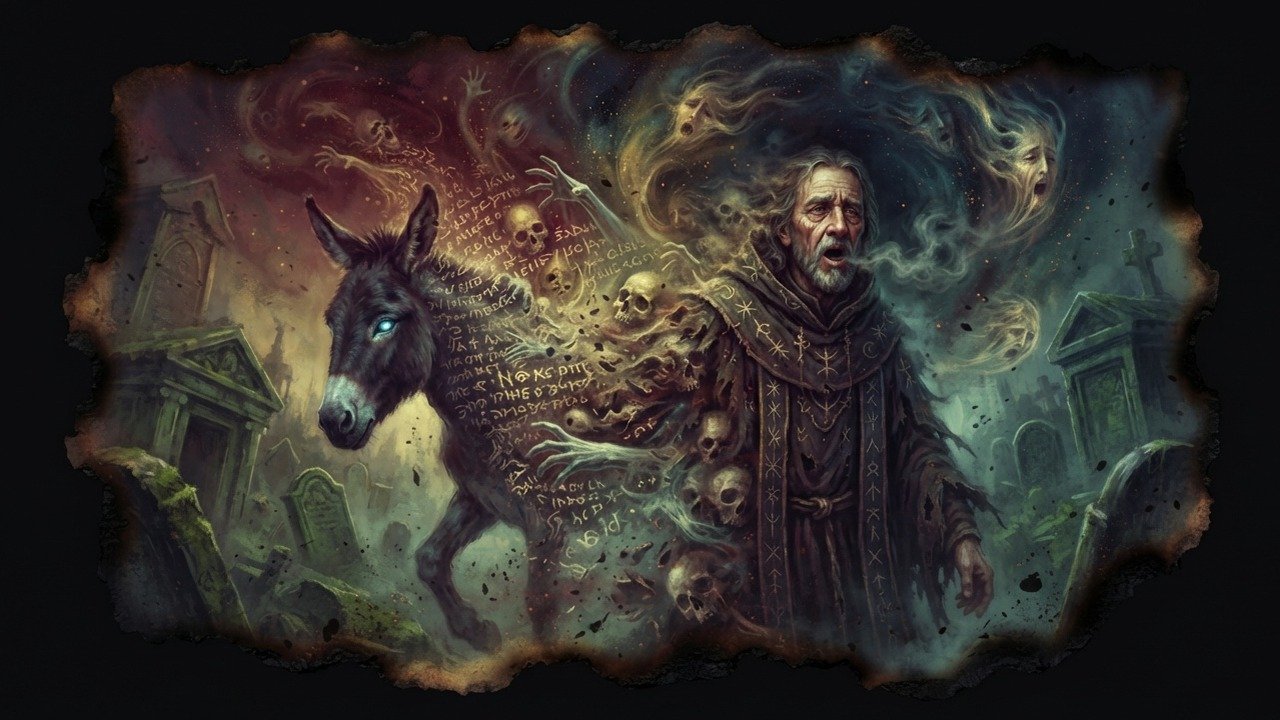
The Legacy of Samigina: The Marquis of Necromancy and the Weight of Souls
1. The Clamor of the Shadows: His True Origins
To find the roots of Samigina (also known in classical texts as Gamigin or Gamigim), one must descend into the chthonic cults of Mediterranean and Mesopotamian antiquity, where the border between the living and the dead required strict guardians and relentless psychopomps. In the Mesopotamian worldview, Kur (the underworld) was a realm of dust and gloom where the souls of the deceased wandered in silence. Archaic traditions spoke of entities capable of descending into the deepest layers of this great void to force the shadows to speak and give an account.
Samigina is not born of monotheistic condemnation, but of the ancestral human need to transmit knowledge through death. He is the personification of memory that does not perish with the flesh, the force that keeps bound the voices of those who perished in sin, ignorance, or tragedy, forcing them to serve as a living archive for those who still walk the earth.
2. The Iconography of Transmutation: The Horse and the Human
In the demonological hierarchy of the Goetia of Solomon and the Pseudomonarchia Daemonum, Samigina is cataloged as the Fourth Spirit, a Great Marquis of Hell who rules over 30 legions of infernal spirits.
His ritual iconography is as direct as it is unsettling: he initially manifests in the form of a small horse or a wild ass, only to later, at the operator's request, transmute into a human form with a hoarse, deep, and cavernous voice.
The Horse/Wild Ass: It symbolizes the beast of burden that crosses the threshold between life and death, the vehicle suited to descend into the underworld and carry the weight of souls. It is the untamed yet resilient nature of the lower astral plane.
The Cavernous Voice: Upon adopting the human form, his voice retains the echo of the grave. He does not speak with the polished eloquence of Agares or the majesty of Bael; he speaks with the harshness of inert matter and the resonance of the subterranean void.
3. Esoteric Meaning: Psychological Necromancy and the Judgment of Shadows
On the map of the Dark Tree of Life (Qliphoth), Samigina rules the regions of Gamaliel (the Sphere of the Dark Moon and the Lower Astral) in connection with the gate of Yesod/Malkuth, where the residues of the human psyche accumulate after bodily death.
The Necromancy of the Liberal Sciences: Ancient texts state that Samigina teaches all liberal sciences, but with a crucial nuance: he gives an account of the souls that died in sin or in the waters of oblivion. In initiatory magic and depth psychology, this represents Psychological Necromancy. Samigina grants access to the "fallen souls" of one's own psyche: dead ideas, talents buried by trauma, wisdom forgotten by history, and the psychic ancestors of the operator.
The Computation of Astral Weight: As Marquis of the Astral Necropolis, Samigina knows the exact amount of "weight" or guilt that a mind carries with it upon death. He grants the practitioner the ability to analyze destructive habits and inherited patterns from their lineage to break the cords of karmic or psychic heaviness.
The Evocation of Testimony: He does not seek the capricious torment of the deceased, but the extraction of truth. He allows one to listen to the dead without becoming trapped in the astral vampirism of mourning or obsession.
4. Practice, Manifestation, and Sovereignty over the Threshold
The manifestation of Samigina does not bring fire or freezing wind; it brings a dense, telluric, and funerary calm. The environment feels heavy, the air takes on a stagnant quality—like that of a newly opened grave—and the operator experiences a drastic drop in body temperature, accompanied by a sober clarity devoid of emotion.
How he acts in reality: Samigina acts by dissolving the fear of death and unearthing secrets believed to be lost with the passage of generations. In the individual, he awakens a cold, mathematical understanding of the finitude of matter, granting the ability to integrate grief, overcome ancestral trauma, and extract practical lessons from past failures.
Energy management and protection: The supreme danger of Samigina's frequency is Necrotic Miasma and Astral Depression.
The Risk of Psychic Necrophilia: Approaching Samigina without a clear purpose of transmutation can drag the practitioner into stagnation, pathological melancholy, or vital paralysis. Those who obsess over the dead end up losing their grounding in life.
The Authority of Life over Death: The operator must present themselves before Samigina as a spark of living and incorruptible will. Protection lies in one's own Vital Force (Vril): the magician must remember that the dead answer to the awakened consciousness. Keeping the mind focused on present action is the indispensable anchor to enter the realm of Samigina and emerge from it with wisdom intact.
Comments
Share information, an experience, or a source to help enrich this entry. They are automatically reviewed before being published.
Loading comments...